Goat yoga comes to the Peninsula

Alaska, Print

This story was originally published in the Peninsula Clarion.

Amber Harrison had few expectations when she laid down her yoga mat at the Palmer Fairgrounds last year. She came all the way to the Matsu Valley to try something she had seen only seen on the internet: goat yoga.

“I kind of thought, ‘oh that’s silly, is that even really yoga?’” Harrison said. “I pretty much only went to the fair to see that and what it was all about.”

Harrison, the owner of the Yoga Yurt, introduced goat yoga to the peninsula. Her first goat yoga session was this weekend.

After her goat yoga experience at the fair, Harrison posted a photo to the Yoga Yurt’s Facebook page asking if anyone would be willing to rent their goats for a session. Liberty Alaskan Goat Farms, a hobby farm off of K-Beach Road, offered to supply Harrison’s class with some baby dwarf goats and a place to practice.

The sessions took place outside, in the backyard of Liberty Alaskan Goat Farm. Jennifer Enersen of Liberty Alaskan Goat Farm had a few of her Nigerian dwarf goats, and Barbra Wills of White Gold Farm provided a group of her Alpine/Nubian breed goats to entertain the yoga class.

“I had heard about [goat yoga] a few years ago,” Enersen said. “I always thought it would be so fun to do. I kind of joked with my husband about it. Eventually, I would love to get into therapy with goats. I’m a nurse by trade and a farmer on the weekend.”

Harrison said the main goal with goat yoga is just to have fun.

“The unpredictability of the animals is just entertaining,” Harrison said. “They have minds of their own. Sometimes they’ll just be nibbling on your hair, or sit by you or stare at you. Or they’ll be in a corner doing their own thing. There are even people who came that just sat and pet the goats. So it’s kind of also a petting zoo. … They’re adorable. Who doesn’t want to be around tiny adorable farm animals?”

LaRae Paxton attended the first session at noon. She said she watched numerous Youtube videos to prepare herself. It was her first time, and she said “it was great fun,” despite being the only person in the class who had her mat urinated on.

Katrina Cannava brought her two children, Parker and Anna, to try goat yoga for the first time.

“We loved it,” Cannava said. “We have an uncle who had done it before, so we were super excited to try it. It was great for the kids.”

The Yoga Yurt, which celebrates their second anniversary this week, offers a wide range of yoga classes and workshops. In the summer, Harrison does free yoga in the Soldotna Creek Park at 6 p.m. on Fridays and paddleboard yoga on local lakes in the summer and pools in the winter.

“I try to do more traditional structured yoga, of course,” Harrison said. “That’s the foundation of our studio. I think sometimes we get in our heads about what yoga is supposed to be.”

Harrison said their aerial fitness class, which uses hanging silks, is among her most popular courses.

“It’s really fun and people get intimidated because they think like, Cirque du Soleil. We do stuff like that, but most of it is more yogic,” Harrison said.

The yurt can fit around 27 people and features a ceiling window that allows natural light to pour into the space. Harrison said she plans on more goat yoga classes in the future.

The Yoga Yurt is located on East Poppy Lane, off K-Beach Road.


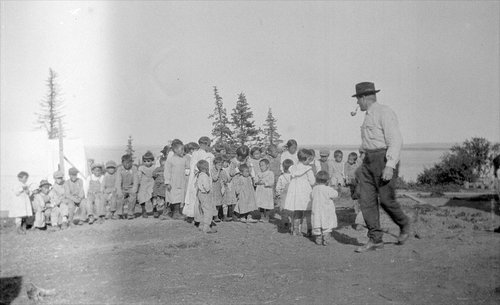
100 years ago, Spanish flu devastated Alaska Native villages

Alaska, Print, Uncategorized

Originally published in the Peninsula Clarion.

At the dawn of the 20th century, 15 people lived in the village of Point Possession on the northern tip of the Kenai Peninsula, according to census data. After the 1918 Spanish flu epidemic reached the small settlement and killed 10 people, a single family were all that was left of the Point Possession population.

A century later, the exact death toll from Spanish flu is unknown. Estimates place it between 20 million and 50 million people worldwide.

The Alaska Office of Vital Statistics reports nearly 3,000 deaths between 1918 and 1919 in the territory. Per capita, more people died in Alaska of the Spanish flu than anywhere else in the world other than Samoa.

Katie Ringsmuth, a history professor at the University of Alaska Anchorage and owner of public history consulting business Tundra Vision, said the epidemic represented total annihilation.

“This truly was as close to extinction as people experienced,” Ringsmuth said. “What’s shocking to me is that very few people are talking about this as the anniversary arrives … This was a demographic game-changer. Before, there were more native people than neo-Americans.”

Ringsmuth is working on restoring the Naknek cannery in the Bristol Bay region. She’s been compiling documents and records to tell the history of how the flu affected Alaska and the small fishing community of Naknek. Ringsmuth said it was the community’s most able-bodied that were affected by the flu.

“You tend to think it was the old people, the young, the weak, but it [wasn’t],”Ringsmuth said. “It killed the 30-year-olds, the strongest part of the community.”

Though the epidemic began in January 1918 in the rest of the world, the virus took a long time to reach Alaska. Historians believe it was likely carried by steamships and barges from Seattle and other ports. The first cases appeared in October in Juneau, and as ships and barges made their way around the state in the fall of 1918. The pandemic seeped into the state from the coasts. In October 1918, the S.S. Victoria docked in Nome, and the men on board unknowingly delivered mail carrying the virus, according to a 2015 Senior Voice article by Alaska historian Laurel Downing Bill. A month later, 31 of the men aboard the S.S. Victoria died heading south from Nome. Dog sled teams, explorers, missionaries and people in search of their family members brought influenza into Alaska’s more isolated areas.

In historian Alfred Crosby’s “The Forgotten Pandemic,” he writes about how Spanish flu affected the U.S., how the disease made its way from one side of the country to the other and why he believes the events of 1918 and 1919 are “largely forgotten.” In reference to how quickly and virulently influenza impacted the small villages of Alaska’s northwest corner, Crosby states in his book that “the Spanish flu did to Nome and the Seward Peninsula what the Black Death did to 14-century Europe.” Crosby estimated that 8 percent of the Alaska Native population died from the flu.

Tim Troll, a former Dillingham resident, used to the run the museum there. He’s also compiling a history of how the Spanish flu affected Alaska and the Bristol Bay area.

“This was a worldwide epidemic, and Alaska is always thought of being isolated and out of the way, but not enough to keep this sort of thing out,” Troll said.

At the time, the territorial government of Alaska was overwhelmed with the demand in medical care, and the federal government had exhausted services fighting the pandemic in the Lower 48 and providing for the war effort in World War I. Territorial Governor Thomas Riggs requested $200,000 in relief aid for the state. The request was reduced by half by the U.S. Senate and then voted down in the House of Representatives.

Other diseases not previously endemic to Alaska were also making their way into the state. Cases of smallpox, influenza, measles, tuberculosis, whooping cough and other communicable diseases cropped up in villages in Alaska from the 1830s–1920. The disease was carried to some of the state’s most remote locales, often by ship and dog sled. As villages became aware of the deadly infiltration, word of mouth was often times the only way to warn other communities. In a 2012 Anchorage Daily News article, author Tony Hopfinger describes how village leaders and doctors across Alaska ordered the closure of public spaces. Travel was prohibited between villages and armed guards positioned themselves outside some communities and were ordered to shoot anybody who tried to enter. One village, Shishmaref, was able to evade the flu completely.

“(The Spanish flu) epidemic, horrible as it was, occurred in the context of wave after wave of lethal diseases that decimated Alaska Natives,” Shana Loshbaugh, an independent scholar from Kenai who now lives in Fairbanks, said. “The only thing special about it was that, apparently, it was the last major scourge.”

The story was similar on the Kenai Peninsula. Record-keeping at the time was limited, but Alan Boraas, an anthropology professor at Kenai Peninsula College, said about half of the Dena’ina Alaska Native population in the Cook Inlet region died from the epidemic. From 1880–1920, at least eight Dena’ina villages were abandoned after too many people died for the villages to survive.

Places like Kalifornsky, Point Possession, Nikiski, Anchor Point and other villages across the inlet became too small after the epidemic. Boraas said the survivors came to Kenai, Tyonek or relocated further north to Eklutna.

Boraas said the nearest medical facility was in Seward, and that there may have only been one medical professional in Kenai at the time.

“People just suffered and it was terrible,” Boraas said.

By the summer of 1919, the disease was gone from the peninsula.

Today, there are few reminders of influenza’s effect on the peninsula. South of Kenai near Kasilof lies the old village site of Kalifornsky. Abandoned after the outbreak, a small graveyard inside a delicate white fence holds 16 unmarked graves, and one outside the fence, Dena’ina elder and writer Peter Kalifornsky’s resting place. The graves inside the fence belong to village members who perished from disease. The village’s survivors moved to Kenai, or across Cook Inlet to Tyonek.

In Alaska, more than just lives succumbed to what is widely considered one of the world’s worst influenza epidemics. Entire communities and cultures vanished in its wake.

“There was a loss of language, culture, formal schooling and more,” Boraas said.


French-with-orphans902177

Photo courtesy of Tim Troll


Movi found in Alaska caribou, moose

Alaska, News, Print, Uncategorized

Originally published in collaboration with Elizabeth Earl, and in the Peninsula Clarion

A harmful pathogen previously known only in goats and sheep has been found in healthy Alaskan moose and caribou.

Mycoplasma ovipneumoniae, commonly known as Movi, is a harmful bacterium known to cause pneumonia-like disease in both domestic goats and sheep and has caused die-offs in the Lower 48 wildlife populations. This is the first time it’s been detected in animals other than goats and sheep in Alaska, according to a Friday press release from the Alaska Department of Fish and Game. Outside the state, Movi was also found in a healthy bison in Montana, a mule deer in New Mexico and a sick white-tail deer in the upper Midwest.

Movi may have contributed to the death of a caribou in the Fortymile herd east of Fairbanks, according to Fish and Game. Lab tests confirmed the presence of Movi in the dead caribou’s lungs, the first time the bacterium had been connected to an actual case of respiratory disease in wildlife in the state, according to Fish and Game.

Bruce Dale, the director of the Division of Wildlife Conservation, said the dead caribou was also emaciated, which is not a known effect of Movi. Four herds in the state — from near Dillingham to the North Slope — have tested positive for the bacterium, but no sick individuals have been spotted. Archived samples from the Fortymile caribou herd from 2013–2014 have also tested positive for the bacterium, Dale said.

“It’s been around for awhile — it’s not like we’re expecting this to be rampantly present,” he said. “There’s been lots of cases of pneumonia in our caribou studies — never associated with Movi before, but always associated with being in poor condition.”

Movi is one of over 100 known mycoplasma species, which have varying degrees of virulence. The ability for Movi to cause respiratory illness is affected by other pathogens and other factors, as was the case with the caribou, according to the press release.

Individuals can carry Movi for some time without becoming sick, or may never become sick themselves. Environmental stressors, such as hunger, hard winters or other sickness, can open up the opportunity for Movi to manifest itself. Fish and Game does extensive tracking on the Fortymile herd and only one individual turned up susceptible to the disease, Dale said.

Movi was originally thought to have been only present in goats and sheep. State veterinarian Dr. Robert Gerlach said that it is unknown how the transfer between species occurred.

“The pathogen might be present in the wild and natural environment,” Gerlach said.

Nearly 400 of the estimated 1,500 domestic goats and sheep in the state have been tested for Movi, with around 4 percent testing positive, according to Fish and Game.

Statewide awareness of Movi began in early 2016 when the Board of Game considered a proposal to remove domestic goats and sheep from the “clean list,” an approved list that includes animals like domestic dogs and cats and allows them to be moved in and out of the state without a permit. The proposal would have required the goats and sheep to be individually tested, require permits and have double-fencing to prevent any nose-to-nose contact with any wild animals, in part because of the risk of Movi infection.

After public outcry about the burden of the permits, testing and fencing, the Board of Game agreed to delay the proposal for two years, giving goat and sheep owners time to work the issue out on their own with those concerned about the pathogen. In November 2017, the Board of Game was satisfied and turned down the proposalLess than three months later, Fish and Game found wild sheep and goats that tested positive for Movi, including some on the Kenai Peninsula.

Deanna O’Connor uses her blog, “If you Give a Girl a Goat,” to share stories and tips about raising goats that she’s learned running her hobby farm in Nikiski. She first got her goats tested for Movi in 2016, and then with the state veterinarian’s office in 2017. Her goats tested negative for Movi.

“Domestic owners are deeply invested in the health of their herds and flocks and are willingly the first line of defense when it comes to the spread of any illness to and from our animals,” O’Connor said. “We are more than happy to voluntarily participate in programs that keep animals — domestics and wilds alike — healthy, but we do not want to be regulated or permitted.”

With the news of moose and caribou carrying the pathogen, Wasilla resident Tina Judd is only a little concerned. She keeps a herd of 45 goats in Wasilla.

“We have a lot of moose near our property, but we have guardian dogs that keep them at bay,” Judd said.

Judd said she aims to keep up with the most recent science and keep wild and domestic animals separated. She and her husband are creating a support group called the Alaska Goat and Sheep Alliance, which she hopes can be a source for people to learn about and promote healthy herds and flocks.

For now, Judd said that future decisions regarding Movi should be based on science, not fear.

“Until the science is more developed, we shouldn’t look at the discovery of Movi in the wild population as the sky falling, but rather continue the testing of both domestic and wild animals and gathering facts,” Judd said.

Fish and Game plans to do more radio collaring on two wild sheep populations in the Brooks Range and in the Talkeetna Mountains, where animals tested positive for Movi before. Later, they’ll recapture some of those individuals and nearby animals to determine if the collared animal is still infected and if the others became infected, Dale said.

Upcoming Soldotna restaurant chooses ‘Alaska from Scratch’ author as new chef

Alaska, food, News, Print, Uncategorized

This story was originally published in the Peninsula Clarion.

For Maya Wilson, anything worth doing has been terrifying at first. Her newest endeavor on Whistle Hill is no exception.

Wilson, who launched her first cookbook “Alaska from Scratch” earlier this year, announced this week that she will be the head chef at the upcoming Soldotna restaurant Addie Camp Dining Car eatery and wine bar.

Wilson’s popular blog, Alaska From Scratch, began in 2011. She previously worked at The Flats Bistro in Kenai. Wilson said she thinks the new eatery is a great addition to the Soldotna food community.

“The vision for the restaurant was to do it as locally sourced as possible. To support local farmers, support our local vendors. I’m really pumped about that because that’s exactly what the food community needs and what Alaska needs,” Wilson said. “What I want, what I’ve always wanted, is for people to be well-fed and nourished, and this is just an extension of that.”

Peninsula residents may have seen the former train car jutting out from a building under construction atop a hill along the Sterling Highway on the way out of Soldotna toward Sterling. The train car and the building will be opening up as the new restaurant later this year.

The restaurant, owned by the Mary and Henry Krull, who opened Brew@602 in a neighboring former train car last year, will be offering dinner service and Sunday brunch.

The two-story building features large picture windows with views of Soldotna and the Kenai Mountains, two outdoor decks, a bar and plenty of inspiration from the railroad industry, including rail tie siding from the Alaska Railroad, and of course, the train car that will accommodate a more intimate dining experience.

The 1913 rail car, named Addie Camp, came from Addie Mine in Hill City, South Dakota. Wilson said the owners plan to preserve as much of the car’s original detail as possible. The Krulls rode in the car many times over the years before it was taken out of service in 2008. It was part of a tourist excursion in South Dakota. For Mary Krull, creating a restaurant came down to her and her husband’s love of good food.

“We like all things fresh and local,” she said. “We wanted to give Soldotna another option.”

The restaurant will also have its own hydroponic grow operation that will provide greens year-round, adding freshness to their dishes, even in the dead of winter.

Wilson has already started to meet with local farmers and vendors to partner with. She has begun to conceptualize the menu and said it will change with the seasons. Vegan and gluten-free options will also be available.

“It’s not fussy, it’s approachable. I really do try to focus on Alaska’s ingredients. I feel like that will be received well by the locals and the tourists, and I’m hopeful I will bridge that gap a little bit,” Wilson said.

Currently, the owners are working on acquiring a beer and wine license. The application process requires signatures from residents, 21 and older, in a one-mile radius of Addie Camp Dining Car eatery and wine bar. When open, the restaurant hopes to serve local beers on tap and fine wine.

“We need the community’s help to be the eatery and wine bar that we hope to be,” Wilson said.

Krull said they hope to open the restaurant this October.

“It’s a huge undertaking. It’s so exciting, and terrifying too. I’m most excited about for when we finally open and we get that food on the table,” Wilson said.

Gifted Students ‘Make the Most’ of School in Alaska

Alaska, News, Print, Uncategorized

This story was originally published on Education Week.

Glennallen, Alaska

This town of 500 people sits at the end of the Glenn Highway, 180 miles northeast of Anchorage, Alaska’s largest city. It’s a hub for travelers headed to the Copper River Valley, or farther, to Canada and the lower 48 states, and has much to offer in mountainscapes and a quiet way of life. For gifted students like Aric Cox, though, specialized educational resources are limited.

“I encourage him and his sister to make the most of what you got here. Yeah, it’s not as wonderful as … some other place, but we make the most of it,” Sherri Cox, Aric’s mother, said.

When it comes to providing advanced academic services, Glennallen shares many challenges with other rural schools across the country: too few specialized teachers, spotty internet access, underfunded districts, a lack of access to rigorous academic content.

Carolyn Callahan, a professor in the department of curriculum, instruction, and special education at the University of Virginia, said that rural gifted students have a particular disadvantage in schooling and that Alaska may be an extreme case because of its remoteness.

“Finding gifted kids in rural schools is difficult because personnel, and trained personnel, is limited,” she said. “In a rural school of 100 elementary students, you’d only have maybe five gifted kids, maybe one for every grade level. The opportunity for a teacher to create a whole enriched curriculum for one child becomes limited.”

Callahan said Aric is lucky in one respect: His academic ability, at least, was identified. Identifying gifted students in rural communities in the first place, she said, can be just as challenging as providing advanced content to that student when resources of all kinds are low.


Aric, who graduated from high school last month, has been living in Glennallen nearly his entire life and has attended Glennallen School since kindergarten. The K-12 school serves 286 students in all.

This year, the graduating class numbered 14.

Personalized Learning

And Glennallen School is the largest of the three schools in the Copper River school district, which serves fewer than 450 students in an area nearly the size of Ohio.

“I feel like larger schools would offer more variety of opportunities, but at the same time, in classes here, you get to know your teachers more,” Aric said. “In a bigger school, I don’t know if that would have been possible.”

That sentiment is shared by his school’s principal, Nick Schumacher, who said the small class sizes allow for more one-on-one attention.

“I feel like in smaller communities, you have to sort of take more initiative and go look for the opportunities,” Aric said.

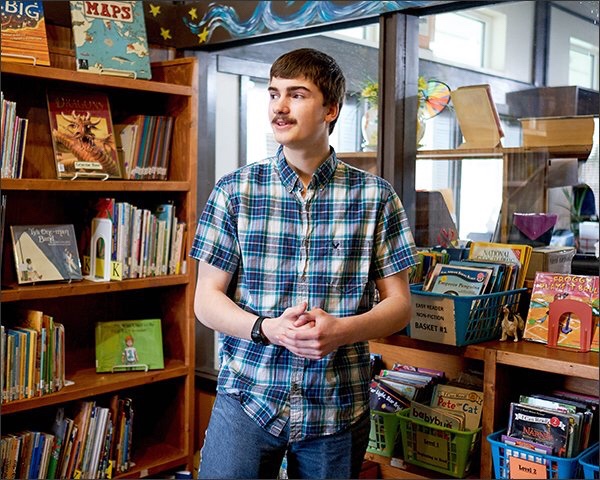
On his own search for opportunities, Aric discovered a passion for computer technology and helping people. He has been volunteering at the community library for the past seven years, where he sets up computers, puts books away, checks books in and out, and signs residents up for library cards, among other tasks.


After the local job center closed, Aric began working on a project to create a job-search database on one of the library’s computers. He also served as a student intern at Cross Road Clinic, the main medical facility in Glennallen where his parents both work. There, he installed TVs and a teleconference center, and helped with general information-technology work.

Aric burned through his school’s most challenging courses well before he was ready to graduate. Then he took online classes and video-teleconference classes to supplement the courses the district couldn’t offer him. Those classes were often based out of Prince William Sound College, which has an office in Glennallen, schools in Anchorage, and an online school on the U.S. East Coast, called the Potter’s School.

That ability to take online courses means Cox has been luckier than many of his peers in other parts of rural Alaska.

“The internet has been a boon in many, many cases because kids like Aric have access to it,” Callahan said. “Some schools don’t even have that option.”

Downside of Online Classes

But it’s also not been an ideal option, Aric noted.

“I’ve tried to take classes from teachers in school if I can, but if not, I would look at the online options and pick what was best,” he said. “[Online classes are] very impersonal. You get the content still, but you have to decide what you’re going to do with it. You don’t have a teacher to guide you along.”

Callahan agreed that the e-learning structure can be isolating for many students.

“You’re one student online, you’re not in a community. Nationally, it’s a problem and it’s something we’ve been dealing with by trying to get more gifted students identified,” she said.

The Copper River district is a member of the League of Innovative Schools, a nationwide coalition of more than 93 schools that focus on building opportunities for students through technology. Copper River and the Sitka school system are the only two Alaskan districts in the league. This coalition recognizes the districts for their use of a video-teleconferencing system that allows students to remotely take classes that are being offered at other schools in the district.

“If a teacher in our Kenny Lake School, which is 45 miles down the road, is offering a class in, let’s say, oceanography, a student in Glennallen that wants to take it can have access to it,” Copper River schools Superintendent Tamara Van Wyhe said.

The Copper River district offers e-learning options for gifted students like Cox through various partnerships with online education portals. In all, Van Wyhe said, the district is able to offer more 300 e-learning classes. Copper River students can also receive college credits and dual credit through a partnership with Prince William Sound College.

Moreover, independent study is an option for students who want to study something the district can’t provide.

That benefited Aric when he found an Advanced Placement Calculus class at an online school that wasn’t partnered with Copper River. His district offered financial support for the class, as well as a teacher to proctor the exam.

Teacher-Hiring Challenges

While the internet has helped make finding advanced classes for students like Cox less of a challenge, recruiting teachers who are skilled at meeting the needs of gifted students—and well-qualified educators in general—has become increasingly more difficult, Van Wyhe said.

“Ten years ago or more, it was pretty easy because all we had to say was, ‘Hey, we’re on the road system.’ People wanted to come here, but the pool of candidates has been declining so dramatically over the last five years,” Van Wyhe said. “There are not as many people interested in working in rural Alaska, so our road system draw isn’t quite what it used to be.”

Van Wyhe said it can be difficult for teachers to commit to wear all the hats required in a rural district.

“If you’re a high school English teacher, you’re not going to come to a rural district and just teach high school English. You’re going to teach English and social studies, and you might have a science class, and you might be asked to teach an art class, and you might coach cross-country, and be the adviser for student council and National Honor Society and a hundred other things,” Van Wyhe said.

Van Wyhe was a teacher in and around Anchorage for a couple of years before teaching in Copper River. While a small district in rural Alaska has its challenges, Van Wyhe said it’s the social and emotional benefits that have kept her there for more than 21 years.

“We have over 400 students in our school district, and I know every single one of them,” Van Wyhe said.

Meanwhile, in Quinhagak, a small, even more remote village on Alaska’s southwestern Bering Sea coast, Robby Strunk, a high school junior and gifted student, takes most of his classes online. His favorite subject is math, but his school’s most difficult math class is Algebra 2, which Strunk took as a freshman. Strunk said there are no teachers at his school who are trained to work with gifted children. He also said that because of budget reductions last year, his school had to cut a teacher position, leaving only two teachers at his 227-student high school.

College Transition

Strunk, however, has an opportunity to further his education through the Rural Alaska Honors Institute, an intensive college-preparatory program that brings rural, Alaskan Native high school juniors and seniors from across the state to the University of Alaska Fairbanks for six weeks.

Students can earn anywhere from eight to 11 college credits in one summer through the all-expenses-paid program.

Started in 1983, it is the oldest, continuously run program for academically promising rural students in Alaska.

The program was created in partnership with the University of Alaska and the Alaska Federation of Natives, with the goal of helping students ease the transition from village to town as they gear up for college.

The program, which nearly 1,800 students have attended since its inception, receives an average of 125 applicants each year and accepts 40 to 50 of them, according to RAHI program manager Denise Waters. Students must have a 3.0 GPA and have lived in Alaska most of their lives.

Strunk has been hearing about RAHI his whole life. His four older siblings went through it, and he was accepted to attend this summer, along with 41 other students from across the state. He said he is hoping to have similar experiences, and that the program will give him a jumpstart on college.

Over six weeks, students take classes from 8 a.m. to 5 p.m. and then work in a mandatory study hall from 7 p.m. to 9 p.m., five days a week.

“This is not a walk in the park,” Waters said.

Students choose from two course-study options. For those with an interest in the sciences, there is RAHI Research. Students must have taken some basic biology or chemistry classes and write two essays. This summer, six students will join university researchers, and, depending on the nature of the research the university is conducting, the students will be required to go into the field, collect data, assist with research, write a research paper, and give a final presentation about their findings.

Hard Work and Opportunity

The other track, the more traditional path, gears students up for managing college life. Those students take classes in college writing, library sciences, and study skills. In the afternoon, they choose from among four different classes: an appropriate level math class, chemistry, business, and a class that teaches the process and operations of refinery, chemical, and other industry manufacturing. In the evening, a physical education class is required; Alaska Native dance, karate, and yoga are the options.

The university and the Alaska Federation of Natives were able to entirely fund the program on their own when it began in the 1980s.

“This was during the [oil] pipeline days, and there was more money,” Waters said.

But in the last 10 years, external funding and partnerships were needed to continue the program.

The state of Alaska is grappling with a recession that has left districts, schools, and students with few resources, especially for the advanced content required to challenge gifted students.

This summer, while Strunk is attending RAHI, Aric will continue volunteering at the library and at Cross Road Clinic, as well as working with his school district to put together technology guides for teachers and students to work with the devices the school plans to start using next school year. In the fall, Aric will be leaving Glennallen, and Alaska, to study computer technology at Grove City College in Pennsylvania.

Strunk’s longterm goal? He hopes to return to Quinhagak after college and possibly teach math at this local high school.

Coverage of the experiences of low-income, high-achieving students is supported in part by a grant from the Jack Kent Cooke Foundation, at www.jkcf.org. Education Week retains sole editorial control over the content of this coverage.

Victoria Petersen is an Alaskan journalist, working as the education reporter for the
Photos by Young Kim

Why don’t more residents know about Anchorage’s flag?

Alaska, Audio, News, Uncategorized

Originally published on Alaska Public Media.

It’s bright yellow and only flown in only a couple spots around the city. Few people have probably seen Anchorage’s municipal flag, but it plays an important role in the city’s symbolism. Victoria Petersen has the story.

At Anchorage’s public library, the geese are returning from winter, and people are shuffling in and out of the newly renovated building. Abigail Ash comes here two, to three times a week, always passing by the library’s three large flagpoles.

“I noticed the flag, but I didn’t know what it stood for. My daughter’s even come here and they’re like ‘what’s that?’ It’s like ‘I have no clue’,”

Ash is referring to the municipal flag, which flies next to the U.S. flag and the state flag at the library.

Most people don’t notice it, or know what it stands for. Don Burgman also frequents the library about twice a week.

“I look at the flags, all three of them, and occasionally I notice they’re at half mast and I’m curious about why. But I never noticed it was the city flag. Now that I know that I’ll appreciate it,”

The library and museum are among the few places in Anchorage where you can see the flag flying in the wind. Both Burgman and Ash agree that Anchorage needs a city flag, and that they’d like to see it around more.

“Oh yeah sure, we need a flag,”

“It stands for us,”

The flag features the municipal seal, designed with Captain Cook’s ship the Resolution, a nod to the explorer’s history with Anchorage. It has a large anchor and a small airplane to symbolize Anchorage as a port and as the air crossroads of the world. The seal sits on a field of bright yellow, and the words Anchorage, Alaska adorn the top and the bottom of the seal.

Ted Kaye is a vexillologist, which means he studies the design of flags. Kaye lives in Portland and is the secretary for the North American Vexillological Association He says poorly designed city flags are flown less. Which may explain why few Anchorage residents recognize their flag.

“I like to say that in every bad flag design, there’s a good flag design trying to get out. Anchorage’s flag is no exception. It has great imagery, an anchor for Anchorage is just super. But writing the words Anchorage, Alaska on the flag, in a sense, shows that Anchorage is insecure about its symbolism.”

Kaye has written numerous books about flag design, including one about the history and design of 150 different city flags across the nation. He says his researchers found nearly nothing gathering information about Anchorage’s flag page.

“We know what the design represents, but we didn’t know who had designed it or exactly when. That was just not available to our researchers when we contacted Anchorage.”

After reaching out to the museum, the Mayor’s office and the library, it was discovered that Anchorage artist Joan Kimura was the original designer. A long time artist in Anchorage, Kimura taught art at the University of Alaska Anchorage, and formerly the Anchorage Community College from 1973 to 1994. The UAA Kimura Art Gallery is named in her family’s honor.

Kimura submitted an acrylic painting of her flag design for a contest the city was having in 1973. It’s almost exactly the same as the flag flying at the museum and the library today.

In 1975, in a Anchorage Assembly resolution, the seal design from the flag was adopted as the official seal for the city of Anchorage, the same seal the municipality uses today.

Thorne Bay, Wrangell, Wasilla, Homer, Houston and Ketchikan are a handful of other cities in Alaska that have official flags. North Pole features Santa Claus on their flag. Seward’s flag was chosen in 2016 from a contest that featured art from over 350 schoolchildren.

Some might ask why a city flag is important. Kaye says flags can be used for people to identify with and to rally around.

“City flags look both inward and outward. Inward they create a sense of identity to tie the residents together and help define who they are. Outward a flag creates a brand to represent the city to the outside world.

Residents see the municipal seal everywhere, from liquor licenses, to ballots, to the sides of municipal vehicles. However, spotting it flying is far rarer.

In Anchorage, I’m Victoria Petersen

Reception mixed on ASD proposal to switch school start times around

Alaska, Audio, News

Originally published on Alaska Public Media.

The Anchorage School District is considering a huge change. The district is looking at implementing new school start times, with elementary schools starting earlier and high schools later.

The district held a series of open houses recently to educate the community and hear feedback.

At the first open house for school start times, poster boards are set up on tables inside Lake Hood Elementary. Parents, teachers and community members were gathered around tables, talking with school district personnel about the potential start time changes.

Pamela Witwere, a parent and a teacher at Gladdyswood elementary school, says she’s worried about the potential change.

“I have major concerns because my kids aren’t early risers, and many of the families that I work with, none of their kids are early risers,” Witwere said. “So these aren’t kids that are up at 6 a.m. They struggle to get to school at 9 as it is,”

Witwere isn’t alone. Nearly every parent and teacher interviewed at the open house expressed similar concerns.

The school district is proposing the change in an effort to improve attendance, reduce tardiness and increase graduation rates. The school district cites national research that suggests middle schoolers and high schoolers do better with later start times and and younger students benefit from starting earlier.

Anchorage School District superintendent Deena Bishop says the open houses are an opportunity to gather input about the new start times.

“This change isn’t as simple as just change the start time and everybody will be happy. The entire community is nearly affected, so we wanted to be sure that we data sourced it,” Bishop said.

Bishop says she recognizes that switching elementary schools to an earlier start time will not be easy and she understands the change would ripple throughout the community. Childcare is a big issue — making sure daycare providers are able to adjust their schedules to match the school district. Bishop says the district would hope to tackle that issue through partnerships with local nonprofits.

“We would never want a parent to be stressed from just having a family, and running a family, and getting to work on time, and getting to school and back and forth, and getting food on the table. All those things are real life worries and actions for our families, so we wouldn’t want the school to put extra stress on families,” Bishop said.

The school district is proposing four scenarios, one of which is no change to the schedule at all. The other scenarios have high schoolers starting at 8:30 am or after, and the elementary students starting no later than 7:45 am.

Last year, a student created an online petition that urged the school district to study later school start times for high schoolers. The petition gathered thousands of signatures and pushed the school district to hire Western Demographics to study the issue.

Shannon Bingham is leading the research team. He says it’s clear high schoolers benefit from later start times. But the research isn’t as conclusive on elementary kids starting earlier.

“So as far as the quantity of research that’s out there, there’s significantly less. So some of the minority opinions and some of the more recent research is saying earlier start times are not necessarily good for elementary school children either.”

But Bingham says the research they conducted on elementary students showed that younger children who had to wake up earlier weren’t negatively impacted.  .

Jose Lopez attended the Lake Hood open house with his wife and three children. He thinks it would be hard for elementary kids to make the switch.

“I have three kids that attend school early. I kind of have a hard time making the younger kids start earlier than the older kids,” Lopez said.

The Anchorage School District says the comments received so far have been mixed. Parents of middle and high school students tend to be in favor of the change, while parents of elementary students are not.

The Anchorage School Board will make a decision later this year, and any change will be implemented in the 2019-2020 school year.

AK: The sweet traditions of Russian Orthodox Easter

Alaska, Audio, food, Uncategorized

Originally published on Alaska Public Media

Scraping the sides of the bowl, Abby Slater is forming a dough of milk, sugar, yeast and flour. It’s Slater’s first time making Easter bread. She’s observed and helped her Aleut family make it many times before though.

“My earliest memory of Easter bread was actually later in life because we didn’t reconnect with my aunt until I was a little bit older,” Slater said. “She was the one who had the recipe for the Easter bread. My grandma died before I was born, my native grandma, my kukax. So she didn’t get to pass that along to us grandkids,”

The recipe her aunt uses is the same the family has been using for generations. Originally from Kashega, a small village near Dutch Harbor, Slater’s family traditionally used dried berries and candied fruits in their Easter bread.

“It’s interesting hearing all the different variations of it because at the end of the day, it’s just a bread recipe, right? We talk about things about how some people put berries in it, or candied fruit,” Slater said. “That’s the version I grew up with. And other people are like ‘that’s not how you make it.’ And other people frost it, and in my mind I’m like ‘that’s not how you make it.’ But that is how people make it, it’s just not what I grew up with, you know?”

St. Innocent Russian Orthodox Church in Anchorage. (Photo by Victoria Petersen, Alaska Public Media – Anchorage)

Diane Chris says that the Easter bread in Prince William Sound is elaborately decorated. She’s a Matushka — priest’s wife — at St. Innocent Russian Orthodox church in Anchorage.

“On Easter, when you’re in a church, I’ve been in the churches, they’re small in the Sound. I’ve been there, and you’re fasting, and all you can smell is this sweet kulich, and the frostings and it’s just amazing,” Chris said. “Normally they put a candle on the top of them, and it’s lit for the blessing. It’s very festive.”

Easter bread, also known as kulich, is a decadent, egg-rich, dairy-rich, yeast-risen bread. Mother Capitolina, the only nun at St. Innocent Russian Orthodox church in Anchorage, says the bread symbolizes Easter.

“We’re doing everything we have fasted from: butter, eggs. Now it’s the resurrection,” Mother Capitolina said.

Chris helps make food for a bake sale the church is having. She says the bread is baked in coffee tins, representing the tomb Jesus resurrected from.

Traditionally, Easter bread is made by women and is a skill mothers pass down to daughters.

Every year, St. Innocent church has an annual bake sale where church members bake Easter bread, fry bread, piroshkis, pirok and other traditional foods. The money from the sale goes to their church and is open to the public.

“We have lots of people throughout the state that have grown up with the bread, from the villages,” Chris said. “They have different types of breads that they’re used to, so we have a variety here that are baked by the ladies of the church.”

It’s not just the Alaska Russian Orthodox population that enjoys the tradition of Easter Bread. Chris says that St. Innocent’s annual bake sale is always the Saturday before unorthodox Easter.

“We try to do it prior to everybody else’s Easter, because they like it for their Easter,” Chris said. “It’s become a tradition for a lot of people who aren’t necessarily orthodox.”

There are over 50,000 followers of Russian Orthodoxy in Alaska, and 49 parishes set up across the state. The first Russian Orthodox Church established in Alaska was on Kodiak Island in 1795. Many of these Russian Orthodox churches are baking Easter bread in mass quantities; some are even shipping it.

St. Tikhon, another Russian Orthodox Church in Anchorage, also sells Easter bread. Via their Facebook page, St. Tikhon takes orders for Easter bread and sometimes ships to villages across Alaska.

The bread is blessed on Easter Sunday by members of the Russian Orthodox church and then shared with the congregation. Easter bread is only eaten by the Russian Orthodox between Easter and Pentecost, which is 49 days after Easter.

Slater isn’t Russian Orthodox, but the making of Easter bread ties her to her Alaska Native family.

“I feel really connected, I guess,” Slater said. “Maybe that sounds silly ‘cause it’s just bread. But I feel like I’m participating in something– It’s kind of the way that I feel when I cook anything that’s an old recipe. You just feel like you’re part of something that’s older than you, and bigger than you.”

The bread pudding grandpa never got

Alaska, college cookbook, food, Print, Uncategorized

Originally published in The Northern Light

He slept in, ate his breakfast, read the paper and drank his coffee a year ago. He didn’t have trouble speaking, breathing, chewing or walking then. He wasn’t on oxygen or jaundiced or in pain. Grandpa was fine.

Last Christmas, I found myself struggling financially and decided to give the gift of homemade meals and treats to my grandparents — a rather humble gift, considering they had been letting me live with them rent-free for over a year and a half. Two envelopes were opened at my aunt Laura’s house, one for my grandma and one for grandpa. Inside was a coupon for their favorite dish. My grandma’s coupon was for soup and my grandpa’s for bread pudding.

His mom used to make it for him as a kid. My grandpa suffered from dementia and I thought that making him something that tasted like his childhood, like memories, would help him feel better.

Sometimes we would look out the window in the kitchen on the land his parents homesteaded as morning snow fell and he would be sure as hell we were in California. One time he thought I was his cousin. He never forgot my name, though.

My grandpa never redeemed his coupon. I would tell him I would make it this weekend or next week. “Just let me know when you want it.” He never asked and I never went to the store to get the ingredients. Social, school and work lives came before bread pudding.

This fall, after I finished my job working 15-hour shifts on the train for the summer, I tried to make time for bread pudding. Several ambulances, emergency room visits and tests later confirmed my grandpa’s deterioration wasn’t temporary. First, he was given a walker. He didn’t like to use it. Then came oxygen and then came a liquid diet. Problems chewing is a symptom of late-stage dementia. Smoothies, protein shakes and mashed potatoes for grandpa. Now he couldn’t eat bread pudding, even if he wanted to, even if I actually made time to make it.He was in the hospital for weeks. He wouldn’t eat much. He wouldn’t talk much. He wasn’t awake much. His eyes were hardly open, his breathing was labored and his skin was yellow the last time I saw him in October. I held his hand and told him to feel better and that I would see him later. I wouldn’t: he died the next morning.

It’s too late now, but I’m still going to make time for bread pudding, posthumously, for grandpa.

I couldn’t find his mom’s recipe, but grandma said the Betty Crocker recipe was just fine. I’m not adding raisins because we don’t have any, but you could add raisins and serve with whipped cream if you so desire.

Bread pudding
Serves 8

2 cups milk

1/4 cup butter

2 eggs, slightly beaten

1/2 cup sugar

1 teaspoon cinnamon or nutmeg

1/4 teaspoon salt

6 cups soft bread, cubed (about 6 slices bread)

1/2 cup raisins, if desired

Whipped cream, if desired

Preheat your oven to 350 degrees. In a saucepan, heat milk and butter over medium heat until the butter is melted.

In a bowl, mix together eggs, sugar, cinnamon and salt. Add the bread and milk mixture. Stir together and pour into a pan.

3. Bake for 40 to 45 minutes, or until a knife or fork inserted 1 inch from the edge comes out clean. Serve warm with whipped cream. Adapted from bettycrocker.com.

b39270b2-db68-4871-81c8-0623405b9d00.jpg

Alaska Railroad’s first Black conductor celebrates unprecedented 50 years with company

Alaska, Audio, News, Online, Uncategorized

Originally published on Alaska Public Media.

Harry Ross started moving trains when he was 21. Fifty years later, he’s still transporting passengers and freight by rail across the state.

“I do not believe there has ever been nobody as foolish as I,” Ross said.

It wasn’t a job Ross expected to get, and it wasn’t the job he originally hoped for. After graduating from East High School in 1964, Ross worked as a mess attendant at Elmendorf Air Force Base. His mom wanted more for him and sent him to college in San Francisco. After dropping out of school, Ross applied for two jobs, one with Western Airlines, now Delta, and one with the Alaska Railroad.

“I didn’t have the education to be a brakeman or a trainman period. I never thought about the railroad my whole life,” Ross said. “Growing up through high school I never thought about working at the railroad in no way, shape or form.”

Ross has been the number one conductor at the Alaska Railroad for over half of his career.

“I’ve been number one so long, like I said, I’ve even forgotten how long I’ve been number one,” Ross said.

Having the highest seniority among conductors comes with some perks. Ross says he gets the first pick of routes and vacation time.

“Everybody salutes you, like, ‘hey number one.’ They don’t call you Harry Ross they say ‘hey number one,’ and you know, that’s pretty interesting and fun,” Ross said.

The workplace wasn’t always so friendly towards Ross. As the first minority trainman hired by the company, Ross says he was met with opposition almost immediately.

“I had a lot of people that I worked with, that did not want to work with me only because of the color of my skin,” Ross said. “And, of course, that didn’t bother me because I’ve always been a people person and I figured one way or another I was gonna win them over. One by one I did, and there were some, of course, I didn’t. And it’s not gonna change those people that’s just the way they are.”

In his time at the railroad, Ross has seen the company go from federally owned to state owned. He says safety is a higher priority and the trains are more heavily regulated. Ross says the best change the railroad implemented in his 50 years is the Alaska Railroad Tour Guide program. The program began in 1980 and is open to high school juniors and seniors enrolled in the Anchorage School District.

“Well, basically it gives the kids a chance to get into the job market,” Ross said. “I enjoy working with these kids because everybody’s energetic and they really love what they’re doing.”

Jon Mobley was a tour guide in 2009 and worked at the railroad in multiple positions, including conductor, until 2017. Mobley says after years of mentoring under Ross, they’re like family now.

“He taught me a lot when I was in the tour guide program, just as a tour guide, and he taught me even more when I climbed the ladder and finally became a conductor. He’s been very crucial to my time at the railroad,” Mobley said.

Ross says he plans to retire at the end of the summer.

“I don’t know how it’s going to feel when I have to say goodbye. I know eventually it’s going to come,” Ross said. “I don’t want to die on the job. I want to enjoy some of my life that I have left, but I can say that I will truly miss what I have been doing the last 50 years.”

Ross says he plans on writing a memoir about his life growing up in Alaska and his time working on the railroad.

Historic Carousel Lounge may see revival

Alaska, News, Online, Spenard, The Spenardian, Uncategorized

Originally published on The Spenardian.

The Carousel Lounge, one of Spenard’s most iconic bars, may see a revival.

Paul Berger, a determined Anchorage businessman wants to bring a neighborhood-oriented bar to the vacant building, called the Bar on Spenard.

“I would really love to have people just walk over,” Berger said. “Neighborhood guys and gals. I want to really focus on the people of Spenard.”

Berger is no newcomer to the Spenard area. He’s lived in the neighborhood, at multiple addresses over the years, and Berger said he’s invested in the neighborhood.

Berger said he wants to steer away from the loud, rock and roll bands that frequently played at the Carousel Lounge. Instead, Berger said he hopes to feature local acoustic acts on occasion and have a jukebox.

“I’m a business guy, not a bar guy… We are going to have a well-run, neighborhood bar, sports, pool, darts,” Berger said.

The building also features eight apartment units, which Berger is currently renting out.

img_4740

Photo by Young Kim for The Spenardian
The building was built in 1964 and opened as the Carousel Lounge in 1967 under the management of Steve Cooper.

In 2003 new owners purchased the bar and painted the exterior red with stripes in honor of Van Halen. The Carousel Lounge served its last drink May 15, 2016. The Anchorage Daily Newsreported that the closure was due to the economy and health issues with one of the co-owners.

The bar was frequented by the Hells Angels in the 70s and 80s, Brenda Lee Fowler remembers the bar’s many biker parties.

“Back in the old days Hells Angels used to throw a lot of parties there… I was married to a Hells Angel back in those days, so I know quite well,” Fowler said.

Missy Mae has similar memories of her time spent at the Carousel Lounge, and said she was sad to see the bar close.

“[The bar hosted] people of different personalities and backgrounds having drinks with friends playing pool or darts,” Mae said.

Jody Tate frequented the bar with her father, a salesman, on his business trips there. Tate said she loves the idea of reopening the bar.

“I… fondly remember Spenard, it’s hardly changed since the 1950s when we moved to Anchorage,” Tate said. “The dynamics of Anchorage have certainly changed through the years with the closing of so many old-timey bars downtown. Anchorage used to have two bars for every church when I was growing up.”

Both Fowler and Mae also said they think reopening the bar is a good idea.

Not all are eager to welcome Berger and his Bar on Spenard into the community. Berger gave a presentation of his business plans to the Spenard Community Council on Feb. 7, as protocol for the transfer of his liquor license, which would be coming from midtown’s Turnagain Arm Pit. Members of the council had concerns ranging from noise pollution to parking.

“I get it. There was rough ownership the last 13 years. The bar got into very bad shape and pissed off all the neighbors,” Berger said. “I get why [members of the community council] are ticked off.”

Tom McGrath has been involved with the Spenard Community Council since the 1980s. McGrath owns land across the street from the bar, and in the 80s patrons of the Carousel Lounge began to park on McGrath’s property, and other neighboring lots.

“The biggest problem was they never had any parking,” McGrath said. “The customers have always just parked in neighbor’s spots. It’s always caused problems for years and years. If it goes back into business, it’s just going to cause problems.”

McGrath offered a resolution for Berger at the community council meeting, that cited the parking issues. To supply more parking McGrath pointed to a lot next door to the bar that is up for sale.

“Well, if he buys the lot, then we don’t have any problem with it all,” McGrath said. “Welcome to the neighborhood.”

Berger expressed interested in buying the lot, but said he does not want to have to.

The Spenard Community Council voted to pass a resolution opposing the Conditional Land Use Permit for the Bar on Spenard, citing issues with parking that were not addressed in Berger’s original plan, including handicap parking, snow storage, tenant parking, rear access to the building, landscaping and grandfather rights for the special land use permit and liquor license.

Berger will be addressing these concerns and more at the Anchorage Assembly, Feb. 27 at 6 p.m. at the Loussac Library. There he will be requesting a special land use permit that will allow him to serve alcohol at the property of the old Carousel Lounge.

49 Voices: Erynn Bell

Alaska, Audio, Online, Uncategorized

Originally published on Alaska Public Media.

BELL: I went back to Ohio a few years ago to clean out my grandfather’s house, who was a semi-hoarder. It was just really interesting to go through all of his belongings and see how wonderfully made these older items were. It seems like nowadays, a lot of the decor, a lot of the furniture is disposable furniture that’s meant to last a few years. Whereas a lot of the furniture that I see at the store now and that I’d seen at his house may be 100 years old, but it’s still in great shape, because it was built to last.

Anchorage is very transient community. So people move in and out of state, and can’t always take their furniture with them, even if it was just purchased a couple years ago. So, we have a lot of really nice used furnishings and a lot of fun vintage decor. It’s a very eclectic, I guess is the way to describe it.

There’s always something new coming in every single day and it’s just amazing to see what people in this town in their homes or in their storage units that they are cleaning out. The whole point of Rethink Home is to rethink what is beautiful. Just because it’s used does not mean it’s not beautiful.

49 Voices: Ylli Ferati

Alaska, Audio, Spenard, Uncategorized

Originally published on Alaska Public Media

FERATI: When I first got into it, I got thrown behind the bar, and people come in, they order whiskey and ask you questions of how does it taste, what do you think, this and that. I didn’t like whiskey at first, so throughout the days, I just started trying different things and came across a certain bottle, the Balvanie, and decided, “Wow, I really like this stuff.” It took me a while.

A couple years ago, say about five years ago, I had a guy from Diageo come in, and he was a master of whiskey. And he walked into the bar with their reps, and he takes a stop and he looks left and right.And the first words out of his mouth were, “I can’t believe this is in a neighborhood bar in Spenard.

People come now and they want to try new things. I do classes and stuff like that. They just love it; they want to learn. They love to learn. And that’s kinda propelled my whiskey knowledge.

As far as I know, nobody’s ever came to say [otherwise], but we have the biggest whiskey collection in Alaska. I was just put in a Thrillist arcticle for top whiskey bar in the state. Pretty honorable. It’s still growing, there’s bottles added every week.

We want you to relax, enjoy, have a good time. Especially if you’re at the bar. Meeting my regulars, and everybody… it makes the bar seem fun. It makes my job fun to ee everybody else happy.

49 Voices: Hannah Dorough

Alaska, Audio, Uncategorized

Originally published in Alaska Public Media

Dorough: I really enjoy having a flip phone. I lost it on an airplane and I had to get a different phone, but they didn’t sell the Razrs anymore, because everyone moved into the smartphone era. So I had to go to GCI and I got one of those drug dealer phones that are prepaid, and you put $50 on them every month and you drop them in the garbage bin when you’re done, and move on with life.

214447DE-2CA7-4260-AD95-FC9A47BD4022

So now I have a different black, shiny flip phone that is not a Razr. But I recently dropped it down like, 15 different stairs and it hit each one on the way down. And it survived perfectly fine. A lot of people like it because they think it’s like a throwback. And they always want to play on it. And they ask if I have games. I don’t have games.

And then some people really don’t like it, and they tell me multiple, multiple, multiple times in conversation that I need to get a different phone. I’m like no, shush.

People keep telling me I need to get Snapchat. I don’t want to get Snapchat. I don’t want Instagram. I don’t want these things. They sound so complicated.

49 Voices: Carolina Vidal

Alaska, Audio, Uncategorized

Originally published in Alaska Public Media

VIDAL: At first I started calling myself a word I made up — “Piñateur” — which is silly because it has some Spanish and French, but now I’m just the owner of The Piñata Shop.

Almost a year ago, my now-seven-year-old was about to turn seven, and she asked me for a Trolls-themed birthday party. And she doesn’t have to twist my arm to make a party. I enjoy parties a lot. I was an event and wedding planner in Mexico and I worked doing the same in New Jersey. I knew I wasn’t going to find it in Anchorage, because I knew when I’d seen piñatas before. I think I know piñatas; I’d been around them all my life. Usually, by the time the second kid hits it, it’s broken in pieces, and I thought they were very fragile and not very well made.

So I told her, “I’m going to make you a piñata. And she want the cloud guy. She wanted the cloud to rain candy once it was broken. And I gave it a shot, and I loved how it turned. And that was the beginning of it.

DSC0341-600x400

I wanted to do something different, so I went for a salmon, a humpy salmon. And I loved how it turned out, and my husband, the Alaska guy, was very proud. He took a picture of me holding the salmon piñata and sent it to all his relatives. And our neighbors and friends started looking at what I was doing, and I started getting orders from them.

I’ve seen them being whacked and people ask me, “doesn’t it hurt to see your work, and those hours invested in them, just being whacked.” And I say no. I thought it was going to be like that, but I’m excited for the kids. I’m like, “Get it! Harder! Come on, Johnny! Come on Lulu! Come on, go for it!” That’s nice for me to make their very first piñata and I have people coming back to me and asking for more.

Back to the roots: A short history of Mountain View

Alaska, News, Print, Uncategorized

Originally published in Mt. View

Michael Dougherty and his family first moved to Mountain View in 1950, when he was only three years old and the city of Anchorage had only two paved streets, one stoplight on Fourth Avenue and a brand new high school: Anchorage High School.

Mountain_View_Anchorage-2-July-1958

“We lived in a small mobile home park in Mountain View,” Dougherty said. “Years later, my wife’s sister bought a house there, and in her backyard was the concrete pad from one of the mobile home sites.”

An appropriate name, Mountain View offers views of the Chugach Mountains. The name was first recorded being used by the Army Map Service in 1941. Homesteaders and construction workers for Elmendorf Air Force Base were the residents of Mountain View in the 1940s.

Consisting of mostly cabins and small houses, the neighborhood was rezoned to allow the construction of multi-family housing in 1965.

The Good Friday Earthquake

As the state population and infrastructure grew rapidly in the 50s and 60s, the Good Friday earthquake brought a brief halt to the development.

When he was 13, Larry Cline’s family home suffered little damage during the 9.2 magnitude earthquake that lasted for nearly five minutes. However, just a block away at a playground behind Mountain View Elementary, the earthquake left a huge crack in the asphalt, Cline said.

“School was out, being Good Friday, and I was home watching TV… Things just started going crazy. The ground was rocking and there was a low roar the whole time. I moved to stand at the front door and my mom stepped outside. She immediately fell on her butt in the snow,” Cline said. “I stayed in the doorway and braced myself.”

Cline said he watched his family’s ‘56 Chevrolet four-door station wagon rocking back and forth until all four wheels were off the ground at the same time.

“It didn’t last but a few minutes, as I recall, but I remember wondering if it was going to go on forever,” Cline said.

From pigs to lions, Mountain View was a wild place

Born and raised on Bragaw Street, Paula Shaw Vincent lived across from what is now the Alaska Native Cultural Charter School in an area that used to be an 80-acre pig farm. The farm was run in Mountain View from 1942 to 1951 by John Vanover, who homesteaded in the area in 1940.

For decades two domesticated lions, Timbo and Princess, also called Mountain View home. They lived in modified trucking trailers that allowed the cats access to views of Mountain View Drive. The trailers were placed between Leon and Lois Brown’s A&W Drive-in and their electric business, Brown’s Electric. Leon — whose late brother George owned the popular Anchorage eatery, The Lucky Wishbone — helped take care of the lions from the late 50s until the late 70s. The lions were then mounted and put on display in Brown’s Electric. After the electric business moved buildings, Leon donated the lions to the Alaska Museum of Science and Nature. There the lions were put on display until moved to storage. The current whereabouts of the lions are unknown. The Alaska Museum could not confirm if the lions were on site.

A diverse history

Today, Mountain View is America’s most diverse neighborhood, according to U.S. Census data research conducted by University of Alaska Anchorage professor Chad Farrell in 2013. The majority of Mountain View’s diverse population came in the late 90s and early 2000s, but since the beginning it was a place for people from all walks of life.

“It was a very diverse neighborhood even back then. Mostly black, white and Native though. Not quite the mix it has now. [There was also] lots of military [people],” said Terri Floyd, who lived in Mountain View from 1956 to 1974. “I think Anchorage as a whole changed a lot with the pipeline. Small neighborhood stores went away, larger grocery stores and malls opening changed the face of Anchorage.”

The neighborhood has seen its fair share of changes since it was annexed to Anchorage in 1954.

Georgiana Criswell Gooch lived in the basement of her church located at 403 N. Hoyt St. At the age of 17, she left home to take a job at Sears in 1970. During this time Gooch lived in a small house across the street from her church.

“It was like a nice urban area where you could see the mountains really well. It was a neighborhood where everyone knew each other, kind of like a small town,” Gooch said.

Gooch left Alaska in 1974 and came back in 2006. Her brother, who lived in Anchorage at the time, told her to stay away from the neighborhood they once called home.

“I was shocked at how small the buildings seemed and how worn down everything had become. The post office was gone. The sports store wasn’t the nice place I recall,” Gooch said. “My brother… got really upset with me when he found out I had driven to Mountain View to look at the old neighborhood. He told me, ‘Don’t ever go back there again. If you must, take someone with a gun. Better yet, just stay away.’ I couldn’t have been more surprised.”

For some, Mountain View has changed for the worse. For others, it hasn’t changed at all.

“Mountain View is not the scary place people think it is,” said Tisha Smith, a current neighborhood resident.

Smith, who grew up in south Mountain View in the 1970s, bought her childhood home from her mother a few years ago. When it was built in 1963, Smith said, her home was part of a pretty nice and new neighborhood, and that pocket of Mountain View has hardly changed at all.

___________________________________

This story appears in the Winter 2018 issue of Mountain View Post magazine: Find copies — including more stories, photos and recipes from Mountain View — at the Mountain View Neighborhood Library and select local businesses.

Meet the teens running a Midtown Anchorage bakery

Alaska, food, News, Print, Uncategorized

Originally published in Anchorage Daily News

When 18-year-old Alisa Louangaphay took ownership of the Midtown Anchorage bakery A Pie Stop in March, she wanted to surround herself with people who were as passionate about baking as she was. So she hired three other teenagers.

“It does sound a bit scary. (But) we aren’t a bunch of delinquents. We all do extracurriculars. We all work hard in school. We all do our best. We try really hard to make sure every customer that leaves here is satisfied,” Louangaphay said.

Newly graduated Lily Rodriguez, 18, and her 16-year-old sister Carolyna are bakers in the shop. Christian Bowers, an 18-year-old senior at Polaris K-12 School, is the bakery’s barista. Louangaphay assists in the baking and, with the help of her grandfather, handles all the business aspects of running A Pie Stop, all while she finishes up her senior year at SAVE High School.


Together, the crew turns out 27 different kinds of pies, plus fruit turnovers, cookies, cinnamon rolls, cheesecakes, brownies, quiches and espresso. Cornish pasties – a hard-to-find meat hand pie – are a popular item, typically selling out around 2 p.m. daily. Gluten-free pies are also available by special order.

Louangaphay may still be a teenager, but she’s been baking for most of her life. She was first introduced to it by her grandfather, Steve Satterlee. When she was very young, she would help him bake at the Chokecherry Inn, a bed-and-breakfast their family owned in Fairbanks.

“She started baking pies with me when she was just 4 years old. She always wanted to help me. That’s all she’s ever wanted to be, is a baker,” Satterlee said.


Louangaphay studied at the King Career Center culinary arts program in 2016. She attended the University of Alaska Anchorage Bakery Boot Camp for several summers in a row and the University of Alaska Fairbanks Business Week, where high-school students learn about entrepreneurship.

Last spring, she spent a semester at A Pie Stop under its previous owners as part of a culinary internship. She had been working there about four months when her grandfather proposed purchasing the bakery for her.

“I was eating (at A Pie Stop) when I overheard a conversation that the shop was for sale. I made the decision to cash out some of my retirement money to make Alisa’s dream come true,” Satterlee said.

Satterlee bought the bakery in March. Both Satterlee and Louangaphay worked for two months with previous owners Dawn Kauffman and Fanny Miller, Amish and Mennonite bakers who taught Louangaphay and Satterlee their recipes. Many of those recipes are still on the menu, including whoopie pies, a traditional Amish dessert. Amish butter shipped from Ohio is also available for purchase at the bakery.

“I’ve always had that dream. I’ve always been set on this path … I wanted to prepare myself for when I got older, for when I actually got to run my dream. I didn’t think it’d happen so soon,” Louangaphay said.

It was through the King Career Center culinary program that Louangaphay met with Bowers and Lily Rodriguez.


“It’s fun working here. It’s a bunch of kids here, so we’re just baking and having fun,” said Rodriguez, who completed a year at the King Career Center culinary program and graduated from Service High School in 2017.

Rodriguez has been the shop’s head baker since August and recruited her younger sister Carolyna, a home-schooled student, to work at A Pie Stop with her in October.

“People are usually surprised to see me working here, like, ‘Wow, I’ve never seen a 16-year-old work at a bakery.’ And yeah, because that really doesn’t happen that much because people don’t want to give them a chance. I got lucky,” Carolyna Rodriguez said.

Carolyna Rodriguez, Louangaphay and Bowers are all receiving school credit for their work in the bakery.

A learning curve

Starting as a new business, Satterlee says they’ve had some stumbles. Whether it’s locking down the perfect recipe for pie crust, removing or adding items to the menu or figuring out how to be efficient during the holiday rush, running the bakery how Louangaphay envisions it has been a learning experience.

“After the previous owners left, business went down. Anytime a business changes ownership, you lose some of those old, loyal customers. We have had to build a new customer base,” said Satterlee, who’s in charge of the bakery’s finances. Before Satterlee retired three years ago, he worked as a purchasing agent for Alyeska Pipeline.


But since then, Satterlee says, they’ve been able to grow their customer base with strategies like radio advertising and contests for free pies.

A recent partnership with The Magpie has also increased business. Since November, The Magpie, which operates a food truck in the summer, has rented kitchen space in A Pie Stop.


Customers can now order breakfast and lunch from The Magpie at the same counter where they get pies and pastries. Plus, Magpie owner, Amanda Cash, is an on-site mentor to the young bakers.

“Amanda is great because, you know, we haven’t been in the culinary field for very long, and if we have any questions about anything we can just ask her,” Carolyna Rodriguez said


In addition to running The Magpie, Cash spent two years as a chef in Denali and served as the executive chef of a restaurant in her home state of Indiana. She also spent several years as a cooking instructor.

Cash has some creative ideas for 2018, including a pie-of-the-month club, creating an area for live music and having pies available to take and bake at home.


As for Louangaphay, once she graduates from high school, she plans to increase her hours and dedicate more of her time to growing her young business.

A Pie Stop

Hours: 8 a.m.-5:30 p.m. Monday-Friday, 10 a.m.-3 p.m. Saturday

Location: 3020 Minnesota Drive, Suite 1

Contact: 907-677-PIES (7437) and apiestop.com

Orphans and canneries: The Spanish flu in Alaska

Alaska, Online, Uncategorized

Historians estimate the Spanish flu killed 50 to 100 million people around the world, roughly 3 to 5 percent of the planet’s population. Per capita, more people died in Alaska, than anywhere else in the world, with the exception of Samoa.

The flu hit Alaska in 1918, but it wasn’t until late 1918 and early 1919 that the pandemic came to Bristol Bay, where it ravaged communities, killing off some villages in their entirety.

“This truly was as close to extinction as people experienced,” Katie Ringsmuth, history professor at the University of Alaska Anchorage and owner of Tundra Vision, a public history consulting business in Alaska, said. “What’s shocking to me is that very few people are talking about this as the anniversary arrives… this was a demographic game-changer. Before there were more native people than neo-Americans. Total annihilation is what this flu represented.”

Ringsmuth, who has been focusing on the history of the Naknek cannery and community has collected documents and records of how the flu affected this small fishing community in Bristol Bay. These documents were collected from the San Francisco-based Alaska Packers Association, who was the largest salmon packer in the state at the time.

Tim Troll, a former resident of Dillingham, used to run the museum there. Troll began to research more about how the flu affected Dillingham and Bristol Bay and was able to hear stories, firsthand, about the canneries role in the pandemic. He describes the Alaska Packers Association as the “Conoco Phillips of the time.”

Ringsmuth describes one story contained in the documents compiled by the Alaska Packers Association:

“The Superintendent of the cannery reports a boat is drifting down the naknek, so he sends out his cannery foreman to go retrieve the boat. And onboard were several people, probably a family, all the adults were dead with the exception of the children. These were the some of the kids they brought to the orphanage,” Ringsmuth said.

There are other stories like this in the documents left by the cannery doctors and nurses. Many children were left without parents, as the Spanish flu most often took the lives of people healthy adults, sparing children and the elderly.

“You tend to think it was the old people, the young the weak, but it didn’t. It killed the 30-year-old’s, the strongest part of the community,” Ringsmuth said.

No one knows how Spanish influenza reached Bristol Bay. Some believe it was brought by ships or by ministers of the Russian Orthodox church.

“This was a worldwide epidemic, and Alaska is always thought of being isolated and out of the way, but not enough to keep this sort of thing out,” Troll said.

At the time, the territorial government of Alaska was overwhelmed with the demand in medical care, and the federal government had exhausted services fighting the pandemic in the Lower 48, and providing for the war effort in World War I.

Bristol Bay’s canneries took the place of government entities and, Rinsgsmuth said, took everyone in and provided medical care to, not only their employees, but to everyone in the villages where they were at. [The canneries] had their doctors and their nurses go into the villages and tend to the sick and bury the dead so they wouldn’t be contagious.

“These canneries had the infrastructure to provide medical care, where the federal and territorial government had absolutely no recourse to deal with this,” Ringsmuth said.

After the flu subsided, the territorial government tried to reimburse the canneries for the services they provided.

“[Alaska Packers Association] went ‘no, no, no,’” Ringsmuth said. “They ended up writing a book about it, which turned into kind of telling the world how awesome they were. They did do something pretty incredible that defies what a lot of people assume, is that they would be uncaring and they only think of money, but the reality is, is that the [Alaska Packers Association] had the hospitals and the infrastructure and they saved a lot of people.”

The canneries also created orphanages for all of the children left behind in the wake of the flu.

“The children left were saved by the canneries. Bristol Bay was repopulated by these kids that were saved,” Troll said.

Ringsmuth saw the Alaska Native adaption after the loss brought with the Spanish flu as a form of strength.

“Instead of laying down and letting the wave of history wash over them, they got up and they adjusted to the systems that were presented to them. I think the Alaska Native people were a lot stronger than our narrative gives them credit for.” Ringsmuth said,” “Not only is it a system of adaptation, but they use that system to empower themselves and lead to nothing else than the Anti-Discrimination Act of 1945, and I see that as a culmination of what happened here.”

What Remains

The canneries provided medical attention for the infected and burials for those who perished with the flu. Due to the high fatality rate, mass graves were made and can be found near infected villages all over Alaska.

“They were overwhelmed, they were digging mass graves, nobody was making coffins or anything like that,” Troll said.

It was mass graves like these that led to the breakthrough report completed in the late 90s that examined the origin and evolution of the viruses genes, suggesting it was mammalian in origin and may have been adapting in humans before 1918.

Ann Reid, micro-biologist and one of the authors of the report, used lung tissue that was taken from the body of a flu victim buried in one of these mass graves, under the permafrost, in Brevig Mission, Alaska.

Reid says that when her partner Johan Hultin was researching burial sites that many of the sites had not remained frozen or had crumbled into the sea. Brevig Mission was the only site that seemed to be intact. She notes that when Hultin first exhumed the victims in 1953, most of the bodies appeared to have been continuously frozen. When he reopened the grave in 1998, there was only one body still in good condition.

“It would seem that the permafrost in Brevig Mission had not remained permanently frozen during the intervening 40 years,” Reid said. “As climate change has affected temperatures in the Arctic more dramatically than anywhere else on Earth, the same is proving true of any other remaining once-permafrost graveyards along the Alaska coast.”

Reid says that the chances are good that if they were doing this project now, they would not have found any still frozen remains.

An anthrax outbreak in Siberia last year killed thousands of reindeer and a couple people in a small village. The anthrax came from infected reindeer that were buried years prior in the permafrost. With the thawing of permafrost in Arctic regions, the reindeer resurfaced and infected the nearby village. This outbreak has raised concerns for people living near the mass graves of the victims of the Spanish flu buried in Alaska’s permafrost.

For villages living in close proximity to these mass graves, Reid says it is extremely unlikely that the virus would be infectious if the bodies were located and exhumed today.

But the viability, or the ability for a virus to cause a disease, is variable, says Reid.

“Some viruses, like smallpox, are large, double-stranded DNA viruses that are relatively stable; that is, they can withstand freezing and thawing and retain their ability to infect cells. Exhuming smallpox victims from permafrost should, therefore, be done with extreme care, or just not done,” Reid said. “Other viruses, and influenza falls into this category, are fragile; influenza is a single-stranded RNA virus and cannot withstand freeze-thaw cycles, sunlight, high humidity etc. Its genetic material is easily damaged and broken into fragments that cannot be reproduced by the host cell.”

As for the outbreak in Siberia, anthrax is a bacterium that have spores that Reid says are extremely resilient.

“Disturbing the bodies of animals that died of [anthrax], or even the surrounding soil, can indeed lead to new infections,” Reid said.

For TNL: Tai Yen Jimmy Kim and the American dream

Alaska, Print, Uncategorized

Originally published in The Northern Light

When Tai Yen Jimmy Kim isn’t at UAA studying for his justice and theater classes, one can find him performing in plays across Anchorage, working at Rustic Goat or at a local open mic rapping about institutionalized racism.

Photo courtesy of Tai Yen Jimmy Kim for The Northern Light

Photo courtesy of Tai Yen Jimmy Kim for The Northern Light

Tai Yen Jimmy Kim is a “dreamer.”

When he was four years old, Kim moved from South Korea to New York. Accompanying Kim was his mother and her family. The family hoped to become citizens with the help of Kim’s grandfather, who had moved to Chicago and became a citizen himself before Kim was born. A petition was put forth by his grandfather to help the family gain citizenship, but unfortunately proved futile for the Kims.

“I can’t help but think if we were able to afford an immigration lawyer in New York years ago, we could be citizens by now,” Kim said.

When Kim was 12 years old, his family moved to Alaska where he’s been ever since. Kim graduated from West High School in Anchorage and now is in his senior year at UAA, where he is double-majoring in theater and justice.

“I spent hundreds of hours participating in the Anchorage Youth Court, a specialized court for minors. That’s when I became interested in law,” Kim said. “I hope to work in rehabilitation rather than become a lawyer. Anchorage is unique in that it has specialized courts for domestic violence, and drug and alcohol abuse, among others. I want to help these individuals reintegrate back into society. I want to find funding for mental health programs for these inmates who need it most.”

Kim is 22 years old and not a U.S. citizen. Kim is protected from deportation and eligible for a work permit because of an Obama-era immigration policy known as Deferred Action for Childhood Arrivals, or DACA. The program has offered protection to nearly 800,000 children who were brought to the U.S. illegally, allowing them to remain in the country without fear of deportation.

Photo courtesy of Tai Yen Jimmy Kim for The Northern Light

Photo courtesy of Tai Yen Jimmy Kim for The Northern Light

DACA recipients must have entered the U.S. before 2007 when they were 16 or younger. The protections of the DACA program are renewable every two years. Earlier this month, the Trump administration announced that they would be rescinding the program, although the future of the program is still up in the air and in the hands of the nation’s lawmakers and politicians.

“Why couldn’t he keep the protections offered by DACA, while pushing Congress to create a more comprehensive bill? It shouldn’t take putting 800,000 young adults in limbo for Congress to do their job,” Kim said. “These immigrants are striving to make this country great. We are hardworking individuals. If you truly believe that we are the reason you can’t get a job, then I can see why you’re unemployed.”

If the Trump administration were to wind-down the program, Kim could be at risk of losing his work permit, or may even be deported back to South Korea.

“I am not worried about deportation. I built an extensive network of kind, intelligent people here. They wouldn’t let that happen. Also, Trump and Homeland Security are a long way from deporting over 800,000 DACA recipients,” Kim said. “I am worried, however, about my ability to work legally and receive scholarship funds for graduate school down the line. My work permit expires in January.”

Kim’s father stayed behind in South Korea. Due to visa restrictions, Kim has not been able to visit his father in nearly a decade. The two have been able to communicate via text and video chats without costly international fees through an app called Line.

Photo courtesy of Tai Yen Jimmy Kim for The Northern Light

Photo courtesy of Tai Yen Jimmy Kim for The Northern Light

“We thought we would be able to visit Korea regularly, but that’s not how it played out… He pays for my college tuition, and I’m incredibly grateful for that. I’m proud of him and worried about him. He works hard for a family he can’t be with,” Kim said.

If Kim traveled to South Korea to visit his father, he would not be allowed re-entry into the U.S.

Kim with his mom and dad in South Korea. Kim has not seen his father in over a decade. Photo courtesy Tai Yen Jimmy Kim.

“My lawyer has informed me that travelling back to Korea would be dangerous, since I wouldn’t be allowed re-entry into the U.S., something my USCIS [United States Citizenship and Immigration Services] issued work permit makes abundantly clear on the bottom front of the card, ‘NOT VALID FOR REENTRY TO U.S.’” Kim said.

Besides his father, the only other connection Kim has to South Korea is the language. Practicing with his mom at home, Kim is able to keep a basic retention of the language.

“It is the only time I get any practice. I can’t speak it at an intellectual level. I won’t be conducting any literary analyses in Korean anytime soon. However, I can keep a conversation for the most part,” Kim said.

One of Kim’s hobbies is rap. He’s had the pleasure of collaborating with friends at open mics and has even rapped on stage with Inspectah Deck, something Kim has said he is very proud of. Although Kim hasn’t rapped about the DACA policy yet, he hopes to write a rap as well as a play about his experiences as a young American immigrant.

For Cruise Critic: Two Days in Anchorage Pre- or Post-Cruise

Alaska, Online, Uncategorized

Originally published on Cruise Critic

People flock to the 49th State to see glaciers, mountains, wildlife and to experience a true last frontier. Trips to Alaska, including cruises, often begin or end in Alaska’s largest city, Anchorage. Home to more than 350,000 people, Anchorage is a sprawling metropolis cradled by the Chugach Mountains and the Cook Inlet. Don’t be fooled by the high-rises and department stores, exploring Anchorage is an Alaskan adventure itself.

Locals like to joke that there’s two seasons in Alaska, winter and construction season. During the short but intense summer season, Alaskans come out of hibernation to enjoy the best of the midnight sun. Explore downtown Anchorage and beyond without having to worry about public transportation or renting a car. Downtown is very walkable and each city block holds a part of Anchorage history all its own. Those wanting to go beyond the borders of downtown Anchorage can find reliable transportation with taxis, Uber and Lyft. The historic Alaska Railroad provides day trips from Anchorage that follow the same tracks as they did in 1914, when the railroad was quite literally building the state of Alaska. Traveling like a local is also a possibility. Air travel is very important in Alaska because only 25 percent of the state is accessible by the road system. One in every 92 people in Alaska has their pilot’s license, which is six times the national average. Depart from Anchorage’s Lake Hood (near the international airport), the largest seaplane base in the world, to get a view from above in a small aircraft.

DAY 1: Downtown Anchorage on Foot

Explore historic downtown Anchorage through food, museums and strolls through shops and art galleries that display Alaska’s diverse influences. Anchorage’s downtown is rather small compared to most American cities, rendering it very walkable and easy to navigate. Chances are, you might stumble upon live music, pop-up festivals and other surprise entertainment from buskers along the street.

Breakfast/Brunch

Casual diners can get an excellent breakfast or brunch at Snow City Cafe (1034 W. Fourth Avenue). Diner food with an Alaskan spin, Snow City Cafe has some of the city’s best pancakes and eggs Benedict. Get your eggs Benny Alaskan-style over a king crabcake or salmon cake. While waiting for a table you can order a coffee or espresso drink that will come in a one-of-a-kind mug. (Open Monday through Friday, 6:30 a.m. to 3 p.m.; Saturday and Sunday, 6:30 a.m. to 4 p.m.)

Red Chair Cafe (337 E. Fourth Avenue) offers creative and delicious morning fare that you’re not likely to find at any other restaurant (try “SteamPunk” potatoes or a beer biscuit with your breakfast). Sit down to dig in or grab something to go from the ever-changing espresso bar where head baker, Barb, is turning out homemade muffins, scones, cookies and other delectables. Much less crowded than Snow City Cafe, Red Chair Cafe is a local favorite. Lemon poppy seed pancakes and excellent coffee keep Anchorageites coming in all year round. (Open Tuesday through Sunday, 7 a.m. to 3 p.m.)

Morning

Art-, history- and science-lovers unite under the roof of the newly renovated Anchorage Museum (625 C Street). Great for all ages, the museum has an Imaginarium where kids can learn all about Alaska’s natural phenomena with the help of interactive exhibits. Peruse hallways full of art by Alaskan artists old and new and learn about Alaska’s earliest inhabitants, settlers and pioneers. (Open daily, 9 a.m. to 6 p.m.)

Enjoy views of Cook Inlet from the Tony Knowles Coastal Trail, an 11-mile paved path that lines the majority of Anchorage’s coast. The trail starts at Second Avenue and goes to Kincaid Park, with the north terminus at W. Second Avenue and H Street. There are plenty of places to enter and exit the trail throughout, and it’s perfect for either a leisurely morning jaunt or a run. For more exploration on the Tony Knowles Coastal Trail, rent a bike from Pablo’s Bicycle Rentals (415 L Street). From tandem bikes to kids’ bikes to bike trailers, Pablo’s can accommodate any coastal trail bike adventure. (Open daily, 8 a.m. to 8 p.m.)

If the season is right and the fish are running, try a late morning or early afternoon of salmon fishing in Ship Creek. Typically, the season for the salmon run is late May and goes until early August, but check with a guide once you get here. Bait Shack at Ship Creek (212 W. Whitney Road) can provide fishing gear rentals, bait, tackle, licenses, processing and vacuum packing — everything you need to catch a king.Open daily, 10 a.m. to 8 p.m.)

Lunch

For a midday meal, stop by one of Anchorage’s many hot dog stands. These stands dot nearly every corner of downtown Anchorage and specialize in the reindeer sausage hot dog. Reindeer meat is a must-try Alaskan food. If it’s not for you, most stands offer beef, Polish and veggie-style sausages as well.

Not all stands are created equal and many include special homemade sauces to entice passersby. Consider b (415 L Street), a new addition to the downtown Anchorage hot dog scene, but a longtime favorite among locals who frequented the stand when it was located in midtown. The stand features many different types of sausages and various add-ons, like caramelized onions, cilantro fries, chipotle sauce and homemade aioli sauces. (Open Monday through Saturday, 10 a.m. to 8 p.m.)

Anchorage’s diversity is showcased at Alaska Reindeer Dog (on the corner of F Street and Fourth Avenue) where East meets West with classic and exotic Asian spins on the reindeer hot dog. This stand offers specialty dogs like the bacon-wrapped dog, and the Korean-inspired bulgogi dogs and kimchi dogs. (This stand runs on its own hours, but you can expect it to be open just about every day from 11 a.m. until the early evening.)

Journey to the east side of downtown to visit a true gem of Old Anchorage. The Lucky Wishbone (1033 E. Fifth Avenue) has been serving American classics like fried chicken, burgers and handmade milkshakes since 1955. The food is tasty and the longtime employees give solid service. The atmosphere is quintessentially Alaskan with pilot paraphernalia covering the walls to celebrate the owner’s (and Alaska’s) love of flying. (Open Monday through Thursday, 10 a.m. to 10 p.m.; Friday and Saturday, 10 a.m. to 11 p.m.)

Afternoon

Journey a little farther after lunch. Take one of the complimentary scheduled shuttles from downtown to the Alaska Native Heritage Center (8800 Heritage Center Drive). The shuttles leave from four scheduled stops in downtown Anchorage. (A timetable with shuttle schedules and stops can be found on the center’s website.) Learn from Alaska Natives about the indigenous people who have called this great land home for thousands of years. Watch traditional dance performances, marvel at demonstrations of Native Games — a true test of strength and agility — and walk through life-size dwellings modeled after six unique native Alaskan groups to get a sense of how these people lived life in the unforgiving Alaskan wilderness. (Open daily, 9 a.m. to 5 p.m.)

Visit Alaska Experience Theatre (333 W. Fourth Avenue) to learn about the state’s turbulent past. The theater is also a history museum, so as you wait for your movie to start, peruse pictures, watch a real seismograph fluctuate and learn about the 1964 earthquake. A 9.2 on the Richter scale, the largest earthquake in North America and the second-largest earthquake ever recorded in world history, lasted over four-and-a-half minutes. Watch the “1964 Earthquake Experience” film to get a more visual idea of the event that shook the state. During climatic parts of the film, the floor of the theater will literally shake beneath you, giving you the feeling of being there during the earthquake. Other films the theater offers include “Journey to Alaska/Northern Lights Adventure,” “Epic Aurora” and “Alaska’s Mind Blowing Aurora.” (Open daily, 9 a.m. to 4 p.m. Check website for movie times.)

Drinks

Feel like a local at F Street Station (325 F Street). Sip on margarita-filled mason jars as you take in the aviation memorabilia surrounding the bar’s interior. Order the best calamari in town here as a late-night snack. (Open every day, 10 a.m. to 1 a.m.)

For a more classy drinking experience, get yourself to speakeasy Blues Central (609 F Street). Getting into the bar is half the fun — Blues Central is on the second floor of Williwaw Social, another popular bar in town. Those wanting to visit Blues Central will have to find the phone booth in Williwaw, pick up the phone and get the password, then walk upstairs, knock on the door and enter the not-so-secret watering hole. Homemade bitters, simple syrups, top-shelf booze and a craft cocktail menu unlike any other makes Blues Central a hit. The Smokey Oso drink, made with spiced pepper syrup, chocolate bitters and loose leaf tea that’s smoked right in front of you, is a guaranteed crowd-pleaser. Black-and-white photos line the walls to pay homage to the original Blues Central of Anchorage, an iconic spot for many years that shut its doors in 2014. (Open Tuesday through Thursday and Saturday, 5 p.m. to midnight; Friday until 12:30 a.m.)

Dinner

After exploring all afternoon, you’ve worked up an Alaska-sized appetite. Stop by Haute Quarter Grill (525 W. Fourth Avenue) to enjoy excellent drinks and fine dining. There’s an extensive wine and beer selection along with plenty of options for fresh seafood, although the gnocchi is a local favorite. Make sure to ask for their specials, as the chef likes to feature seasonal dishes. The location along the main part of Fourth Avenue is convenient for those browsing shops and galleries. (Open Tuesday through Thursday, 4:30 to 9:30 p.m.; Friday and Saturday, 4:30 to 10:30 p.m.)

Make your way to Simon and Seaforts (420 L Street) for a table with a view of Cook Inlet. One of the best places in Anchorage to get seafood, Simon’s has been voted best seafood restaurant in Anchorage as well as restaurant with the friendliest staff. Order the crab and macadamia nut-stuffed halibut for an island twist on the catch of the day, and don’t forget the Key lime pie. (Open for dinner Monday through Thursday, 5 to 9 p.m.; Friday and Saturday from 4:30 to 10 p.m.; and Sunday from 4:30 to 9 p.m.)

For something a little more casual, visit 49th State Brewery (717 W. Third Avenue). Enjoy house-brewed, award-winning beer alongside food that is inspired by Alaska. Many of the restaurant’s menu options feature regional ingredients such as fireweed honey, yak and Yukon Gold potatoes, to name a few. (Open for dinner Tuesday through Saturday, 4 to 11 p.m.; Sunday and Monday, 4 p.m. to 1 a.m.)

Evening

If you saved room for dessert, and you definitely should, visit Wild Scoops (429 E Street). Alaskans eat the most ice cream per capita than anywhere in the United States and one should follow suit while traveling here. Don’t let a line out the door deter you from their mouthwatering homemade ice cream featuring uniquely Alaskan ingredients. Spruce tip and rhubarb crunch are among their best summer flavors. (Open Tuesday through Sunday, noon to 10 p.m.)

Use the rest of the evening as an opportunity to learn more about Anchorage’s darker past. Ghost Tours of Anchorage (tour begins on the corner of Fourth Avenue and L Street) is a guided walk through downtown. Your guide, Rick Goodfellow, is a longtime Alaskan who has gathered stories full of history and mystery. The goal is not to scare or sway people into believing in the paranormal, but rather to teach about Anchorage’s history through spooky tales of both fact and the far-fetched. (Tours operate Tuesday through Sunday at 7:30 p.m., and cost $15. Reservations not necessary.)

DAY 2: Channeling Chugach

Take a day to explore Anchorage’s backyard: Chugach State Park and Chugach National Forest. Most of today’s activities occupy the morning and afternoon, and some constitute a whole day trip. Places to eat include downtown Anchorage, where you can dine before and after your escapades, alongside restaurants that are part of the adventure, further from downtown. Plan accordingly.

Breakfast/Brunch

Build your strength for your day’s adventure at Dark Horse Coffee (646 F Street). This intimately sized cafe in downtown Anchorage serves Heritage coffee, Alaska’s oldest coffee roasting company, from Juneau. In addition to coffee, Dark Horse offers fresh fruit smoothies, pastries, acai berry and fruit bowls, and housemade quiches. It’s a great spot for health-conscious eaters or those looking for a quick and tasty bite. (Open Monday through Friday, 6:45 a.m. to 6 p.m.; Saturday, 8 a.m. to 4 p.m.; and Sunday, 9 a.m. to 2 p.m.)

Morning

Bring your city experience to new heights. Take the Flattop Mountain Shuttle (333 W. Fourth Avenue) to Flattop Mountain, Anchorage’s most popular hiking trail. The shuttle leaves from downtown in the afternoon and will drop you off at the Glen Alps trailhead where you can take off on multiple hikes of various degrees of difficulty. Or just walk around the trailhead where there are plenty of places to sit and enjoy the views from Anchorage’s hillside. A short and paved path affords tremendous views of Anchorage and beyond for visitors who need wheelchair access. The shuttle stays parked at the trailhead for a few hours before bringing visitors back to downtown. ($23 round trip; check the Flattop Shuttle’s website for more details on schedules and group prices.)

Rainy day and you’re not up for a hike? If you’re not already traveling by train as part of a cruisetour, book a day trip on the historic and scenic Alaska Railroad (800-544-0552, 411 W. First Avenue). Take the Glacier Discovery train to Spencer Glacier or stay onboard for a scenic ride through a remote mountain pass to Grandview. At Spencer Glacier you can hop off the train and take a guided stroll with a National Forest ranger who will teach you all about the vegetation, history and geology of the area you are traveling through. For those eager to see the glacier, it is perfectly safe to venture on your own ahead of the ranger and walk down the path leading to the lake. It is roughly 1 mile from where the train drops you off at the whistle-stop to the shore of the lake where the massive Spencer Glacier sits. The trail is gravel and remains flat the whole way through, manageable for those who might need a little extra time to get from point A to point B.

Optional excursions around the glacier are offered through the Alaska Railroad’s reservation service. There’s a small cafe onboard where passengers can buy sandwiches, snacks, alcoholic drinks, local beer and other refreshments, but it’s also acceptable to bring your own food onboard. The Glacier Discovery train and all of its optional excursions can be found and booked on the Alaska Railroad’s website, over the phone or in person at the depot. The Glacier Discovery train leaves from the downtown Anchorage depot at 9:45 a.m. and arrives back in Anchorage at 9:15 p.m. However, for no additional cost, you can arrange with the reservations agent at the Alaska Railroad to get off in Portage and take a motor coach back to Anchorage so you will arrive back at the depot around 6:30 p.m. instead — just in time for dinner.

Lunch

If you are in downtown Anchorage around lunchtime, visit another Alaskan institution (like Lucky Wishbone). The White Spot (109 W. Fourth Avenue) has been turning out their famous burgers and fried halibut since 1946. A true hole-in-the-wall, this is a genuine place for a casual lunch. Finish your meal with their signature blueberry pie in a jar — perfect for a single serving. (Open Monday through Wednesday, 7 a.m. to 3 p.m.; Thursday through Saturday, 7 a.m. to 8 p.m.; closed on Sundays.)

Afternoon

If you have time to spare this afternoon, visit one of the oldest homes in Anchorage. Built in 1915, the Oscar Anderson House Museum (420 M Street) stands an example of how Anchorage’s first residents lived. According to his own account, Oscar Anderson was the 18th person to arrive in the “Tent City” in 1915. The early homesteader made many contributions to the young city of Anchorage, which include investing and leading business in meat-packing, coal production, transportation and the newspaper-publishing industry. Anderson’s widow, Elizabeth Anderson, donated the house to the municipality in 1976, and two years later it was listed on the National Register of Historic Places. Since then, the house has been restored and turned into a museum. Walk-ins are welcome to tour the house Tuesdays through Sundays from noon to 4 p.m. Appointments must be made if you wish to tour the house on Fridays. (Email oscar.anderson.house.museum@gmail.com for appointments.)

Drinks

Grab some local beer at Humpy’s Great Alaskan Alehouse (610 W. Sixth Avenue). Nearly 25 years old, Humpy’s is home to one of Alaska’s largest assortments of beer on tap. As you sip on local saison and snack on king crab nuggets, enjoy people-watching and even some live music if you’re there on the weekends or in the evening. (The bar is open Monday through Thursday, 11 a.m. to 2 a.m.; Friday, 11 a.m. to 2:30 a.m.; Saturday, 10 a.m. to 2:30 a.m.; and Sunday, 10 a.m. to 2 a.m.)

Dinner

Coming back into Anchorage after a long day of exploring? Big adventures deserve a big, rewarding dinner. Treat yourself with a truly Anchorage pizza experience: Moose’s Tooth (3300 Old Seward Highway) is one of the highest-grossing single unit pizzerias in the nation — and for good reason. The restaurant serves a delicious array of unique specialty pizzas like their Spicy Thai pizza, which features roasted chicken, red onions, Alaska-grown bean sprouts, cilantro, mozzarella, provolone and peanut sauce; and their Amazing Apricot pizza, which comes with blackened chicken, cream cheese, apricot sauce, cilantro, mozzarella and provolone. A great selection of tasty salads and beer brewed from their own brewery is also available. It’s important to note that this restaurant is not located in downtown Anchorage; about a 10-minute drive will be necessary if coming from downtown. (Open Monday through Friday, 10:30 a.m. to midnight; Saturday and Sunday, 11 a.m. to midnight.)

Evening

Anchorage is teeming with talented artists. Stumble upon homegrown music almost any night of the week at venues like Williwaw Social (609 F Street), Bernie’s Bungalow (626 D Street) and Alaska Center for the Performing Arts (621 W. Sixth Avenue). If you’re looking to catch a great local band, keep your eyes out for folk-rock group Blackwater Railroad Company, or the Polynesian reggae band H3. Find them on Facebook for updated tour schedules.

If you happen to be in Anchorage on the first Friday of the month, take the opportunity to wander through downtown for its First Friday event and peek in at all the shops, cafes and, of course, the museum, which is the cornerstone of the program. On these days, artists and businesses collaborate to showcase the work of local artists, whether it’s music, painting, photography or native jewelry-making. Time and places vary, but events are typically in the evening and sprinkled throughout downtown.