For TNL: RED ZONE: 3,400 and counting – Untested rape kits discovered in statewide audit

Alaska, News, Print, Uncategorized

Originally published in The Northern Light

In the fall of 2015, Governor Bill Walker ordered the states law enforcement agencies to release the number of untested rape kits in their inventory. Of the 52 agencies in the state, 17 facilities reported their inventory. The reported inventory brought the total to 3,400 untested rape kits, and counting. Of the 3,400, 1,691 untested kits were reported at the Anchorage Police Department, some being decades old.

Some reasons a kit might be in storage and not processed is if a victim asks to not be tested, if the sexual assault was a false report, or if the victim is deceased.

“We have been requested in the past from outside entities to say do you know what your current backlog is, are there any ways we might be able to alleviate those and getting a firm answer from anyone was incredibly difficult. It really took an action of the governor to be able to find out how many,” Keeley Olson, Executive Director at Standing Together Against Rape (STAR), said. “The whole idea of sexual assault is that someones power has been completely taken away from them; and the idea of advocacy and empowerment is to give them options.”

In the case of a sexual assault on campus, the University Police Department collects evidence for a rape kit, then sends it to the crime lab. UPD had no untested rape kits in their storage at the time of the audit.

“Like any other agency, if we have a sexual assault, we have a kit. Once we collect it, we give it to our evidence guy and he transports it to the state crime lab. We deal with it like everyone else does,” Lieutenant Michael Beckner of UPD said.

Rape kits hold evidence that is collected from the victim, then examined at the crime lab in hopes of finding a perpetrator. The DNA held in rape kits are often missing pieces in larger criminal cases.

Victims are encouraged to go through with the examination and DNA collection, in hopes to find justice for the victim and other possible victims. Of course, an adult is not required, and has the right to abstain from the examination.

“We would not make a victim do anything they don’t wish to do and they would make that choice. Our responsibility is to educate the about preserving evidence and to understand that there is a time frame to preserve evidence. We would want to make sure that a person understands what that means for the long term,” Bridgett Dooley, Director and Title IX Coordinator said.

The problem of rape kit backlog expands past the state of Alaska and is a national issue. Few state governments track rape kit backlog, and no federal entity tracks rape kit backlog.

Legislation is currently being crafted by the Governor in hopes to bring every law agency accountable for their untested rape kits on site.

That legislation will be will be introduced by the governor in the next legislative session and will require a state wide audit and hold a fiscal note to hire investigators and prosecutors for cases identified.

The state has applied for a federal grant to help finance processing for the untested kits. The state will hear back if they received the grant at the end of the month. It will take years to process the untested rape kits.

For TNL: From fishing to flowers: Adapting in remote Alaska

Alaska, Print, Uncategorized

Originally published in The Northern Light

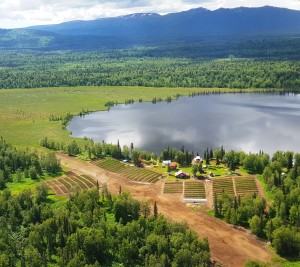
According to the USDA, EagleSong Family Peony Farm is one of America’s most remote farms. Located near the North base of Mt. Susitna, EagleSong grows over 12,000 peony roots in over 22 varieties. In addition to growing and selling peonies worldwide EagleSong also grows all types of vegetables to feed their crew throughout the summer and family through the winter, and hops for use by local micro breweries. EagleSong is one of the states largest peony farms and co-owner Mike Williams is the founding owner and managing partner of Alaska Peony Distributors, LLC, a commercial peony pack house that buys peonies for area farms. The peonies are transported to the pack house located at Lake Hood where they are inspected and graded, then marketed and sold around the world.

Before EagleSong became a success in the ever-growing Alaskan peony industry, Williams, along with his wife Paula purchased an old homestead and created the EagleSong Lodge in 1993.

“We were the traditional hunting and fishing lodge with some winter business catering to snow-machiners, dog mushers and acting as a checkpoint for various winter races. We gradually lost our salmon runs that sustained our summer business due to the invasion of northern pike. They ate up all the salmon. It is tough being a fishing lodge with no fish. During our peak there were over a dozen lodges operating around us. By 2009, we were the only lodge still open. We knew the end had come,” Williams said.

Forced to switch gears, the Williams family looked to peony farming to save their home.

“We didn’t want to leave our home of 15 years so we looked into farming and settled on peony farming since it primarily evolves around air transport which we had relied on since we moved here,” Williams said.

The homestead is a family run farm where the Williams family raised four children, as well as peonies and other vegetables. Beyond farming, other artistic endeavors that originate from EagleSong include hand carved birch and spruce sculptures by Mike Williams, an experienced commercial carver. While Paula uses her locally grown produce to further her culinary skills. A cookbook is in the works and is looking to be completed by 2017.

EagleSong is an avid host of volunteers from the World Wide Opportunities on Organic Farms organization, which matches volunteers and farms across the world for farm stays in exchange of labor and agricultural experience.

“We have hosted dozens of volunteers, WWOOF-ers and interns over the years and not one has gone away less than satisfied with their experience here. The farming experience coupled with the experience of living in back country Alaska is an opportunity that few ever experience,” Williams said. It is hard to put in a few words all the things our visitors can experience. Hard work at times, but the satisfaction at the end of the day brings them back for more. We insist all our visitors participate in the growing of the food we consume and give them the opportunity to create their favorite dishes so we can all experience their culture. It is not unusual to have WWOOF-ers from far flung parts of the globe. Last summer we had WWOOF-ers from Denmark, Germany, India, France, China and all over the U.S.”

EagleSong was the focus of a 13 episode series, called Building Alaska, last summer. The show finished airing in May and is currently playing in Europe.

You can find EagleSong at the Downtown Saturday Market selling peony roots, and a few flowers. They have been a fixture of the market for over ten years now.

For more information and to get in touch with Mike and Paula Williams at EagleSong you can visit their Facebook page or website, www.eaglesongalaska.com.

For TNL: Homemade fettuccine in the Widgeon II

Alaska, food, Print, Uncategorized

Originally published in The Northern Light

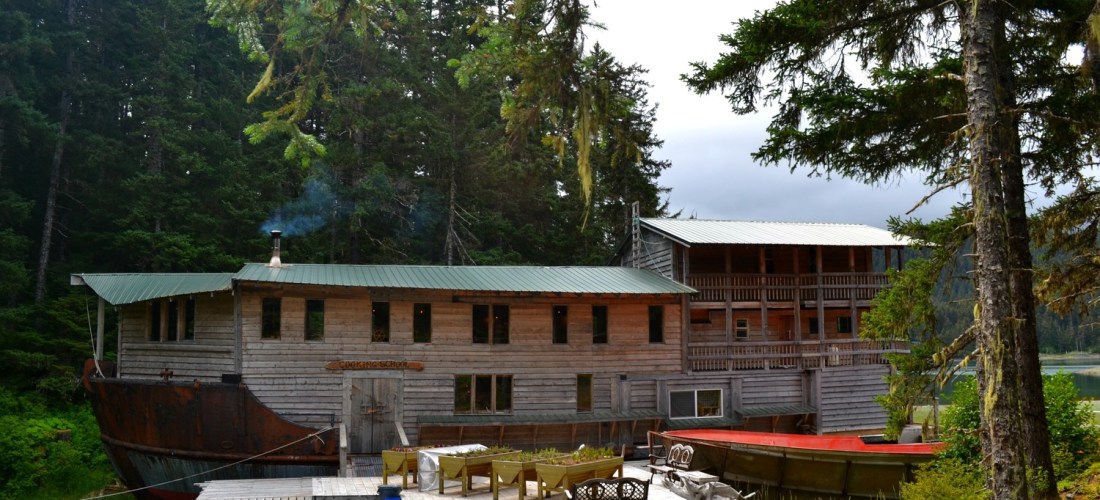
I just got home from spending the weekend at Tutka Bay Lodge, a remote lodge in Kachemak Bay. The lodge is home to a remote cooking school. The Widgeon II is a historic boat that went from a World War II vessel to a crabbing boat, and was drug up on to the beach of the remote lodge and transformed into the cooking school it is today. Unique and rustic, the cooking school is without running water and an oven. I was sponsored by UAA’s Department of Journalism to attend a food writing retreat hosted by Alaska’s own Julia O’Malley and New York Times Food editor Sam Sifton at the lodge. We ate, cooked, and wrote the weekend away. Here’s the homemade fettuccine recipe I derived  from this weekend.

download (24)

Homemade fettuccine

Hearing the word homemade followed by something you’ve only ever thought ywould buy can be daunting. I’ve made homemade pasta once in my life as part of a ‘culinary boot camp’ my parents put me in one summer as a kid. In the class we learned knife skills and basic cooking repertoire. Of all the things we did that week making pasta seemed to be the most time consuming and tedious task of them all. Flash forward a decade later in the Widgeon II, a remote cooking school in Kachemak Bay, I’m assembled with a small team consisting of a fellow writer and a gifted cook. Tasked to work with the ingredients at hand, we are inspired to make pesto, and the idea of pasta soon follows. Investigating to see if fettuccine was available, we were greeted without pasta, but with a clunky metal machine that I spent numerous afternoons avoiding as a kid. The ominous crank wasn’t enough to deter my hunger. I turned the crank and helped to feed the pasta through. Shocked at how little time it took to make such a small amount of flour go so far, I was having a revelation. Maybe making pasta isn’t as annoying as I thought? Maybe everything seems to take hours as an 11 year old? When the water was boiled and the pasta was done I tasted for doneness and it clicked. The kneading, feeding, and cranking was worth it for the delicate, melt-in-your-mouth, almost buttery consistency of the pasta. Create a taste you can’t buy from a store.

Ingredients:

2 ½ Cups of All-purpose flour

½ Tablespoon of kosher salt

6 Egg yolks

1 Egg

1 Tablespoon olive oil


Directions:

1.       In a large mixing bowl incorporate 2 cups of flour and salt. Create a well in the center of the flour.

2.       Place the olive oil, egg yolks and the egg into the well and with two fingers whisk the eggs into the flour until a tacky dough is formed.

3.       Knead the dough  for about 7 – 10 minutes. Set aside and cover with plastic. Allow to rest for a minimum of 20 minutes.

4.       While dough is resting set up pasta roller and cutter per manufacturer’s instructions.

5.       After the dough has rested cut into even thirds. Set the excess two aside, keeping them covered, and work with the first third by flattening the leading edge until it reaches about ½ inch in thickness.

6.       Feed the flattened dough through the pasta roller on the widest setting. Once the dough has been fed through, take the stretched dough and fold into thirds. Dust the pasta dough with flour if tacky.

7.       Repeat step 6 ten times, folding the pasta into thirds each time, creating layers.

8.       Once the layers are created, proceed to thinning and stretching the pasta dough. Reducing the width of the rollers each pass through until you have reduced the width 8 times. Dust the dough with flour as needed.

9.       Add the pasta cutter attachment to the pasta making machine per manufacturer’s instructions. With the widest pasta cutter setting or the fettuccine setting, feed the pasta sheet through the cutter. Once pasta has been cut dust liberally with flour and form the pasta into a small nest, set aside and cover with plastic.

10.   Follow steps 5 – 9 with the other two pasta dough thirds.


Directions to cook pasta:

1.       Fill a large deep pot with 2 quarts of water and bring to a boil.

2.       Once the water has been brought to a boil, toss in 3 – 4 tablespoons of salt.

3.       Shake the remaining flour off the pasta before placing the pasta into the boiling water.  Sir the pasta until the water has returned to a boil, and allow to cook until desired doneness, approximately 2 – 4 minutes.

4.       Once pasta has reached desired doneness, reserve a cup of the cooking water for later. Drain the water and serve.

Time: 1 hour

Yield: 6 – 8 servings

For TNL: The Writer’s Block and the Spenardian Renaissance

Alaska, Print, Spenard, Uncategorized

Originally published in The Northern Light.

In October of 2015, Vered Mares purchased Adults Only, a pornography shop in the Spenard area that had been in business for decades. Mares had the idea and business model of changing it into a bookstore with a full service cafe and art space. The current building, which is two trailers hooked together, will be demolished this May. After, she will begin construction on a new building twice the size of the current one.

“it’s sort of the last vestige of the Spenard old red lights district, you know, that’s what this place was back in the heyday. It was a pornography store, but I think it was also a whole lot more than that. What was once a fairly undesirable business in a neighborhood is being turned into something that can really be part of the neighborhood,” Mares said.

13020255_10201667409764749_1217084460_n

Spenard is known for its scandalous past as the place on the outskirts of tent city where people went to have a good time. From crack houses, rowdy bars and pornography shops, Spenard has rejuvenated itself in recent history to be known as a funky and engaging part of the Anchorage community. With the introduction of specialty shops, popular bars and restaurants the neighborhood is being transformed in a Spenardian Renaissance. Mares, her many business partners and volunteers have been working since fall of 2015 to transform what was once an element of Spenard’s less than desirable past, to something that will benefit and engage the entire community.

“This neighborhood has a history and whether we like it or not it’s part of Anchorage, it’s part of Spenard, it’s part of Alaska,” Mares said. “It wouldn’t have the same interesting and quirky flavor without that history.”

download (8)

The Spenard Renaissance is made possible by the creative people who live, work and play in the neighborhood. With boutiques, local bars and restaurants, and the introduction of Writer’s Block Bookstore and Cafe allowing a place for people in the community to come out and freely express themselves the neighborhood is changing from the inside out.

download (8)

“It’s easy to be excited with change. What’s really interesting is that the groups of artists that are engaging in these events are looking at the neighborhood on the whole as a place of creativity, as a conglomerate of creative resources. It’s easy to see what’s there. But it takes artists to see what’s more,” Sarah Davies, local artist and creator of the 100 Stones project, said

The idea for Writer’s Block Bookstore and Cafe came from Mares’ frustrations on what the community offered and didn’t offer.

download (9)

“When I first moved to Alaska, almost 10 years ago, what really irritated me was that I couldn’t get a really great cup of coffee after 8 p.m. There also weren’t any independent bookstores. These were the three things that sort of ruled my life up until they were gone,” Mares said.

The bookstore will have a full service kitchen and cafe, selling an eclectic mix of international dishes and comfort food. Mares hopes to incorporate dishes less commonly found in Anchorage while infusing foods from her Israeli and New Mexican heritage. The cafe will have a typical coffee menu as well as a sophisticated selection of coffee from around the world. The cafe will also hold a beer and wine license.

In addition to the cafe, the space will also allow a place for artists of all types to congregate and share their art. Whether it’s writing, sculpture, painting, photography or music, Writer’s Block will have a space to showcase local artists.

“We are trying to keep as much as our business as local as humanly possible, from where the food comes from to where the books come from to who we hire and how we engage in the community. Anchorage has an incredible creative community that I think is still untapped and is underrepresented,” Mares said.

With an emphasis on local artists, it is Writers Block Bookstore and Cafe’s number one priority to give preference to Alaskan authors. Mares wants to feature local writers in her bookstore, but will also provide a myriad of other literature. All books being sold will be new.

“Right now we don’t have an independent bookstore in Anchorage, there’s not really an avenue for new literature that’s not in a large corporate model that exists in Anchorage,” Mares said. “We want to engage with our local literary community first and foremost. We’ve got some amazing writers here and we want to be able to showcase them here. Some of your favorite writers might be down the street from you and you just never knew it. We want to support our local writers as much as possible.”

Before construction even begins the business is giving a place for artists to thrive. While Mares and her team are waiting for the construction to begin and the old building to be demolished, local artists were asked to occupy the building as an interactive community art piece.

DSC_0478

Three events are taking place this month to allow the community to engage in the installation and the vision of “Transforming ADULTS ONLY,” as the series of events is being called. For three consecutive Fridays, starting April 15, the community is invited to participate in the events featuring local artists, food trucks, musicians and performers from around the city to pay homage to the past and get involved in the future of the neighborhood.

“These three events will be celebrating what Spenard once was and where it is going. As far as I know, this is really the last iconic reminder of Spenard’s past and it will be torn down in May for the Writer’s Block, a business that seems to better represent the residents and frequenters of Spenard these days, as many creative types choose this part of town for their homes and places to spend time…” Val Svancara, Outreach and Engagement Coordinator for the Transforming ADULTS ONLY events, said. “In fact, many of the artists working on this event are Spenard-based.”

DSC_0483

Many have seen Mares efforts as gentrification of the neighborhood. Mares wants Writer’s Block Bookstore and Cafe to be a place for her neighborhood to enjoy and be a part of.

“It’s not about gentrification, this term gets brought up a lot when I’ve been talking to people. It’s not about gentrifying, I don’t want to change Spenard. I want to bring more of the fun, quirky, unique elements of Spenard and bring them into a central location. This is where I live too, I don’t live in another part of town or even outside of town I live half a block off of Spenard road.” Mares said.

Mares is currently raising money through a GoFundME account (https://www.gofundme.com/pb7nl8) which has raised over $20,000. All of the proceeds of the GoFundME account will go towards construction and opening the doors of Writer’s Block Bookstore and Cafe. With certain awards offered for particular contributions patrons will receive more than just a good feeling for contributing to Mares efforts. From a cup of coffee to having a bar stool dedicated in your honor, those who donate will receive more than just a thank you.

download (7)

The series of Transforming ADULTS ONLY events will take place every Friday for the rest of April: April 15, 22, and 29 from 6-8 p.m. The events are free of charge and will provide local entertainment, lawn games, food trucks, a beer garden sponsored by Spenard Roadhouse and community involvement. The Writer’s Block Bookstore and Cafe plans on opening their doors this fall.
For TNL: Welcome to Anchorage’s SONO district

Alaska, Print, Uncategorized

Originally published in The Northern Light.

Welcome to the SoNo district. A few blocks and even fewer stores sprawled across Sixth Avenue to Eighth Avenue, and then from E street to C Street, compromise the area of downtown Anchorage known as the SoNo district.

Created through collaboration by local businesses in the area in 2005, the SoNo district became the first official district in downtown Anchorage. The district was proclaimed by Mayor Mark Begich Dec. 1, 2005. The goal of SoNo is to create a destination that is recognizable by locals and tourists as a destination for shopping and entertainment.

“Our goal with SoNo was to create a hip shopping and dining destination downtown. Over the years we have organized Fashion Shows and group promotions to attract customers to our district,” Ellen Arvold, owner of Second Run, said.

Notable stores and businesses in the SoNo district include Bernie’s Bungalow Lounge, Chez Ritz, Second Run, Blush Boutique and Houtghton Hill.

SoNo, or South of Nordstrom, pays homage to the trendy and hip neighborhood SoHo [South of Houston street] of Lower Manhattan. SoHo derived its name from urban planner Chester Rapkin, who used the short and catchy name as a way to attract real estate investors to the area. It worked and SoHo, once a largely abandoned textile industrial area, soon became the destination for artists and wealthy people alike.

Unlike SoHo, SoNo is riding the wave of notoriety brought by the success of SoHo’s re-vamp. Although, like SoHo, SoNo is a destination filled with particular shops and boutiques attracting a higher class and more style savvy shopper.

“I think that there are some very nice places in Anchorage to shop, but I don’t think people in Anchorage really seek out high fashion, and more often than not laugh at it for being so impractical. I think the boutiques that do best in Anchorage have brought high-end but not necessarily high-fashion that is great quality and durable, and practical for the climate,” Cleo Anderson, who has worked in downtown Anchorage and is an artist at Beyond Beads boutique, said.

Most people who are familiar with the boutiques in the area have adopted the term, South of Nordstrom, hence the creation of the district.

“We have seen the name catch on, but it is more of an easy term to describe our location to people unfamiliar with the area,” VaLori Gianni, store manager of Blush Boutique since 2010, said.

Others are less familiar with the SoNo district and the vision the stores that encompass it want to portray.

“Yeah I’ve heard of SoNo, but I didn’t know that they made it up themselves. I feel like if they associated that term with shopping and fashion more frequently on social media or in their stores, people might start to think of that area as a shopping destination. But I can’t say I feel like they’ve created that image yet,” Anderson said.

There are some who have never heard of the district at all.

Jenelle Bennett, who’s been working in the downtown area for years, has never heard the term SoNo.

“I have no clue what SoNo is. Should I know? Does it go by a different name? No I think you’re the first person who’s ever mentioned it to me,” Bennett said.

As well as Britt McLeod, who worked at Kill Joy downtown until they closed, has also never heard of the district of downtown.

“I’ve never heard of SoNo district. How long as it been around? What is it?” McLeod said.

Since the creation of SoNo district two other districts, G Street Arts District and Convention Center District, in downtown Anchorage have been proclaimed as a part of the downtown renewal project, a project aimed at revitalizing downtown Anchorage.

College Cookbook: Aphrodisiac Alaskana

Alaska, college cookbook, food, Print, Uncategorized

Originally published in The Northern Light.

 It seems like the last thing college kids need is a list of foods that will make them horny. Aren’t our hormones rampant enough already? The desire for sex is evident across all cultures spanning over thousands of years; as has the desire to find the perfect potion to get anyone in the mood.

An aphrodisiac is considered to be any substance that’s consumed to increase libido. Popular aphrodisiacs you may have heard of before include oysters, dark chocolate and red wine. With little research on the effect of aphrodisiacs, most evidence is subjective. Whether it’s a placebo effect or the real deal, a delicious aphrodisiac inspired meal this Valentine’s Day is sure to please any date, in or out of the bedroom.

From the dangerously delicious to the down-right disgusting, aphrodisiacs vary and may even be counter-intuitive. Balut, the Filipino delicacy that is fertilized duck egg, is famous for its aphrodisiac qualities. In my travels to the Philippines, I tried Balut, and the only desire I had afterwards was to vomit. If you’re curious, or desperate, you can find Balut at the New Sagaya Midtown Market.

For an Alaskan themed Valentine’s dinner, focus on fresh seafood, especially oysters. Make your way over to the Bubbly Mermaid in downtown Anchorage where they have a monopoly on the best oysters and champagne in town, creating the perfect recipe for a romantic evening. Legend has it that Aphrodite arose from the sea in an oyster shell as the Goddess of love and fertility. Salmon is said to have aphrodisiac elements as well. For the adventurous eater, crushed up caribou antler and bear claw are sought out by the Far East as a powerful aphrodisiac. I do not recommend trying to get your hands on it, but the oosik bone — the baculum or penal bone of walruses, seals, sea lions and polar bears — is sold on the black market by Native Alaskan’s to buyers in Asia who prize the bone as an aphrodisiac, according to Jeremy Sacks, author of “Culture, Cash or Calories: Interpreting Alaska Native Subsistence Rights.”

Champagne and red wine is a Valentine’s Day classic, but don’t totally rule out the power of beer. Before beer was made with hops it was produced using gruit, a collection of herbs used to bitter and flavor beer. The use of gruit was left to the wayside when the puritan and protestant brewers wanted to phase out the, apparently, aphrodisiac qualities that gruit supposedly possess. Using hops grew in popularity and has been the norm in beer ever since. However, modern brewers are looking to this old fashioned way of making beer as a unique way of flavoring their ales. Breweries in Alaska, in fact, are venturing into the gruit world. Alaska Brewing Company’s Alaska Winter Ale, is made with a combination of gruit and hops, as is the Baranof Island Brewing Company’s Sitka Spruce Tip Ale. The aphrodisiac qualities of these specific beers are unknown, but it’s worth a shot.

Whether fact or fiction many of the above mentioned foods will make for a great dinner, snack or even conversation starter.

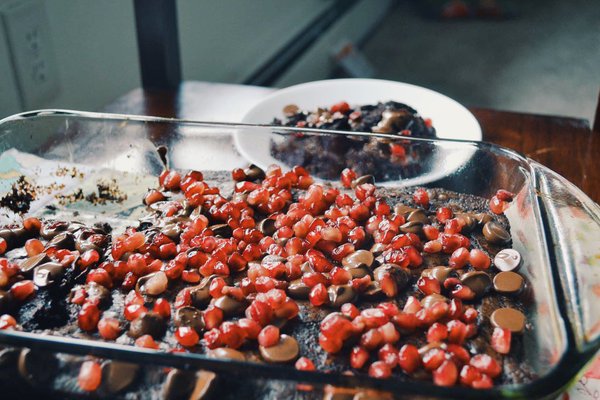
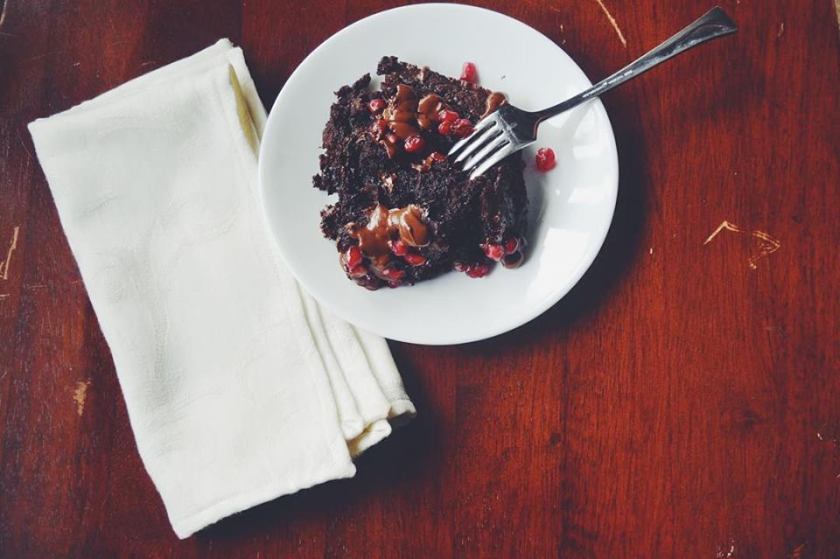
Inspired by a recipe I found on Pinterest, this recipe was posted on the food blog “With food+love” and was titled Pomegranate brownies with cacao nibs and sea salt. I decided to give it the college student spin and make it for myself. I used a box brownie mix and dark chocolate chips instead of cacao nibs and bought pomegranate seeds already harvested from the fruit, which made the process much simpler. I also opted out of the sea salt as I felt there was already so much going on with the brownie as is. Don’t forget to account for the ingredients needed as part of the box brownie mix. This usually includes one or two eggs and oil.

Red wine and dark chocolate brownies with pomegranates.

Ingredients:

One box of brownie mix and ingredients that correspond with the mix (I used a dark chocolate brownie mix)

1 and 1/2 cup of dark chocolate chips

1 cup of red wine (I used a red blend)

1 pomegranate or 1 package of pomegranate seeds

Directions:

1. Spray the baking pan with cooking oil and preheat the oven to the temperature indicated on the box.

2. Prepare the brownie mix as indicated on the box.

3. Pour one cup of the chocolate chips into the brownie batter and stir them in until mixed well.

4. Pour the entire bowl of batter into the oiled baking pan until all the batter is evenly distributed into the bowl.

5. When the oven is preheated cook the brownies for the time indicated on the box.

6. Check the brownies periodically by putting a fork in the brownies and seeing if the fork comes out clean.

7. When the brownies are done immediately sprinkle the 1/2 cup of dark chocolate chips over the brownies.

8. Sprinkle the pomegranate seeds over the brownies.

9. Let brownies cool for about 15 minutes and serve to the one you love.

For TNL: Record revival: Music’s comeback kid

Alaska, News, Print, Uncategorized

Originally published in The Northern Light.

In an age where virtually all music is in the palm of our hands, it’s hard to believe why anyone would opt for an outdated analog format of listening to music. Despite Apple music, Spotify, Tidal, good ol’ fashioned YouTube, and other music sharing software and apps the vinyl revival is well on its way into 2015 and is spearheaded by an unlikely generation – the millennials. Those late teen to thirty-something-year old’s are putting vinyl LP’s (long playing albums) back on the shelf in a neighborhood near you.

One half of all record purchases are by people 25 and younger according to research done by Music Watch. With over 13 million vinyl albums sold in 2014, this is the highest vinyl sales have been since 1989, according to the Recording Industry Association of America.

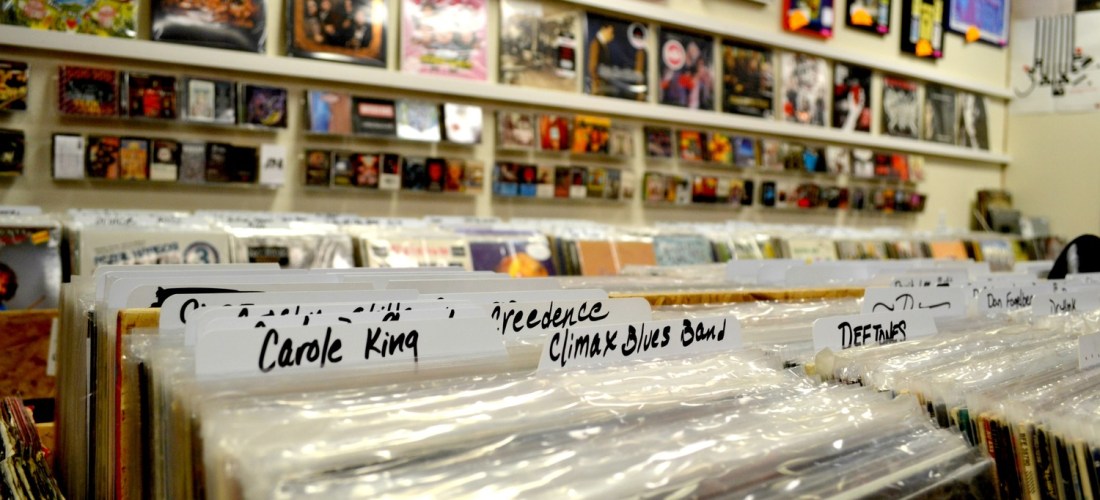
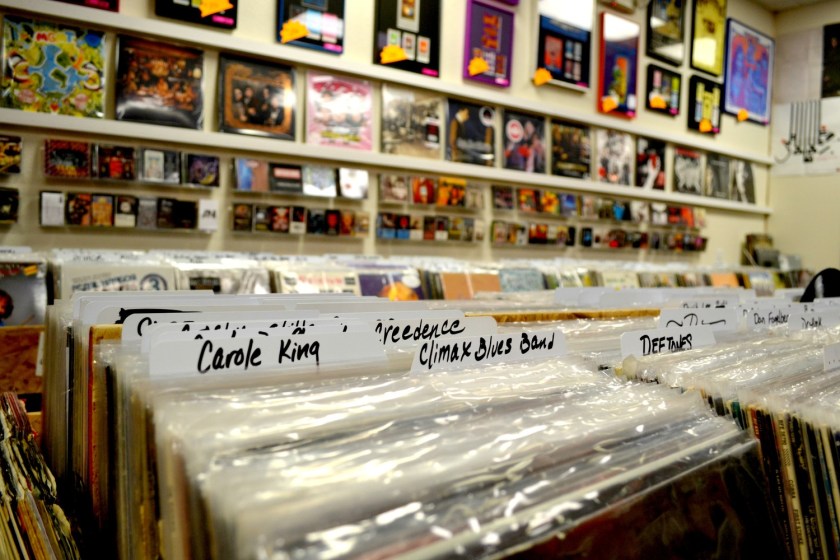
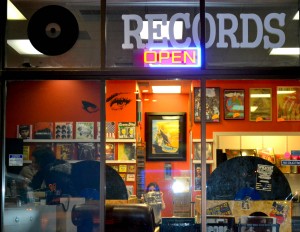
In Anchorage, vinyl records are available in multiple locations; Title Wave, Barnes and Noble, and Anchorage’s newest record shop Obsession Records. Obsession Records opened its doors on Nov. 28, 2014. Verna Haynes runs the shop alongside her husband and son where they buy and sell vinyl records as well as electronics, turntables and speakers.

Nostalgia was the main proponent in Steve and Verna Haynes conception of Obsession records. Their collection grew as did their desire to share with the community their love of vinyl and music.

“Years ago, my sister dragged home a few boxes of records and we had this nostalgic moment and had so much fun looking through them. All of the sudden, it became this thing and he [Steve] just sort of took off with it. All of a sudden he’s out there and he’s chasing records and collecting, and then we had this huge collection. He wanted to be able to communicate with other people that like vinyl, that like music,” said Vema.

The shop has all walks of life come through the doors, but it’s the millennials that want to take vinyl to the next level, with better sound quality and modern music.

“I’ve got that 20-30 year old range and they got jobs and they can invest in the better turntable and better components, and they are at a point where they can take it a step further. They want better sound, that kind of thing, invest a little more money. They are serious about their vinyl, they want quality vinyl, they want it to sound good. Then you have people like me in their 50’s who are coming back to it.” said Vema.

Hannah Dorough, UAA English major with a love of vinyl, can thank her parents for introducing her to the record world. Dorough doesn’t think vinyl is coming back, but that it never left.

“I mean, I like it because vinyl is cool. And you get this awesome feeling when you listen to them. It’s like the musical equivalent to opening that old, dusty book, you know? It’s just cooler to have on vinyl and just feels good to listen to. Honestly, they never truly went out of style. Like the people who love vinyl still love it, still buy it. Even CD’s are rarely bought anymore, but the people who love them go out and buy them,” said Dorough.

Local musician Ian Wahl, age 21, grew up listening and playing music. Wahl appreciates the opportunity vinyl gives you to listen to the music as the artist intended, something Wahl believes is hard to come by.

“I think the appeal has a lot to to with the look and feel of vinyl. I also tend to only listen to older records so it kind of makes me feel closer to the artist that recorded the tracks because that is the way they heard their music and the music that inspired them. In this day you can go online and find almost any song ever recorded and released, but with vinyl you have to hunt through second hand stores and garage sales to find a certain artist or record which makes listening to it more rewarding. I also like having a whole record because I hear songs that I might otherwise not have on B sides of albums that weren’t remembered. When you go online and look for a certain song you find it and play it and you get the other top 40s hits from that artist and genre but you don’t hear the song in the context of what that artist was feeling and creating at that time.” said Wahl.

With a nostalgia transcending generations and a sense of pride, vinyl gives millennials a fascinating and traditional format of listening to music and expressing themselves. Whether you’re a 50-year-old whose always had a love for vinyl and never believed it went out of style, or a 22-year-old with a box of old records your grandparents gave you, vinyl is here to stay