For ADN: The Mowgli’s bring California vibes for Anchorage show

Alaska, Print, Uncategorized

Originally published in Alaska Dispatch News

Most of the members of The Mowgli’s met while growing up together in the Los Angeles area, but it wasn’t until college that the group coalesced around the upbeat sound that would become the six-piece band’s trademark.

“California kind of has a style and a vibe and our music encapsulates that in some way. It’s got a sunniness to it,” said Katie Earl, one of the lead vocalists. “We definitely have a goal to make people feel less alone and ideally inject a little positivity out into the world.”

The band — whose name was inspired by a friend’s dog named after Mowgli, from “The Jungle Book” — channels pop, garage rock and indie folk with a dash of boy band flair. But Earl said they’re resistant to much in the way of genre descriptors.

“I think genre is kind of dead — I could throw six words at you right now. Pop, rock, I really don’t know. I think genres are molding together. Whatever the listener feels like it is, is what it is to me,” Earl said.

The Mowgli’s music follows the pop traditions of the Beach Boys and One Direction with a hint of the indie garage rock sound of Fidlar and Weezer. With a little electronic keyboard, anthem-like lyrics and get-up-and-dance beats, their sound is like a background soundtrack to a late-night summer beach party.

The band’s latest album — “Where’d Your Weekend Go?” — was released in September and keeps with the same simple energetic pop/rock sound.

“A lot of the band grew up on the Beatles. Some of the band listens to punk, emo, rap, R&B. We all just have a lot of different influences,” Earl said.

The Mowgli’s website notes that “I’m Good” was written for an anti-bullying campaign and “Room For All Of Us” was created in support of the International Rescue Committee.

“We definitely make music and write lyrics to make people feel a little less alone and a little better about themselves, because we think the world can be a better place with a little more positivity,” Earl said.

For TNL: Haunted tales of the Wendy Williamson

Alaska, Print, Uncategorized

Originally published in The Northern Light

Mysterious doors that lead to a wall, showers and sinks running on their own, pianos playing by themselves, an elevator shaft that leads nowhere and lights that will never reach the stage are just a handful of the spooky scenarios that have occurred in the Wendy Williamson Auditorium.

With construction beginning in 1973, the auditorium sat dormant for 18 months before money became available to finish the building. When the builders finally completed the building, there were multiple mistakes.

Creating doors that lead to walls, an elevator shaft that leads to a second floor that never was, a catwalk visible to no one and a spotlight room angled in a way that makes it impossible to spotlight the stage are just a few of the unusual engineering aspects of the auditorium.

Many cultures attribute energy to spaces. The Confucius Institute has even been said to have visited the auditorium; telling the manager that the energy of the space was evil and the feng shui was all wrong.

“The lightroom is by far the most sinister, but all the place is funky,” Shane Mitchell, a UAA alum, the auditorium’s manager and director at TBA theater, said.

Mitchell, who has worked in the auditorium for twenty years began his relationship with the theater as a student in UAA’s theater program in the 80s.

“When I started here in 1982, the place had a reputation for being haunted. It hadn’t even been open for a decade yet,” Shane Mitchell said.

The auditorium bears the name of John Wendell Williamson, professor of music at UAA since 1971. Williamson, nicknamed Wendy, passed away in 1988. The auditorium was named in his honor.

“Weird things happened way before he passed on,” Shane Mitchell said.

Shane Mitchell has his own share of less-than-ordinary occurrences. Once while acting in a performance of “The Monkey’s Paw,” Mitchell opened up the coffin he was going to use during the show, backstage. The cast and crew surrounded him as he lifted the coffin to see what was left inside by other cast members. As Mitchell opened the coffin door, all the props for the show flew off a table and against the wall, just about ten feet away from them.

“It became a habit to open up the coffin backstage before I went on. The whole cast gathered around me to crack up. With all the cast around me, all the props flew off the prop table, against the wall. Like someone flew them off with their arms,” Shane Mitchell said.

In that same show, about 350 school age kids were in attendance on a field trip. A question and answer session soon followed the conclusion of the show.

“This one kid raises his hand and says, ‘at the end of the play, how did you make the lady in the white dress float above your heads?’ The director said ‘what?’, then the teacher said, ‘he just wanted to know how the special effect worked.’ The director said ‘next question.’ There was no special effect,” Shane Mitchell said.

Many years ago, a self-proclaimed psychic and FBI profiler toured the building and sent a thorough document explaining the energy and presence inhabiting the auditorium.

“She mailed a document that listed things that made her seem pretty credible in our eyes. She said she sensed five beings, one of a little girl who died in an automobile accident on Lake Otis, the ghost of a teen boy, a young woman, and two men, one kindly and one violent,” Shane Mitchell said.

“The worst part is people always ask ‘did you see something or hear something,’ you get these horrible, horrible feelings that you’re just not safe. I can explain anything I see or hear, but something I feel? I’ve had things happen that I can’t explain,” Shane Mitchell said.

Twin brother of Shane, Wayne Mitchell, is a technician in the auditorium who has his own share of spooky tales.

“There used to be a nighttime janitor here, after a while he stopped coming and asked what happened to him. I was told he got reassigned because he doesn’t want to be where the ghosts are. This was all based on his own experience,” Wayne Mitchell said.

In an attempt to de-spook the building, different members of the auditorium’s staff have brought different items or symbols to ward off evil spirits and energy.

“Different people who have different cultures bring different items of charm. There’s a Pennsylvania Dutch design hanging on the wall, Celtic knots carved into walls, a lady had a statue of the Virgin Mary filled with holy water that she set above the door. Although, right after the place was smudged, stuff started to happen for about 12 days. All it did was irritate them,” Shane Mitchell said.

Not all who spend time in the auditorium experience events unexplained, but the rumors are abundant and enough to give anyone the creeps when they enter the depths of the Williamson auditorium.

“I haven’t actually seen anything scary happen. But from hearing it is haunted so many times over the years, I definitely get creeped out if I’m there working an event by myself. But mostly because I’m a scaredy-cat,” Garren Volper, a UAA student activities employee and frequent participant in the annual Anchorage Folk Fest, said.

On the center wall of the main lobby of the auditorium sits a large bolt. What once bolstered the large portrait of Wendy Williamson, is now a dark dot, sitting as a reminder of the mysterious happenings of the auditorium.

When Shane Mitchell began his career at the auditorium, he found a painting of the Williamson himself, playing the piano. He pleaded with his manager at the time to hang it up, but was swiftly told no. When Mitchell became manager, him and his brother decided to hang the painting up to commemorate the late professor and building namesake. They proudly hung the painting up in the foyer of the lobby for all to see. The next morning the painting was on the ground. This scenario repeated itself multiple times, until one day while Wayne Mitchell was hanging up the portrait the wire on the back snapped, fell to the ground, tearing the carpet, and breaking the floor beneath it — the painting and frame unharmed. The Mitchell brothers put the mysterious painting back into storage, eventually to bring out just one more time to hang in the green room. The next morning, the painting was not on the wall, but on the ground. The Mitchell’s put it back into storage where it sits today.

“It’s not the most flattering portrait. Maybe Wendy hates it?” Shane Mitchell said.

While these experiences are mysterious, the painting itself is unusual in its own right. The painting has no date and no artist signage. It is unknown who painted the painting and when. It bears resemblance to the late Wendy Williamson, but without a title, date, or artist signature, who’s to say?

With numerous stories of his own, Shane Mitchell is the main guy for others to report their unusual happenings to. Audience members, pageant members, musicians, actors, employees and janitors to just name a few of the folks who go to Shane Mitchell with their ghost tales.

“Just about everybody who spends any length of time in the Williamson ends up experiencing some stuff. I think everyone has their thing they can’t explain. There are people who embrace it and people who don’t want to embrace that,” Shane Mitchell said.

The ghost of Wendy Williamson is said to have visited the auditorium himself. Playing jovial piano music in the lobby during classes or rehearsals.

“You’d be up on stage and you can hear someone playing a piano in the lobby. I would come down these stairs and around the corner and nobody would be sitting there at the piano,” Shane Mitchell said.

Although no one has died in the auditorium, many students or artists at UAA have passed away who have ties and traditions with the building. Whether haunted or not, the Wendy Williamson auditorium puts on quite the show.


For Show Me Alaska: Conquering the Denali Park Road

Alaska, Online, Uncategorized

Originally published in Show Me Alaska

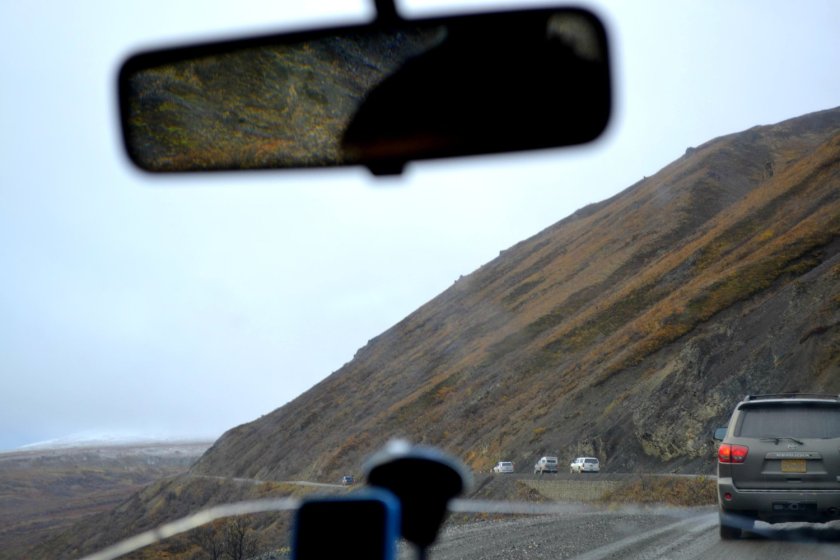
One moment we were enjoying the ride through Polychrome Pass. The next, we were nearly teetering on the edge of a cliff with the wind rocking the car and a sandstorm brewing right outside our windows.

In September 2012, my parents won their first ticket in the Denali National Park road lottery. A rare opportunity afforded to several hundred lucky Alaskans every year, the ticket allows you one day in the park with your own private vehicle. My stepmom, my grandmother and my aunt packed up the Subaru and made our way north. Binoculars, cameras and a sense of adventure accompanied us on what was sure to be a memorable drive.

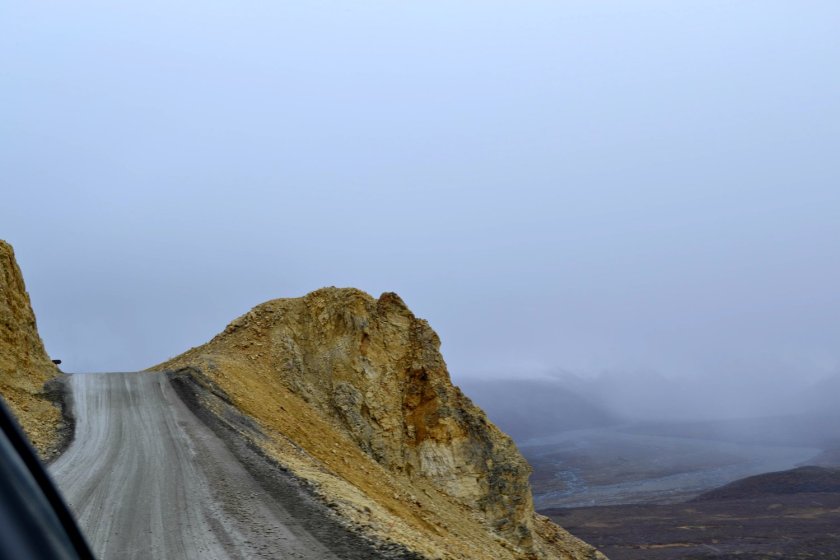
The weather was windy and rainy but we were determined to get the most of Denali. We made our way to Polychrome Pass, a beautiful and unforgiving stretch of narrow dirt road: hanging rocks and steep slopes on one side and at least a 500-foot drop on the other. We continued on. Loose gravel from the mountainside was picked up by what were now hurricane force winds. Lack of visibility was becoming an issue, but we persisted.

Then there was no visibility whatsoever. We began to panic. The wind got stronger and stronger and with one large gust, the car shook and the rear window of my stepmom’s new Subaru Forester shattered. Dirt and rocks blew inside. In the back seat, I ducked my head as my stepmom stepped on the gas and propelled the car into the sandstorm’s abyss.

Getting out of Polychrome Pass felt like an eternity. I kept my head on my grandmother’s lap, covered with a jacket to recover from the ferocious windstorm we passed through. We duct taped a garbage bag over the rear window and made a beeline back home to Anchorage. My parents have won the lottery and visited the park every year since. They always invite me and I always decline; too soured by the memories of being a little too close to the edge.

But this year I’m back.

A unique opportunity reserved only for Alaska residents, the Denali Park Road lottery began in 1990. In the 1980s the road was congested with over 2,000 cars a day, according to the National Park Service, and NPS decided to implement a lottery system, capped at 300 cars a day at the time, to reduce the amount of traffic on the narrow dirt road.  In 1994, the cap was raised to 400 vehicles a day, where it remains today. The National Park Service receives around 10,000 applications annually for the 1,600 tickets offered in September of every year.

To enter the lottery an Alaskan will pay the $10 entry fee, and if that Alaskan’s ticket is chosen, an additional $25 road lottery fee. Upon entering the park, the driver and attendees will visit the visitor’s center and pick up their permit and pay the $10 park fee. Winners of the road lottery can forfeit their tickets to friends and family with a small note and signature on their printed confirmation. Each ticket is good for a permit for one private vehicle or, for the more adventurous, motorcycle. The permit allows the vehicle and its passengers access to the park road for the entire day (6 a.m. – midnight). The lottery takes place on a Friday, Saturday, Sunday and Monday in mid-September.

This year I drove with my cousin Quinn and his girlfriend Tressa. We rallied our way to the park entrance, excited for wildlife and whatever lay ahead. We packed the Subaru with snacks and drinks. Quinn, a first-time road lottery participant and experienced mountain climber, made a successful trek to the summit of Denali back in 2013; Tressa was a park newcomer, eager to see the mountain in all of its glory.

It is important to check the weather before you go and to plan accordingly. It is not uncommon for the weather to change dramatically in a short amount of time.

As we rounded the corner into Polychrome Pass, the golden-colored canyon rocks came into view, sparking an immediate flashback to that unforgettable drive four years prior.

This year, we made our way to end of the dirt road, driving more than 90 miles, socked in by a mild snowstorm; the landscape dusted white, the mountain as mysterious and elusive as ever. This year, I saw Wonder Lake, the remote ranger station and the historic cabin of Joe and Fannie Quigley, famed miners of the early twentieth century.

One bear and three bull moose later, we left the park and were back on the Parks Highway headed home; this time with great memories of the Denali Park Road.

For TNL: Urban indoor farm to provide fresh produce to Anchorage

Alaska, food, Print, Uncategorized

Originally published in The Northern Light

In the land of the midnight sun, the endless sunshine can raise monster 130 pound cabbages, 1,200 pound pumpkins and 35 pound broccoli from the fertile soils of the Matanuska-Susitna Valley. We flock to farmers markets to reap the rewards of valley farmers and savor the flavors of our Alaskan-grown produce. As the frost begins to settle and the season ends, Alaskans grow nostalgic for freshness in anything. Jason Smith, a UAA alumni who graduated with an undergraduate degree in geomatics and a master’s degree in business administration, is bridging the fresh food gap in Anchorage.

Residing inside the old Matanuska Maid building in Spenard, Alaska Natural Organics is Smith’s hydroponic vertical farm, where he harvests produce for restaurants and the Anchorage community.

Alaska Natural Organics was approved for funding in 2014 and provides fresh, locally grown produce to many local Alaskan restaurants including 49th State Brewing Company, Midnight Sun Brewing Company, Hearth, Bear Tooth Theatrepup, Romano’s, Ginger, Rush Espresso, Sacks Cafe, Snow City Cafe, Spenard Roadhouse, South Restaurant + Coffee House and Pangea. Beyond local restaurants, Alaska Natural Organics also sells their basil through Carrs and Fred Meyer. Marketing their Alaska grown produce has come with its own unique set of challenges.

“One of the challenges we have is that everyone says they want to buy local, but there’s people down in the southern California working for a whole lot cheaper, and it brings the price way down. That’s been a hurdle,” Smith said.

Locally grown produce may be worth the extra money. With higher nutritional value and the potential to improve the local economy, buying local could help Alaskans invest in their community.

“On the one hand, local means higher nutrition value. The nutritional value of produce degrades very quickly days after harvest, so you’ll increase the nutrition if you buy it as fresh as possible,” Smith said. “It helps our economy, it stabilizes jobs in the state and it gives us a bit more independence from outside sources. We got one road and a port to bring our food here. It’s a perpetual task so our food can come into the state.”

Bear Tooth, one of Anchorage’s local restaurants make use of what Alaska Natural Organics has to offer, and is even looking into buying basil from the vertical farm all year round. The popular Spenard restaurant uses an average of 15 pounds of basil a week, mostly being used in pesto sauces.

“We are working to get [basil] from Alaska Natural Organics, we are getting some from them currently. He’s someone who can produce for us in a way where we can use year round. Our goal is to be able to go all out with them,” Stephanie Johnson, general manager at Bear Tooth said.

Bear Tooth who uses a myriad of Alaska grown and made products from around the state, seeks out local products to showcase in their restaurant.

“It’s always ideal for us whenever possible because you lose a lot of flavor the farther away something is. Everything being fresher is ideal. When you work with locally grown food, people are far more willing to work with you. The Bears Tooth had a pretty strong commitment [to local products], prior to me being here. It’s something I’ve been doing at other places as well, so I brought my enthusiasm for it,” Natalie Janicka, Executive chef at Bear Tooth said.

With more awareness for locally grown produce and items in Alaska, awareness is growing and farmers and consumers alike are taking advantage.

“I think years and years ago when we first wanted to start carrying Alaskan grown products there were far less distributors. It was a lot of going to the same three produce distributors. At one point, the only thing that you could get was lettuce, that made sense for us at least. It was super challenging,” Johnson said. “It’s getting easier all the time. There’s such a culture of local food now.”

Options for local food when the winter chill begins to settle over the state are more abundant than previously thought. With Alaska Natural Organics providing fresh greens year round, one can taste the fresh and nutritional bounty of a local grower in the comfort of their favorite restaurant or bought from Carrs or Fred Meyer.

Fresh basil from Alaska Natural organics can be bought at Carrs and Fred Meyer. Other options for locally grown and made products is the Center Market, Alaska’s only year round farmers market located in the Sears mall. The market operates in the mornings and afternoons on Wednesdays and Saturdays throughout the year.

For TNL: UAA Professor Offers Solutions to Alaska’s Roadway Problem

Alaska, News, Print, Uncategorized

Originally published in The Northern Light

Learning to dodge potholes and control your car in ruts is just part of learning to drive in Alaska. Professor Osama Abaza is hoping to change this.

In the civil engineering department, Abaza and his team are researching and working alongside the department of transportation to tackle the issues of Alaska’s highways.

For over 10 years, Abaza has worked with a myriad of student researchers to come up with, test and experiment with a new form of concrete. This rubberized concrete uses crushed up waste tires and is strengthened with steel fiber. The combination allows for durability as well as flexibility, both of which are important for climate-related road expansion and contraction.

“This research could revolutionize how materials engineer combat rutting. By using steel fibers and rubber, they are fighting against rutting from studded tires while also protecting our roads from permafrost heaving and cracking. If this concrete is the answer to our rutting problems, this will mean less road maintenance, and ultimately less money spent on costly repairs and road rehabilitation,” Melissa Frey, an undergraduate engineering student at UAA and a member of professor Abaza’s current research team, said. “Our state hasn’t really seen a material like this before, but implementing this material could really change Alaska’s transportation engineering.”

What’s special about this concrete is that it will prevent ruts and potholes from occurring on the states highways.

“It’s going to prevent ruts from happening. Concrete doesn’t develop potholes. You’re not going to see any ruts or potholes on our roadways, that is of course if we decide to use this material,” Abaza said.

More than ruts and potholes, this material will allow Alaska’s highways to last longer.

“Our roads have a lot of ruts on it. Usually what [Department of Transportation does] is rebuild the road every 4 to 6 years. That same road lives in the lower 48 for 20 years. We have all these issues because of our weather and the use of studded tires. With this concrete, our roads could live for 20 years and we can avoid turning our town into a construction zone,” Abaza said.

When testing this new material out, students and faculty were able to take advantage of the engineering buildings state of the art pavement lab.

“We have one of best labs, even in the lower 48, for testing this,” Abaza said.

Last September, UAA put a slab of this new concrete in front of the parking garage near the Consortium Library. It’s being tested, while students during the summer created slabs to place on Abbot Road. Those test slabs, which will have sensors in them to detect expansion rates, will be placed onto Abbot Road in the spring and then observed for three years.

“We know for sure it’s going to work, but now we have to convince the public,” Abaza said.

The price of this new concrete is much higher than the asphalt the DOT uses now, but the state will be saving money in the long run if the roads can last longer.

“The concern is that the material is going to cost a lot more, but if you look over life cycle cost of the material it’s going to be way cheaper than what we are doing now,” Abaza said.

With UAA and the DOT working together. students can get hands-on training working in their community and have the opportunity to apply the knowledge they learn in the classroom to the field.

“I’ve been working with him when I came on board to do further testing on the feasibility of construction. My background is with DOT construction. I’ve been working with him since the start of my thesis,” Mahear Aboueid, a UAA grad student who is also a project manager at the DOT said. “I think the chemistry behind this material is definitely positive towards resisting stud ware and freeze/thaw. As part of DOT and UAA, it’s nice seeing both sides are wanting to work with each other. I think it’s a great thing to be mutually beneficial in helping the community.”

Abaza also sees the benefit UAA can have the community. Whether it be putting students in the hands-on learning environment by working with DOT or working on research that can save the state money while also keeping Alaska drivers safer; Abaza looks to build a bridge with UAA and community entities.

“In order for us at UAA to be really effective in the community, we are supposed to help the community and figure out new solutions. I want to show that UAA is really a resource to provide solutions. We have way more responsibility than to just graduate new engineers,” Abaza said.

Abaza and his team are currently waiting til the spring to place their concrete slabs in Abbot Road. Once placed, the slabs sensors will monitor expansion and contraction for three years.

For TNL: Sonia Sotomayor visits Anchorage

Alaska, News, Print, Uncategorized

Originally published in The Northern Light

Over 1,200 people gathered in the Dena’ina Center in downtown Anchorage on August 17 for a last minute presentation by Justice of the United States Supreme Court Sonia Sotomayor. Sotomayor was the first Puerto Rican judge to serve in any state, the first Latina to serve on the Supreme Court, the fourth woman to serve on the Supreme Court and is one of the youngest people to have ever served on the Supreme Court.

The Alaska Bar Association organized the event, allowing practicing attorneys to receive Continuing Legal Education (CLE) credits if they participated. Of the sold-out show, 40 percent of the 1,200 attendees were practicing attorneys.

Mary DeSpain, CLE director of the Alaska Bar Association introduced and welcomed Sotomayor with a traditional Spanish greeting — “la bienvenida a nuestra ciudad” — Welcome to our city.

The event was a Q&A, with Alaska resident Judge Morgan Christen of the United States Court of Appeals for the Ninth Circuit.

Questions were canvased and chosen before the event by the Alaska Bar Association. With questions from attorneys, the general public and children of the community.

Sotomayor revealed a vulnerable, human perspective in her poignant responses.

“I can’t imagine a better role model. I like how she talked about her human perspective with the importance of making decisions that affect everyone,” Johanna Richter, an economics student at UAA said.

Christen opened the talk with discussing Sotomayor’s book “My beloved World.” In the book, Sotomayor speaks about how she wanted to speak honestly about the experiences in her life — the good and the bad. Sotomayor discussed the hardships of being in the public eye and nearly turning down her Supreme Court nomination from the pressure of tabloids ruining a reputation she spent a lifetime creating.

“You get nominated for the Supreme Court and it’s like getting on a rocket ship to the moon, and it doesn’t take you back,” Sotomayor said in her discussion.

After a few questions from Christen, Sotomayor decided to leave the stage and walk among the crowd. Making her way through over 1,000 people she hugged, shook hands and signed autographs with the audience as she answered the rest of Christen’s questions.

A crowd favorite, a kid-canvased question submitted to the Alaska Bar Association asked Sotomayor what Harry Potter house she belonged to. Without skipping a beat, Sotomayor answered with Gryffindor, and further discussed her love affair with the book series.

When asked if diversity is important on the court, Sotomayor discussed the importance of life experiences as diversity in perspective and decision making.

“I don’t define diversity by gender, ethnicity or race,” Sotomayor said in her discussion.

Audience members ranged widely in age and profession. With members of the Youth court present, and small children with their parents, to Mayor Ethan Berkowitz and practicing attorneys, the crowd was diverse.

“I’m obsessed with her. I love everything about her, and any exposure i can get is great,” Madeline Parrish, age 16 said. “This is what I want to do.”

Sotomayor, who spoke in Fairbanks days before, is traveling around Alaska visiting over 12 communities around the state. Visiting Alaska has always been on Sotomayor’s bucket list, and it further helped her reach her goal of visiting all fifty states. When she got asked to speak at UAF, she decided to take the opportunity to see the sights throughout the state.

For TNL: RED ZONE: 3,400 and counting – Untested rape kits discovered in statewide audit

Alaska, News, Print, Uncategorized

Originally published in The Northern Light

In the fall of 2015, Governor Bill Walker ordered the states law enforcement agencies to release the number of untested rape kits in their inventory. Of the 52 agencies in the state, 17 facilities reported their inventory. The reported inventory brought the total to 3,400 untested rape kits, and counting. Of the 3,400, 1,691 untested kits were reported at the Anchorage Police Department, some being decades old.

Some reasons a kit might be in storage and not processed is if a victim asks to not be tested, if the sexual assault was a false report, or if the victim is deceased.

“We have been requested in the past from outside entities to say do you know what your current backlog is, are there any ways we might be able to alleviate those and getting a firm answer from anyone was incredibly difficult. It really took an action of the governor to be able to find out how many,” Keeley Olson, Executive Director at Standing Together Against Rape (STAR), said. “The whole idea of sexual assault is that someones power has been completely taken away from them; and the idea of advocacy and empowerment is to give them options.”

In the case of a sexual assault on campus, the University Police Department collects evidence for a rape kit, then sends it to the crime lab. UPD had no untested rape kits in their storage at the time of the audit.

“Like any other agency, if we have a sexual assault, we have a kit. Once we collect it, we give it to our evidence guy and he transports it to the state crime lab. We deal with it like everyone else does,” Lieutenant Michael Beckner of UPD said.

Rape kits hold evidence that is collected from the victim, then examined at the crime lab in hopes of finding a perpetrator. The DNA held in rape kits are often missing pieces in larger criminal cases.

Victims are encouraged to go through with the examination and DNA collection, in hopes to find justice for the victim and other possible victims. Of course, an adult is not required, and has the right to abstain from the examination.

“We would not make a victim do anything they don’t wish to do and they would make that choice. Our responsibility is to educate the about preserving evidence and to understand that there is a time frame to preserve evidence. We would want to make sure that a person understands what that means for the long term,” Bridgett Dooley, Director and Title IX Coordinator said.

The problem of rape kit backlog expands past the state of Alaska and is a national issue. Few state governments track rape kit backlog, and no federal entity tracks rape kit backlog.

Legislation is currently being crafted by the Governor in hopes to bring every law agency accountable for their untested rape kits on site.

That legislation will be will be introduced by the governor in the next legislative session and will require a state wide audit and hold a fiscal note to hire investigators and prosecutors for cases identified.

The state has applied for a federal grant to help finance processing for the untested kits. The state will hear back if they received the grant at the end of the month. It will take years to process the untested rape kits.

For Show Me Alaska: Chitina a stop along the way

Alaska, Online, Uncategorized

Originally published in Show Me Alaska

You might miss it if you’re not paying attention.

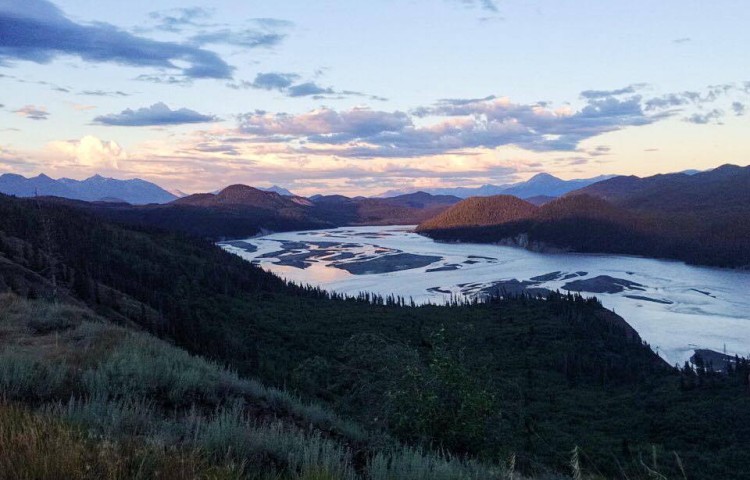
Past farmland and through canyon country sits Chitina, Alaska: Nearly 250 miles from Anchorage, the town is noted for being the end of the Edgerton Highway and the beginning of the historic and seldom-maintained McCarthy Road. It may be the last place to get gas before journeying the next 60 miles to McCarthy, or a place to grab snacks on the way home from a weekend exploring the historic mill town of Kennecott. Chitina may seem unimpressive to the shallow traveler. However, when you dive beneath the surface, the town of less than 150 opens up, showing you a unique Alaska you may have never experienced.

Walk into Uncle Tom’s Tavern in the center of town to meet the people who call Chitina home. An old piano greets you at the door; a wood stove, taxidermy and plenty of rocks and fossils soon follow. Quintessential bar memorabilia adorns the interior. License plates, slot machines and posters of scantily clad women hang as ornamentation in the small, smoke-filled room. Old-timers and local folk sit at the bar with pints in hand and ash trays nearby. The woman at the end of the bar turned her generator on that morning so she could watch a movie with her friends that night. She lives in a one-room cabin with no electricity, no water and no heat. In a town where people are still talking about last year’s Fourth of July celebration, movie nights and new visitors are hot topics.

When Uncle Tom himself walks into the bar, he shows us some gold he found in the area, a nice small handful, telling my friend and me that the special rock is called “leavurite,” and if we find any we should “leave-it-right” there and let him know where it is — a joke he’s probably told 1,000 times to gullible tourists. What Uncle Tom didn’t know is that my friend is a student geologist. Needless to say Uncle Tom’s joke was quickly squandered.

The ladies at the bar know all the hidden gems and are eager to tell interested passersby about the hot spots in Chitina. Liberty Falls, just north of town, is a large, rapidly cascading waterfall, just off the Edgerton Highway. This state-run park is also a campground with 10 spots available. To the south of Chitina, at the beginning of the McCarthy Road, the canyon walls open up to the west bank of the Copper River, where fish wheels and dipnetters fight for the prized Copper River sockeye.

Once a thriving railroad post, Chitina was a stop for the Copper River and Northwestern Railway. The railroad hauled copper from the mines of Kennecott to Cordova, leaving Chitina a bustling and prosperous community in the early 1900s. When the mines at Kennecott were shut down and abandoned in 1938, Chitina was left a ghost town.

Remnants of Chitina’s past can be seen today. The old tin shop, now an art gallery, is on the National Register of Historic Places, while the Chitina Emporium pays homage to the old pioneer spirit. The gateway to Kennecott, McCarthy and Wrangell-St. Elias National Park is unapologetically Alaskan. From the locals and their homesteading endeavors to the subsistence salmon fishing on the famed Copper River, Chitina leaves visitors coated in a gritty Alaska aura.

For Show Me Alaska: Riding to Spencer Glacier, a whistlestop in the heart of the Chugach National Forest

Alaska, Online, Uncategorized

Originally published in Show Me Alaska

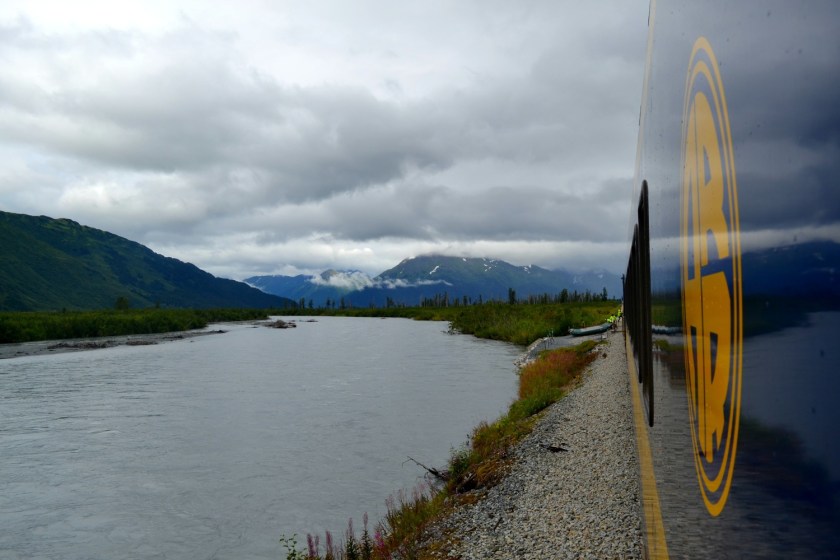
There is no such thing as a typical day aboard the Glacier Discovery train. For the summers of 2012 and 2013, I was a tour guide on the Alaska Railroad: I helped people on and off the train, cleaned up after passengers and provided onboard narration explaining the significance of the areas we passed through.

The Glacier Discovery train carries people from all walks of life: young tourists going to adventure around Prince William Sound, an elderly couple from Nebraska who sold their farm to see the 49th state via cruise ship from Whittier, locals on a day trip to see Spencer Glacier with some out-of-town family, handsome river raft guides gearing up for the day’s tour and U.S. Forest Service rangers more than willing to share their knowledge of the area.

Every day is different, but the highlight is always Spencer Glacier.

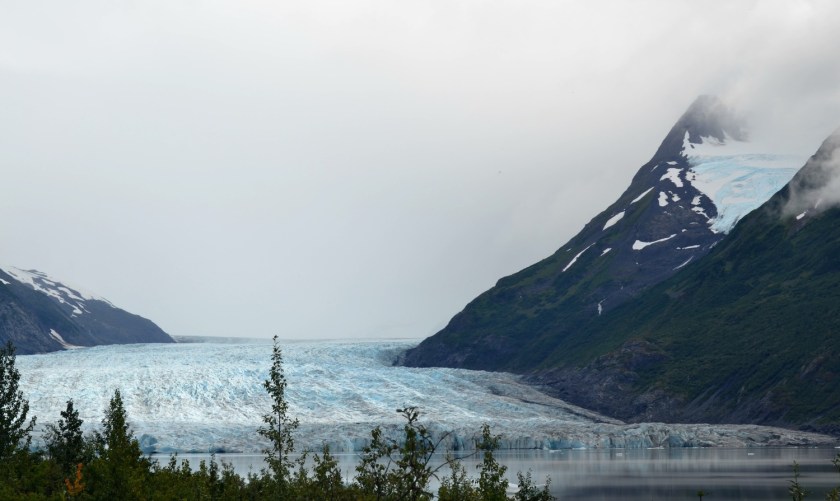
Only accessible by train, Spencer Glacier is a recreation spot like no other. Tours booked in advance — like rafting, canoeing and kayaking — can get you up close and personal with the glacier. A complimentary ranger-led nature walk is an option for the more inquisitive explorer. The walk is easy; the entire 1.3 miles from the train to the glacier lookout is a flat and well maintained thoroughfare.

The glacier can be enjoyed in a day trip, or just from the train, but the best way to take in Spencer Glacier is to stay overnight. Immerse yourself in the remote area and feel a sense of solitude as the train pulls away back to Anchorage, not to return until the next day. Listen as the glacier shifts and slides against the mountains, its echoes reverberating through the Placer River Valley. If you’re lucky, like I was, you can even catch the glacier calving.

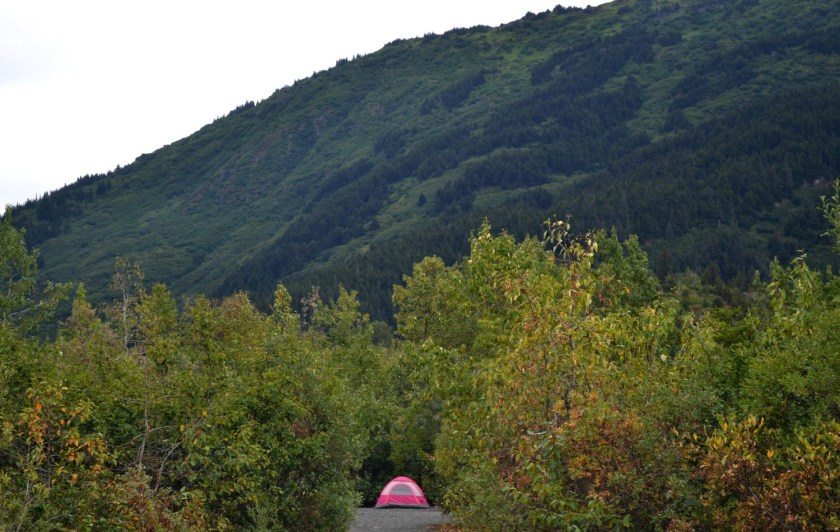
Fall asleep to the sound of a calving glacier and distant freight trains chugging their way through the Kenai Mountains. Stay overnight in the group campsite or the new Spencer Bench Cabin. Approximately 1.2 miles from the train, the group campsite offers well water, restrooms, bear boxes, picnic benches and a fire pit.

The Spencer Bench Cabin, which opened in the summer of 2015, sits at an elevation of nearly 2,000 feet. The hike extends less than 5.5 miles from the trailhead, with the last three miles being rigorous switchbacks. The group campsite and the cabin can bereserved for a fee through the Alaska Railroad. For free camping, continue hiking along the Spencer Glacier trail to find multiple dispersed sites.

Rounding the tracks heading south towards Grandview, I’d bring passengers back in time to 1905 with the story of Edward Spencer. According to a story published by the Seward Gateway on Nov. 3, 1906, Spencer, a timekeeper for the Alaska Central Railroad, was traveling by foot from camp 52 to camp 55 in the area where Spencer Glacier is today. Despite warnings of darkness and treacherous conditions from members of the camp, Spencer proceeded on. The ill-fated timekeeper was found frozen to death nearly a year later, his body face-first in the snow, 2,000 feet from the winter trail on a slope above the glacier.

Spencer Glacier is the first of five whistle stops created in collaboration with the Forest Service and the Alaska Railroad. The whistle stops will be checkpoints along the Glacier Discovery trail, a trail system that will connect Alaskans to the Kenai Mountain backcountry, a place not accessible by road.

Spencer Glacier was completed as the first whistle stop in 2007, and since its creation the stop has received over 10,000 visitors, according to the USFS. The other four whistle stops are still under construction or in the planning phase.

With breathtaking views, opportunities for adventure and the clickety-clack of the standard-gauge rails below you, the Glacier Discovery train will awake the romantic inside you. Follow your inner explorer to Spencer Glacier whistle stop, and take advantage of the beauty in Alaska’s own backyard.

For TNL: From fishing to flowers: Adapting in remote Alaska

Alaska, Print, Uncategorized

Originally published in The Northern Light

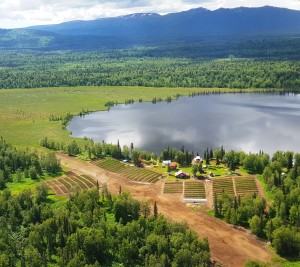
According to the USDA, EagleSong Family Peony Farm is one of America’s most remote farms. Located near the North base of Mt. Susitna, EagleSong grows over 12,000 peony roots in over 22 varieties. In addition to growing and selling peonies worldwide EagleSong also grows all types of vegetables to feed their crew throughout the summer and family through the winter, and hops for use by local micro breweries. EagleSong is one of the states largest peony farms and co-owner Mike Williams is the founding owner and managing partner of Alaska Peony Distributors, LLC, a commercial peony pack house that buys peonies for area farms. The peonies are transported to the pack house located at Lake Hood where they are inspected and graded, then marketed and sold around the world.

Before EagleSong became a success in the ever-growing Alaskan peony industry, Williams, along with his wife Paula purchased an old homestead and created the EagleSong Lodge in 1993.

“We were the traditional hunting and fishing lodge with some winter business catering to snow-machiners, dog mushers and acting as a checkpoint for various winter races. We gradually lost our salmon runs that sustained our summer business due to the invasion of northern pike. They ate up all the salmon. It is tough being a fishing lodge with no fish. During our peak there were over a dozen lodges operating around us. By 2009, we were the only lodge still open. We knew the end had come,” Williams said.

Forced to switch gears, the Williams family looked to peony farming to save their home.

“We didn’t want to leave our home of 15 years so we looked into farming and settled on peony farming since it primarily evolves around air transport which we had relied on since we moved here,” Williams said.

The homestead is a family run farm where the Williams family raised four children, as well as peonies and other vegetables. Beyond farming, other artistic endeavors that originate from EagleSong include hand carved birch and spruce sculptures by Mike Williams, an experienced commercial carver. While Paula uses her locally grown produce to further her culinary skills. A cookbook is in the works and is looking to be completed by 2017.

EagleSong is an avid host of volunteers from the World Wide Opportunities on Organic Farms organization, which matches volunteers and farms across the world for farm stays in exchange of labor and agricultural experience.

“We have hosted dozens of volunteers, WWOOF-ers and interns over the years and not one has gone away less than satisfied with their experience here. The farming experience coupled with the experience of living in back country Alaska is an opportunity that few ever experience,” Williams said. It is hard to put in a few words all the things our visitors can experience. Hard work at times, but the satisfaction at the end of the day brings them back for more. We insist all our visitors participate in the growing of the food we consume and give them the opportunity to create their favorite dishes so we can all experience their culture. It is not unusual to have WWOOF-ers from far flung parts of the globe. Last summer we had WWOOF-ers from Denmark, Germany, India, France, China and all over the U.S.”

EagleSong was the focus of a 13 episode series, called Building Alaska, last summer. The show finished airing in May and is currently playing in Europe.

You can find EagleSong at the Downtown Saturday Market selling peony roots, and a few flowers. They have been a fixture of the market for over ten years now.

For more information and to get in touch with Mike and Paula Williams at EagleSong you can visit their Facebook page or website, www.eaglesongalaska.com.

For TNL: Homemade fettuccine in the Widgeon II

Alaska, food, Print, Uncategorized

Originally published in The Northern Light

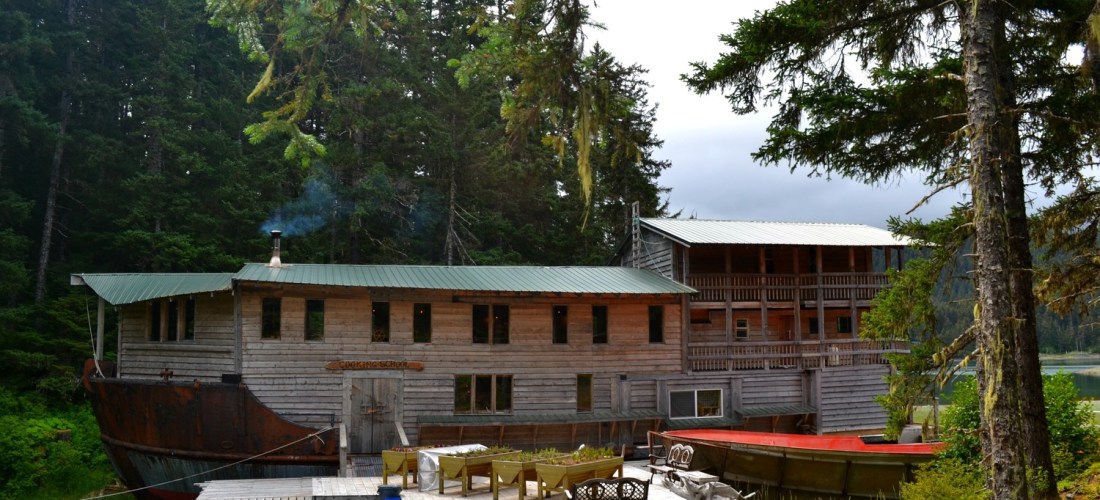
I just got home from spending the weekend at Tutka Bay Lodge, a remote lodge in Kachemak Bay. The lodge is home to a remote cooking school. The Widgeon II is a historic boat that went from a World War II vessel to a crabbing boat, and was drug up on to the beach of the remote lodge and transformed into the cooking school it is today. Unique and rustic, the cooking school is without running water and an oven. I was sponsored by UAA’s Department of Journalism to attend a food writing retreat hosted by Alaska’s own Julia O’Malley and New York Times Food editor Sam Sifton at the lodge. We ate, cooked, and wrote the weekend away. Here’s the homemade fettuccine recipe I derived  from this weekend.

download (24)

Homemade fettuccine

Hearing the word homemade followed by something you’ve only ever thought ywould buy can be daunting. I’ve made homemade pasta once in my life as part of a ‘culinary boot camp’ my parents put me in one summer as a kid. In the class we learned knife skills and basic cooking repertoire. Of all the things we did that week making pasta seemed to be the most time consuming and tedious task of them all. Flash forward a decade later in the Widgeon II, a remote cooking school in Kachemak Bay, I’m assembled with a small team consisting of a fellow writer and a gifted cook. Tasked to work with the ingredients at hand, we are inspired to make pesto, and the idea of pasta soon follows. Investigating to see if fettuccine was available, we were greeted without pasta, but with a clunky metal machine that I spent numerous afternoons avoiding as a kid. The ominous crank wasn’t enough to deter my hunger. I turned the crank and helped to feed the pasta through. Shocked at how little time it took to make such a small amount of flour go so far, I was having a revelation. Maybe making pasta isn’t as annoying as I thought? Maybe everything seems to take hours as an 11 year old? When the water was boiled and the pasta was done I tasted for doneness and it clicked. The kneading, feeding, and cranking was worth it for the delicate, melt-in-your-mouth, almost buttery consistency of the pasta. Create a taste you can’t buy from a store.

Ingredients:

2 ½ Cups of All-purpose flour

½ Tablespoon of kosher salt

6 Egg yolks

1 Egg

1 Tablespoon olive oil


Directions:

1.       In a large mixing bowl incorporate 2 cups of flour and salt. Create a well in the center of the flour.

2.       Place the olive oil, egg yolks and the egg into the well and with two fingers whisk the eggs into the flour until a tacky dough is formed.

3.       Knead the dough  for about 7 – 10 minutes. Set aside and cover with plastic. Allow to rest for a minimum of 20 minutes.

4.       While dough is resting set up pasta roller and cutter per manufacturer’s instructions.

5.       After the dough has rested cut into even thirds. Set the excess two aside, keeping them covered, and work with the first third by flattening the leading edge until it reaches about ½ inch in thickness.

6.       Feed the flattened dough through the pasta roller on the widest setting. Once the dough has been fed through, take the stretched dough and fold into thirds. Dust the pasta dough with flour if tacky.

7.       Repeat step 6 ten times, folding the pasta into thirds each time, creating layers.

8.       Once the layers are created, proceed to thinning and stretching the pasta dough. Reducing the width of the rollers each pass through until you have reduced the width 8 times. Dust the dough with flour as needed.

9.       Add the pasta cutter attachment to the pasta making machine per manufacturer’s instructions. With the widest pasta cutter setting or the fettuccine setting, feed the pasta sheet through the cutter. Once pasta has been cut dust liberally with flour and form the pasta into a small nest, set aside and cover with plastic.

10.   Follow steps 5 – 9 with the other two pasta dough thirds.


Directions to cook pasta:

1.       Fill a large deep pot with 2 quarts of water and bring to a boil.

2.       Once the water has been brought to a boil, toss in 3 – 4 tablespoons of salt.

3.       Shake the remaining flour off the pasta before placing the pasta into the boiling water.  Sir the pasta until the water has returned to a boil, and allow to cook until desired doneness, approximately 2 – 4 minutes.

4.       Once pasta has reached desired doneness, reserve a cup of the cooking water for later. Drain the water and serve.

Time: 1 hour

Yield: 6 – 8 servings

For JuliaOmalleyMedia: A Spenardian grandma’s blueberry crumble

Alaska, food, Online, Spenard, Uncategorized

Originally published on Julia O’Malley Media.

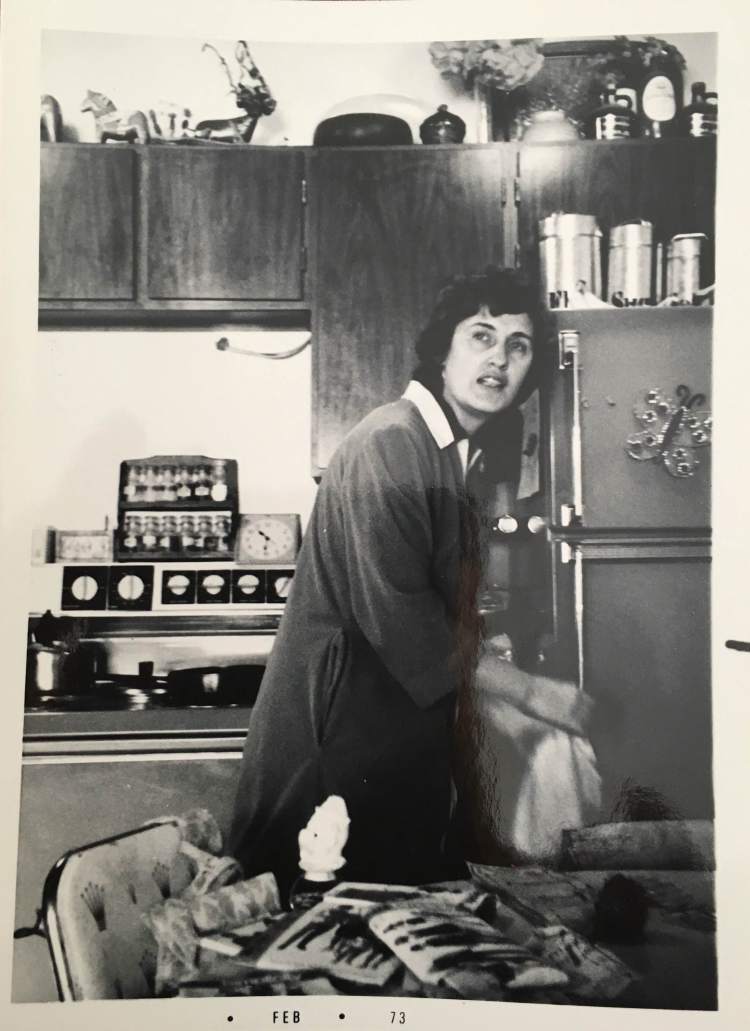
My grandmother, Sylvia Butcher, a true Spenardian and Alaskan in her own right, has been living in Alaska since the early 1960s. She met my grandfather, who grew up in Anchorage after his parents homesteaded here in 1943, in California and they started a life together in the city of Anchorage.

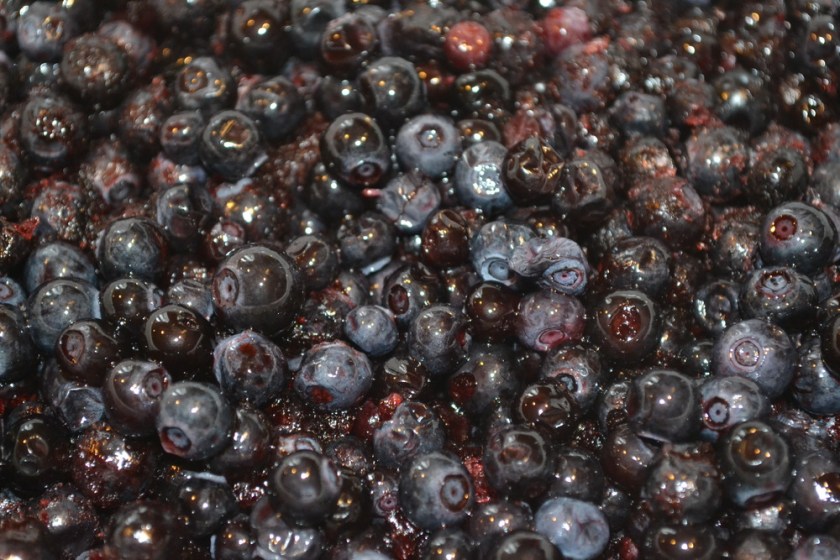
One of my grandmother’s favorite Alaskan pastimes is blueberry picking. She knows all the spots, from the shores of Seward to the mountainsides of Broad Pass. Of course, she would never permit to say where her favorite spot is, as that’s a heavily guarded family secret. She claims that the peninsula is the way to go. She notes that Girdwood blueberries are wormy and that Seward and Whittier are good places to explore, claiming that coastal blueberries are better in taste and easier to pick than their alpine cousins.

Don’t even think about buying blueberries for this recipe. Grandma scoffs at the mere thought of store bought blueberries, lacking in taste and authenticity.

After my grandma agreed to teach me how to make her special blueberry crumble, I visited her in her kitchen. She pulled out of a bag of frozen blueberries that was thawing in the fridge.“They have to be Alaskan blueberries, not store bought. There’s no comparison,” she said. Grandma held the bag in the air and examined it, as if checking to see if a nugget of gold was actually just pyrite. The bag, with the date “8/15″ written in sharpie on the side, was gently poured out into the baking dish. As I spread the blueberries evenly in the dish, Grandma told me about picking those berries with my mom last summer while they were in Seward.

“We picked them until we couldn’t pick anymore, brought them back to the cabin, and went out and did it all again the next day,” she said.

The recipe for blueberry crumble was given to my grandmother in a cookbook published by the women’s club of Anchorage in the late ‘50s. Today, the recipe book is near shreds, the stack of papers are held together by an old rubber band. My grandma received the cookbook from my great-grandmother, her mother-in-law, as a wedding gift. My great-grandmother was part of the women’s club and had her own recipes published in the book as well. My grandma tried the Blueberry Crunch recipe, as it’s called in the recipe book, and has been in love with it ever since.

The recipe is relatively simple, despite the delicious and crowd pleasing results it receives. Make sure to let the dessert completely cool before serving, as it’s too runny and messy if served right after it’s taken out of the oven. The perfect way to serve it — the way it’s been served to me my entire life — according to Grandma is to “warm it up and serve it with vanilla ice cream.”

Grandma’s Alaskan Blueberry Crumble

Ingredients: 

4 cups Alaskan blueberries

1 cup sugar

3 tablespoons all-purpose flour

For the topping:

1 1/2 cups all-purpose flour

1 cup brown sugar

1 cup butter, melted

1 cup rolled oats

Instructions:

1. Preheat oven to 375 degrees.

2.  Place the blueberries into a baking dish. Pour in the sugar and flour, and stir with a spatula until the blueberries are covered. Distribute evenly across the bottom of the baking dish.

3. For the topping: in a separate bowl, combine the melted butter, brown sugar, flour and oats. Mix until evenly combined, then spread across the top of the blueberry mixture with a spatula.

4. Place in the oven and bake for 40 minutes.

5. Let the dessert cool completely. Serve warm and with vanilla ice cream.

For Knik.co: How to live in a dry cabin

Alaska, Online

Originally published on Knik.co

Living without plumbing is a lifestyle choice many Alaskans make. According to a state economic trend analysis published in April 2014, around 12,000 Alaskans live without water; a significant number in a state home to just a little over half a million people.

Whether it is by choice or necessity, living without water is particularly evident in the interior of Alaska. In the interior of the state winter temperatures dip far below zero, making it easy for pipes to freeze. In addition permafrost, ground frozen solid, is common in northern Alaska, making the idea of a modern septic system, a pipe dream. For some, living without water is a way to save money. For others it is a romantic existence, full of self-discipline and self-sufficiency.

I was all on my own during the summer of 2014. In late April of 2014, I moved into my dry cabin off Farmers Loop Road in Fairbanks, Alaska. I went into town the first morning I woke up in Fairbanks. I found my five gallon jug in the local Fred Meyer and carried it to the nearest water station. The water stations in the Fairbanks area are a dime a dozen. About two cents a gallon, I would pump my water, just like I was pumping gas, into my little blue jug. I dragged little blue, significantly heavier when full of water, up the hill from where I would park my car to the cabin, about 200 feet away. I would then gracefully set my blue jug on the lip of the sink where it would live for three to five days; then I would do it all over again.

download (1)

Before I lived in a dry cabin, thirty minute showers were common and part of my everyday routine. Washing dishes in the dishwasher and cleaning my clothes, just a part of the weekly chores I powered through for majority of my existence. My biggest concern at first was how I was going to shower. I got a gym membership and took advantage of the showers in the locker room. With the hassle of having to drive 20 minutes away to shower, baby wipes and dry shampoo found their way onto my weekly grocery list. There was once a time the gym was closed and I was forced to wash my hair in a bucket on my front porch. I never was much of a bath person, but I remember my first real bath after moving out was more luxurious than I could have ever anticipated.

I never considered how much water went into cooking and cleaning. I’d say that 75 percent of my water usage went into a combination of cooking and cleaning dishes, the rest for drinking and other miscellaneous things. I learned to conserve my dish use and gained a carefree judgment of what was actually dirty when it came time to clean. This is because cleaning the dishes was an event in itself. I had to first try to figure out how much water I needed to finish the dishes. Boil that water. Then over the sink, carefully, I’d rinse the dishes with the water, scrub it with soap and hope for the best. I will never take the invention of dishwashers for granted again. The dishwater would drain through about six inches of PVC pipe into a bucket. Every night I would take the bucket of dirty water and toss it free off the deck. This is imperative if you don’t want your living space to smell like a garbage disposal.

download

It’s easy to remember the wasps, mosquitoes, and dirty dishwater when I recall my dry summer. However, it’s hard to forget the romance and the solitude that comes with sequestering yourself in nature.

Nolin Ainsworth, a former student at University of Alaska Fairbanks, lived alone in a dry cabin while attending school.

“My favorite part [about dry cabin living] was the absolute quiet and sound of the wind when it swept through the trees at night.” Ainsworth said.

With a literal laundry list of things to do, living dry adds hours of chores to your week. Whether it is hauling water, washing dishes, or waiting at the laundromat for your load to finish up; living in a dry cabin takes a lot of time, work, and patience.

10696390_4682489157922_2520628417099064507_n

The dry life is not for everyone. I’d even admit that it’s not for me, despite how “Henry David Thoreau” I like to think I am. Whatever your reason for choosing to live water-free, the experience will no doubt give you a new appreciation for modern day luxuries most of us rely on daily.

For TNL: The Writer’s Block and the Spenardian Renaissance

Alaska, Print, Spenard, Uncategorized

Originally published in The Northern Light.

In October of 2015, Vered Mares purchased Adults Only, a pornography shop in the Spenard area that had been in business for decades. Mares had the idea and business model of changing it into a bookstore with a full service cafe and art space. The current building, which is two trailers hooked together, will be demolished this May. After, she will begin construction on a new building twice the size of the current one.

“it’s sort of the last vestige of the Spenard old red lights district, you know, that’s what this place was back in the heyday. It was a pornography store, but I think it was also a whole lot more than that. What was once a fairly undesirable business in a neighborhood is being turned into something that can really be part of the neighborhood,” Mares said.

13020255_10201667409764749_1217084460_n

Spenard is known for its scandalous past as the place on the outskirts of tent city where people went to have a good time. From crack houses, rowdy bars and pornography shops, Spenard has rejuvenated itself in recent history to be known as a funky and engaging part of the Anchorage community. With the introduction of specialty shops, popular bars and restaurants the neighborhood is being transformed in a Spenardian Renaissance. Mares, her many business partners and volunteers have been working since fall of 2015 to transform what was once an element of Spenard’s less than desirable past, to something that will benefit and engage the entire community.

“This neighborhood has a history and whether we like it or not it’s part of Anchorage, it’s part of Spenard, it’s part of Alaska,” Mares said. “It wouldn’t have the same interesting and quirky flavor without that history.”

download (8)

The Spenard Renaissance is made possible by the creative people who live, work and play in the neighborhood. With boutiques, local bars and restaurants, and the introduction of Writer’s Block Bookstore and Cafe allowing a place for people in the community to come out and freely express themselves the neighborhood is changing from the inside out.

download (8)

“It’s easy to be excited with change. What’s really interesting is that the groups of artists that are engaging in these events are looking at the neighborhood on the whole as a place of creativity, as a conglomerate of creative resources. It’s easy to see what’s there. But it takes artists to see what’s more,” Sarah Davies, local artist and creator of the 100 Stones project, said

The idea for Writer’s Block Bookstore and Cafe came from Mares’ frustrations on what the community offered and didn’t offer.

download (9)

“When I first moved to Alaska, almost 10 years ago, what really irritated me was that I couldn’t get a really great cup of coffee after 8 p.m. There also weren’t any independent bookstores. These were the three things that sort of ruled my life up until they were gone,” Mares said.

The bookstore will have a full service kitchen and cafe, selling an eclectic mix of international dishes and comfort food. Mares hopes to incorporate dishes less commonly found in Anchorage while infusing foods from her Israeli and New Mexican heritage. The cafe will have a typical coffee menu as well as a sophisticated selection of coffee from around the world. The cafe will also hold a beer and wine license.

In addition to the cafe, the space will also allow a place for artists of all types to congregate and share their art. Whether it’s writing, sculpture, painting, photography or music, Writer’s Block will have a space to showcase local artists.

“We are trying to keep as much as our business as local as humanly possible, from where the food comes from to where the books come from to who we hire and how we engage in the community. Anchorage has an incredible creative community that I think is still untapped and is underrepresented,” Mares said.

With an emphasis on local artists, it is Writers Block Bookstore and Cafe’s number one priority to give preference to Alaskan authors. Mares wants to feature local writers in her bookstore, but will also provide a myriad of other literature. All books being sold will be new.

“Right now we don’t have an independent bookstore in Anchorage, there’s not really an avenue for new literature that’s not in a large corporate model that exists in Anchorage,” Mares said. “We want to engage with our local literary community first and foremost. We’ve got some amazing writers here and we want to be able to showcase them here. Some of your favorite writers might be down the street from you and you just never knew it. We want to support our local writers as much as possible.”

Before construction even begins the business is giving a place for artists to thrive. While Mares and her team are waiting for the construction to begin and the old building to be demolished, local artists were asked to occupy the building as an interactive community art piece.

DSC_0478

Three events are taking place this month to allow the community to engage in the installation and the vision of “Transforming ADULTS ONLY,” as the series of events is being called. For three consecutive Fridays, starting April 15, the community is invited to participate in the events featuring local artists, food trucks, musicians and performers from around the city to pay homage to the past and get involved in the future of the neighborhood.

“These three events will be celebrating what Spenard once was and where it is going. As far as I know, this is really the last iconic reminder of Spenard’s past and it will be torn down in May for the Writer’s Block, a business that seems to better represent the residents and frequenters of Spenard these days, as many creative types choose this part of town for their homes and places to spend time…” Val Svancara, Outreach and Engagement Coordinator for the Transforming ADULTS ONLY events, said. “In fact, many of the artists working on this event are Spenard-based.”

DSC_0483

Many have seen Mares efforts as gentrification of the neighborhood. Mares wants Writer’s Block Bookstore and Cafe to be a place for her neighborhood to enjoy and be a part of.

“It’s not about gentrification, this term gets brought up a lot when I’ve been talking to people. It’s not about gentrifying, I don’t want to change Spenard. I want to bring more of the fun, quirky, unique elements of Spenard and bring them into a central location. This is where I live too, I don’t live in another part of town or even outside of town I live half a block off of Spenard road.” Mares said.

Mares is currently raising money through a GoFundME account (https://www.gofundme.com/pb7nl8) which has raised over $20,000. All of the proceeds of the GoFundME account will go towards construction and opening the doors of Writer’s Block Bookstore and Cafe. With certain awards offered for particular contributions patrons will receive more than just a good feeling for contributing to Mares efforts. From a cup of coffee to having a bar stool dedicated in your honor, those who donate will receive more than just a thank you.

download (7)

The series of Transforming ADULTS ONLY events will take place every Friday for the rest of April: April 15, 22, and 29 from 6-8 p.m. The events are free of charge and will provide local entertainment, lawn games, food trucks, a beer garden sponsored by Spenard Roadhouse and community involvement. The Writer’s Block Bookstore and Cafe plans on opening their doors this fall.

For TNL: Welcome to Anchorage’s SONO district

Alaska, Print, Uncategorized

Originally published in The Northern Light.

Welcome to the SoNo district. A few blocks and even fewer stores sprawled across Sixth Avenue to Eighth Avenue, and then from E street to C Street, compromise the area of downtown Anchorage known as the SoNo district.

Created through collaboration by local businesses in the area in 2005, the SoNo district became the first official district in downtown Anchorage. The district was proclaimed by Mayor Mark Begich Dec. 1, 2005. The goal of SoNo is to create a destination that is recognizable by locals and tourists as a destination for shopping and entertainment.

“Our goal with SoNo was to create a hip shopping and dining destination downtown. Over the years we have organized Fashion Shows and group promotions to attract customers to our district,” Ellen Arvold, owner of Second Run, said.

Notable stores and businesses in the SoNo district include Bernie’s Bungalow Lounge, Chez Ritz, Second Run, Blush Boutique and Houtghton Hill.

SoNo, or South of Nordstrom, pays homage to the trendy and hip neighborhood SoHo [South of Houston street] of Lower Manhattan. SoHo derived its name from urban planner Chester Rapkin, who used the short and catchy name as a way to attract real estate investors to the area. It worked and SoHo, once a largely abandoned textile industrial area, soon became the destination for artists and wealthy people alike.

Unlike SoHo, SoNo is riding the wave of notoriety brought by the success of SoHo’s re-vamp. Although, like SoHo, SoNo is a destination filled with particular shops and boutiques attracting a higher class and more style savvy shopper.

“I think that there are some very nice places in Anchorage to shop, but I don’t think people in Anchorage really seek out high fashion, and more often than not laugh at it for being so impractical. I think the boutiques that do best in Anchorage have brought high-end but not necessarily high-fashion that is great quality and durable, and practical for the climate,” Cleo Anderson, who has worked in downtown Anchorage and is an artist at Beyond Beads boutique, said.

Most people who are familiar with the boutiques in the area have adopted the term, South of Nordstrom, hence the creation of the district.

“We have seen the name catch on, but it is more of an easy term to describe our location to people unfamiliar with the area,” VaLori Gianni, store manager of Blush Boutique since 2010, said.

Others are less familiar with the SoNo district and the vision the stores that encompass it want to portray.

“Yeah I’ve heard of SoNo, but I didn’t know that they made it up themselves. I feel like if they associated that term with shopping and fashion more frequently on social media or in their stores, people might start to think of that area as a shopping destination. But I can’t say I feel like they’ve created that image yet,” Anderson said.

There are some who have never heard of the district at all.

Jenelle Bennett, who’s been working in the downtown area for years, has never heard the term SoNo.

“I have no clue what SoNo is. Should I know? Does it go by a different name? No I think you’re the first person who’s ever mentioned it to me,” Bennett said.

As well as Britt McLeod, who worked at Kill Joy downtown until they closed, has also never heard of the district of downtown.

“I’ve never heard of SoNo district. How long as it been around? What is it?” McLeod said.

Since the creation of SoNo district two other districts, G Street Arts District and Convention Center District, in downtown Anchorage have been proclaimed as a part of the downtown renewal project, a project aimed at revitalizing downtown Anchorage.

College Cookbook: Aphrodisiac Alaskana

Alaska, college cookbook, food, Print, Uncategorized

Originally published in The Northern Light.

 It seems like the last thing college kids need is a list of foods that will make them horny. Aren’t our hormones rampant enough already? The desire for sex is evident across all cultures spanning over thousands of years; as has the desire to find the perfect potion to get anyone in the mood.

An aphrodisiac is considered to be any substance that’s consumed to increase libido. Popular aphrodisiacs you may have heard of before include oysters, dark chocolate and red wine. With little research on the effect of aphrodisiacs, most evidence is subjective. Whether it’s a placebo effect or the real deal, a delicious aphrodisiac inspired meal this Valentine’s Day is sure to please any date, in or out of the bedroom.

From the dangerously delicious to the down-right disgusting, aphrodisiacs vary and may even be counter-intuitive. Balut, the Filipino delicacy that is fertilized duck egg, is famous for its aphrodisiac qualities. In my travels to the Philippines, I tried Balut, and the only desire I had afterwards was to vomit. If you’re curious, or desperate, you can find Balut at the New Sagaya Midtown Market.

For an Alaskan themed Valentine’s dinner, focus on fresh seafood, especially oysters. Make your way over to the Bubbly Mermaid in downtown Anchorage where they have a monopoly on the best oysters and champagne in town, creating the perfect recipe for a romantic evening. Legend has it that Aphrodite arose from the sea in an oyster shell as the Goddess of love and fertility. Salmon is said to have aphrodisiac elements as well. For the adventurous eater, crushed up caribou antler and bear claw are sought out by the Far East as a powerful aphrodisiac. I do not recommend trying to get your hands on it, but the oosik bone — the baculum or penal bone of walruses, seals, sea lions and polar bears — is sold on the black market by Native Alaskan’s to buyers in Asia who prize the bone as an aphrodisiac, according to Jeremy Sacks, author of “Culture, Cash or Calories: Interpreting Alaska Native Subsistence Rights.”

Champagne and red wine is a Valentine’s Day classic, but don’t totally rule out the power of beer. Before beer was made with hops it was produced using gruit, a collection of herbs used to bitter and flavor beer. The use of gruit was left to the wayside when the puritan and protestant brewers wanted to phase out the, apparently, aphrodisiac qualities that gruit supposedly possess. Using hops grew in popularity and has been the norm in beer ever since. However, modern brewers are looking to this old fashioned way of making beer as a unique way of flavoring their ales. Breweries in Alaska, in fact, are venturing into the gruit world. Alaska Brewing Company’s Alaska Winter Ale, is made with a combination of gruit and hops, as is the Baranof Island Brewing Company’s Sitka Spruce Tip Ale. The aphrodisiac qualities of these specific beers are unknown, but it’s worth a shot.

Whether fact or fiction many of the above mentioned foods will make for a great dinner, snack or even conversation starter.

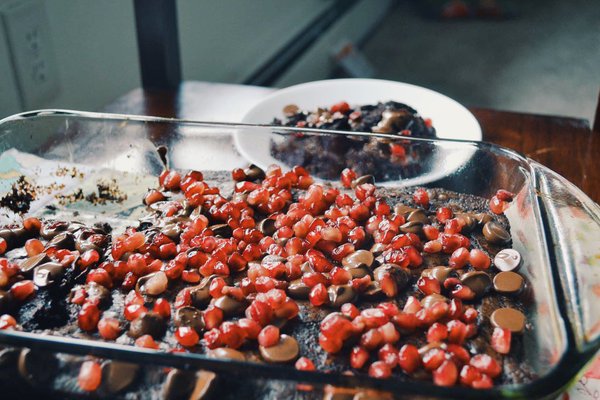
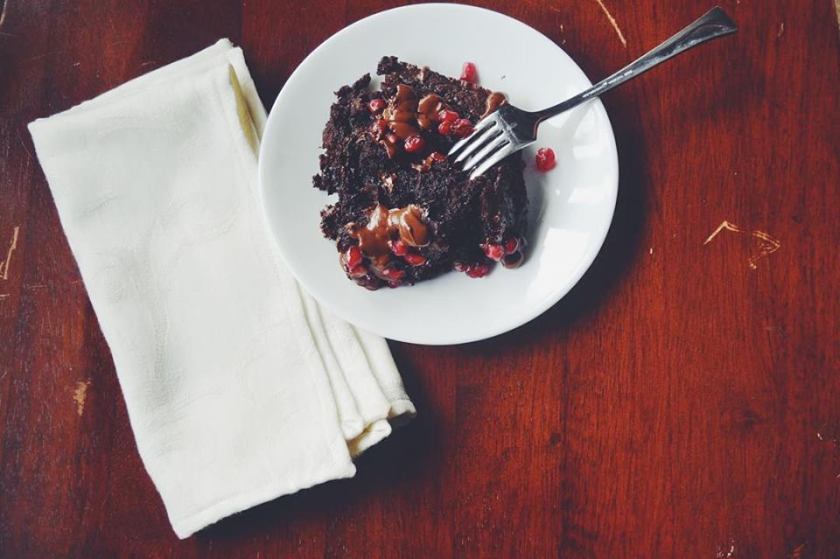
Inspired by a recipe I found on Pinterest, this recipe was posted on the food blog “With food+love” and was titled Pomegranate brownies with cacao nibs and sea salt. I decided to give it the college student spin and make it for myself. I used a box brownie mix and dark chocolate chips instead of cacao nibs and bought pomegranate seeds already harvested from the fruit, which made the process much simpler. I also opted out of the sea salt as I felt there was already so much going on with the brownie as is. Don’t forget to account for the ingredients needed as part of the box brownie mix. This usually includes one or two eggs and oil.

Red wine and dark chocolate brownies with pomegranates.

Ingredients:

One box of brownie mix and ingredients that correspond with the mix (I used a dark chocolate brownie mix)

1 and 1/2 cup of dark chocolate chips

1 cup of red wine (I used a red blend)

1 pomegranate or 1 package of pomegranate seeds

Directions:

1. Spray the baking pan with cooking oil and preheat the oven to the temperature indicated on the box.

2. Prepare the brownie mix as indicated on the box.

3. Pour one cup of the chocolate chips into the brownie batter and stir them in until mixed well.

4. Pour the entire bowl of batter into the oiled baking pan until all the batter is evenly distributed into the bowl.

5. When the oven is preheated cook the brownies for the time indicated on the box.

6. Check the brownies periodically by putting a fork in the brownies and seeing if the fork comes out clean.

7. When the brownies are done immediately sprinkle the 1/2 cup of dark chocolate chips over the brownies.

8. Sprinkle the pomegranate seeds over the brownies.

9. Let brownies cool for about 15 minutes and serve to the one you love.

For TNL: Record revival: Music’s comeback kid

Alaska, News, Print, Uncategorized

Originally published in The Northern Light.

In an age where virtually all music is in the palm of our hands, it’s hard to believe why anyone would opt for an outdated analog format of listening to music. Despite Apple music, Spotify, Tidal, good ol’ fashioned YouTube, and other music sharing software and apps the vinyl revival is well on its way into 2015 and is spearheaded by an unlikely generation – the millennials. Those late teen to thirty-something-year old’s are putting vinyl LP’s (long playing albums) back on the shelf in a neighborhood near you.

One half of all record purchases are by people 25 and younger according to research done by Music Watch. With over 13 million vinyl albums sold in 2014, this is the highest vinyl sales have been since 1989, according to the Recording Industry Association of America.

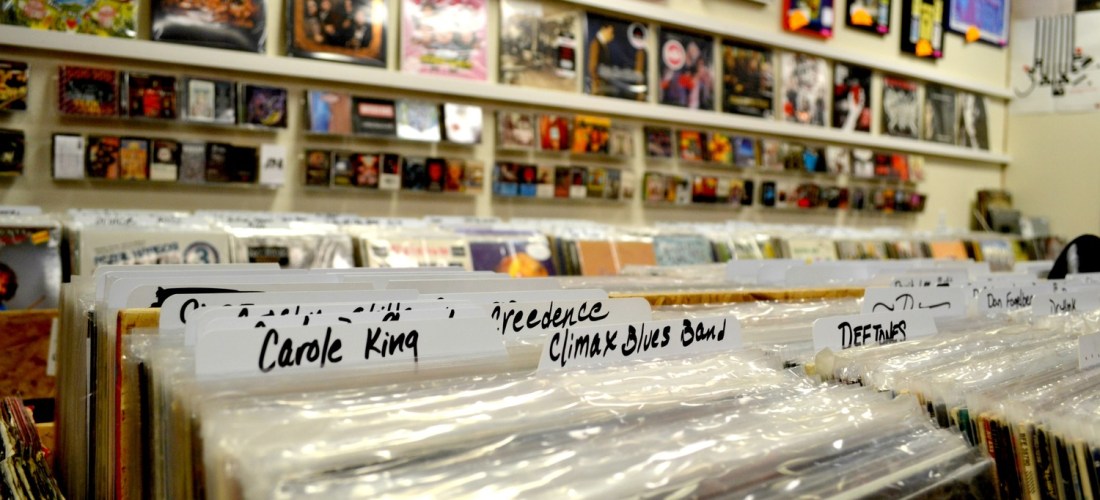
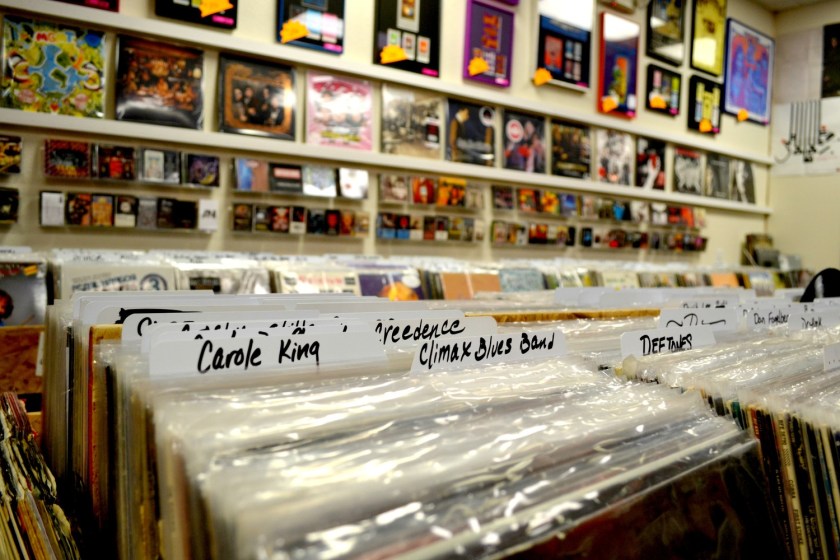
In Anchorage, vinyl records are available in multiple locations; Title Wave, Barnes and Noble, and Anchorage’s newest record shop Obsession Records. Obsession Records opened its doors on Nov. 28, 2014. Verna Haynes runs the shop alongside her husband and son where they buy and sell vinyl records as well as electronics, turntables and speakers.

Nostalgia was the main proponent in Steve and Verna Haynes conception of Obsession records. Their collection grew as did their desire to share with the community their love of vinyl and music.

“Years ago, my sister dragged home a few boxes of records and we had this nostalgic moment and had so much fun looking through them. All of the sudden, it became this thing and he [Steve] just sort of took off with it. All of a sudden he’s out there and he’s chasing records and collecting, and then we had this huge collection. He wanted to be able to communicate with other people that like vinyl, that like music,” said Vema.

The shop has all walks of life come through the doors, but it’s the millennials that want to take vinyl to the next level, with better sound quality and modern music.

“I’ve got that 20-30 year old range and they got jobs and they can invest in the better turntable and better components, and they are at a point where they can take it a step further. They want better sound, that kind of thing, invest a little more money. They are serious about their vinyl, they want quality vinyl, they want it to sound good. Then you have people like me in their 50’s who are coming back to it.” said Vema.

Hannah Dorough, UAA English major with a love of vinyl, can thank her parents for introducing her to the record world. Dorough doesn’t think vinyl is coming back, but that it never left.

“I mean, I like it because vinyl is cool. And you get this awesome feeling when you listen to them. It’s like the musical equivalent to opening that old, dusty book, you know? It’s just cooler to have on vinyl and just feels good to listen to. Honestly, they never truly went out of style. Like the people who love vinyl still love it, still buy it. Even CD’s are rarely bought anymore, but the people who love them go out and buy them,” said Dorough.

Local musician Ian Wahl, age 21, grew up listening and playing music. Wahl appreciates the opportunity vinyl gives you to listen to the music as the artist intended, something Wahl believes is hard to come by.

“I think the appeal has a lot to to with the look and feel of vinyl. I also tend to only listen to older records so it kind of makes me feel closer to the artist that recorded the tracks because that is the way they heard their music and the music that inspired them. In this day you can go online and find almost any song ever recorded and released, but with vinyl you have to hunt through second hand stores and garage sales to find a certain artist or record which makes listening to it more rewarding. I also like having a whole record because I hear songs that I might otherwise not have on B sides of albums that weren’t remembered. When you go online and look for a certain song you find it and play it and you get the other top 40s hits from that artist and genre but you don’t hear the song in the context of what that artist was feeling and creating at that time.” said Wahl.

With a nostalgia transcending generations and a sense of pride, vinyl gives millennials a fascinating and traditional format of listening to music and expressing themselves. Whether you’re a 50-year-old whose always had a love for vinyl and never believed it went out of style, or a 22-year-old with a box of old records your grandparents gave you, vinyl is here to stay