State minimum wage will rise 5 cents Jan. 1

Alaska, News, Uncategorized

Originally published in the Peninsula Clarion

Starting Jan. 1, 2019, Alaska’s minimum wage will be raised by 5 cents, from $9.84 to $9.89.

The 5 cent raise is to adjust the wage for inflation. In 2014, Alaskans voted to raise the minimum wage by $1 in both 2015 and 2016, and require the rate to be adjusted annually for inflation, according to an October press release from the Office of the Commissioner of the Alaska Department of Labor and Workforce Development. Tips do not count toward the Alaska minimum wage.

To adjust for inflation, the state uses the previous calendar year’s Consumer Price Index for urban consumers in the Anchorage Metropolitan Area. The index is a measure of the average change in prices paid by urban consumers over time.

“When there’s a rise in the CPI, there’s a rise in wage,” Paloma Harbour, Administrative Services Director for the Department of Labor and Workforce Development, said.

Harbour said inflation has remained fairly consistent over the last few years.

In each of the years 2017, 2018 and in 2019, the minimum wage was raised by 5 cents, Harbour said.

By law, Alaska’s minimum wage must remain at least $1 per hour over the federal minimum wage, which is $7.25. Alaska is among 29 states with minimum wages above $7.25, the highest being Washington state at $12, and in July, Washington, D.C., will pay workers at least $14 per hour, according to data from the Economic Policy Institute. The federal minimum wage hasn’t risen in over a decade.6072696_web1_Capitol-tease.jpg
Shutdown continues; some local agencies affected

Alaska, News, Uncategorized

Originally published in the Peninsula Clarion

A partial government shutdown that could extend into next year has shuttered several federal operations on the peninsula, and left other government employees working without pay.

Federal Aviation Administration employees, which include air traffic controllers and technicians at the Kenai airport, are still performing essential duties, but without pay, Greg Martin, a spokesperson with the FAA, said.

Martin said FAA employees in Kenai, and around the nation, remain on the job to retain public safety.

“There’s no operational impact for Kenai because air traffic controllers and technicians remain on the job,” Martin said.

The shutdown started Saturday after President Donald Trump and lawmakers reached an impasse over the president’s demand for $5 billion to fund a border wall.

Funding lapsed for nine Cabinet-level departments and dozens of agencies, including the departments of Homeland Security, Transportation, Interior, Agriculture, State and Justice. Roughly 420,000 workers were deemed essential and are working unpaid, while an additional 380,000 have been furloughed.

Employees deemed essential or otherwise exempted from their respective agency furloughs can’t take any vacation or sick days.

Locally, a handful of federal entities will be closed and unavailable.

Activity on the Kenai National Wildlife Refuge will be allowed to continue, but no visitor’s services will be available and the refuge warns that entrance into the refuge will be at the risk of the visitor.

Both Lake Clark National Park and Kenai Fjords National Park remain accessible to visitors, however, access may change without notice and current conditions will not be updated. Visitors should enter at their own risk.

The Kenai office for the United States Department of Agriculture and Rural Development is closed due to the partial government shutdown, according to their office voicemail.

The U.S. Army Corps of Engineers office in Soldotna and the Women Infants and Children office in Kenai are both unaffected by the partial government shutdown.

The shutdown will likely extend into next week. The House and Senate gaveled in for a perfunctory session Thursday but quickly adjourned without action. No votes are expected until next week. Lawmakers are mostly away for the holidays and will be given 24-hour notice to return, with Republican senators saying they won’t vote until all parties, including Trump, agree to a deal.

Although furloughed federal workers have been given back pay in previous shutdowns, it’s not guaranteed. The Senate passed a bill last week to make sure workers will be paid. The House will probably follow suit.

The Associated Press contributed to this report.

Kenai Peninsula teachers still without a contract

Uncategorized

Originally published in the Peninsula Clarion

As the Anchorage and Ketchikan school districts finalize employee contracts, it is unknown when teachers in the Kenai Peninsula Borough School District will see their three-year contracts.

David Brighton, president of the Kenai Peninsula Education Association, said the district and teacher unions do not have any meetings scheduled to negotiate contracts.

“It’s frustrating to see Ketchikan and Anchorage both settle a contract with 2 percent raises in all three of the years, and our district can’t see to give us a three-year contract or include raises,” Brighton said.

If no new meetings are scheduled with the district and unions, arbitration will take place on Feb. 26.

The school district was not immediately available for comment.6066894_web1_MP_SchoolBoard_20180910-1200x800.jpg

The sweetest gift

Alaska, food, Uncategorized

Originally published in the Peninsula Clarion

It’s probably the sweetest gift there is. Honey has been a symbolic offering for thousands of years. In ancient Egypt, beekeepers would gather honey to prevent diseases and heal wounds. The Greeks gifted honey to their Gods as a sacrificial offering.

Even in the Bible, the term “milk and honey” is described to the Israelites as the bounty of the promised land in Canaan, Exodus 3:8.

The sweetness of honey has slipped into holiday traditions around the world. During the Jewish holiday of Rosh Hashanah, apples are dipped into honey and honey cake is eaten to welcome the new year. Challah bread, an eggy sweet bread eaten during the Jewish holidays is typically sweetened with honey. During the Madhu Purnima, which was celebrated in September this year by Buddhist in India and Bangladesh, it is traditional to gift honey to Buddhist monks during the festival. In Greece, special Christmas cookies called melomakarona are dipped in honey and covered in chopped walnuts. During the holy month of Ramadan, Muslims enjoy honey-drenched dishes, like the bite-sized honey puffs called loukoumades.

With thousands of species of bees and varying flora across the globe, no jar of honey is the same. Besides supporting the local economy, there can be other benefits to buying your honey products locally.

James Reid along with his sister Ana, run Stoked Beekeeping Company in Homer. He said eating locally harvested honey connects you to the land and flora around you.

They harvest honey and sell it raw, and also use the beeswax to make specialty, food-safe cloth wraps. James Reid said honey is made using local pollen and nectar. He said eating their byproducts can help acclimate a body to the pollen of local flora, which in turn can help with seasonal allergies.

To get the community more involved with local honey, the Reids offer tours of their hives every summer.

Sarah Souders of Sarah’s Alaska Honey has been harvesting honey for 18 years. She said honey harvested on the Kenai Peninsula is special because of the pollen taken from vast fields of fireweed.

“Alaska honey is unique and light in flavor,” she said.

She said local honey makes a great gift, and her stock usually runs out after Christmas time.

“It’s much more personal than something from Wal-Mart,” Souders said.

It’s not just Alaskans who seek out Kenai Peninsula honey. Souders said she has people from all over the world call her to order honey.

“Someone from Qatar has been calling me all week trying to order our fireweed honey,” she said.

She said she limits her sale of honey online to try to focus on selling to locals first.

Souders will be hosting a beekeeping class next month. Information for the class can be found on Sarah’s Alaska Honey Facebook page.

To find Sarah’s honey, give her a call at 907-252-5132. James Reid said his honey can be found at the Homer Salmon Sisters Shop or by calling him at 424-558-1015, or emailing him at stokedbeekeeping@gmail.com.

Kenai’s tsunami risk is low, but not impossible

Alaska, News, Uncategorized

Originally published in the Peninsula Clarion

On the morning of Nov. 30, many residents on the Kenai Peninsula received automated tsunami warnings on their cell phones following the magnitude 7.0 earthquake. While Seward and Homer evacuated their schools and braced for impact, some residents in Kenai may have been left confused.

An hour or so after the earthquake rumbled the peninsula, Kenai City Manager Paul Ostrander was on the radio, assuring residents that they had nothing to worry about when it came to a potential tsunami. Shortly after this, the warnings were canceled across the state.

The tsunami warnings, which come from the federal level, were automatically issued to communities in the Cook Inlet region the morning of Nov. 30.

Could a tsunami traveling up Cook Inlet affect the city of Kenai? Scientists say maybe.

Donald More, acting director of the National Tsunami Warning Center in Palmer, said there is a tsunami threat for Kenai, though it’s a small one.

The city of Kenai sits at the crux of the mouth of the Kenai River and the silty salt waters of Cook Inlet. Moore said tsunamis caused by earthquakes will slowly diminish as they travel up Cook Inlet toward Anchorage. He said Kenai is not under threat when it comes to thrust-generated tsunamis.

“Kenai will probably not see significant damage from this kind of tsunami,” Moore said.

Moore said a different kind of tsunami could affect Kenai — one that is caused by landslides, both above and underwater.

In 1883, the southern Cook Inlet volcano St. Augustine erupted, sending a massive chunk of the mountain into the sea. The landslide caused four 20-feet-high waves to crash on the shores of the Kenai Peninsula, according to the Alaska Volcano Observatory.

“The Kenai Peninsula is in risk of this kind of event,” Moore said.

Moore said the National Tsunami Warning Center and the Alaska Volcano Observatory work closely to watch St. Augustine.

“We monitor earthquakes in the vicinity of the volcano,” Moore said. “We have special warnings in place for St. Augustine.”

Moore said these landslide-generated tsunamis are difficult to track and predict.

“You don’t know when or where the land is going to slope,” Moore said. “It could be underwater. It could be an earthquake near the coast that causes a landslide.”

Earthquakes that reach a magnitude 7.1 or higher are typically the threshold for the warning center to start monitoring potential tsunamis, though they could happen with smaller earthquakes as well, he said.

Just like with earthquakes, Moore said there is uncertainty when it comes to predicting and assessing tsunami threats.

In the case of another tsunami warning, the National Tsunami Warning Center encourages residents in coastal communities to seek higher ground or move at least 1 mile inland until there is no longer a threat.

Borough reduced deficit by nearly $4 million

News, Uncategorized

Originally published in the Peninsula Clarion6060739_web1_47324593_1398301540303991_8473079986553618432_n

The borough had nearly $4 million less in deficit spending than projected, according to Borough Mayor Charlie Pierce, who was speaking at a Dec. 5 Joint Chamber Luncheon at the Kenai Chamber of Commerce and Visitor Center.

At the beginning of fiscal year 2018, which goes from June of 2017 to June 30, 2018, the borough estimated they would spend $4,152,291 more than they earned. Pierce said updated reports from fiscal year 2018 show the borough only spent $434,028 during that year.

The borough managed to spend less from a combination of federal money, state money and budget tightening on the local level.

“There were a lot of unanticipated gifts,” Pierce said at the chamber luncheon. “We can’t take credit for all of it.”

The largest reduction of the deficit came in the form of $3.1 million in federal PILT money, or payments in lieu of taxes.

PILT money is what the federal government pays as their contribution to area federal lands.

“It’s essentially a property tax,” Pierce said Tuesday.

An additional $1.2 million was saved through expenditure tightening and project fund rollovers. Pierce said the borough put a hold on everything and looked at every expense to help cut back costs. He said some of those savings came after borough employees retired, and their positions did not get replaced.

“Each one of the borough employees needs to be given credit for the savings,” Pierce said during his report at the Dec. 4 borough assembly meeting.

National Forestry receipts, revenue sharing with the state and an increase in sales tax revenues also helped offset deficit costs, Pierce said.

Despite all the savings, the borough appropriated an additional $600,000 in supplemental expenditures, which went toward the East Peninsula Highway Emergency Service Area program, the borough’s comprehensive plan, supporting the LNG project and hiring a compliance officer.

“We felt like we needed a seat at the table,” Pierce said about the LNG project at the chamber luncheon update. “We want to represent our borough residents to make certain that if decisions are being made as to whether it happens here or not, we wanted to participate. We had to pay some money and hire some lawyers and of course a compliance officer.”

Pierce told the chamber he was looking forward to hearing ideas from assembly members on how they can balance the budget at the fiscal year 2020 budget plan kick off on Jan. 9.

“We continue to spend more than we make in the way of revenues,” Pierce said.

In 2020, Pierce said the borough forecasts around $2.1 million in deficit spending.

“2019 will be very frugal as well,” Pierce said at the assembly meeting. “We’ll look for savings along the way.”


Mayor: Borough needed more prep for quake

News

Originally published in the Peninsula Clarion

The Kenai Peninsula Borough School District was praised for their quick response following the Nov. 30, 7.0 magnitude earthquake, however, borough Mayor Charlie Pierce said there was room for improvement for borough administration.

“It was evident that our performance, although very well, was not anywhere near to how the school district had performed,” Pierce said at the Dec. 4 borough assembly meeting.

Pierce said the borough hasn’t practiced any drills or performed emergency training in case of earthquakes or even fires.

“We don’t train,” Pierce said. “We haven’t had any fire drills or any evacuation plans that employees were familiar with. There were a number of people in (the borough building) going in different directions and weren’t really certain about what to do.”

On Dec. 3, Pierce said Borough directors, managers and chiefs gathered to go over how they reacted and made a plan for what to do if another emergency occurs.

“We addressed that on Dec. 3 to make sure if we have an earthquake tomorrow, or if we have one this evening, that we will know what to do.”

Pierce said per their new training, visitors in the borough building are asked to follow an employee in the case of an emergency.

The mayor also commended the school district at the Dec. 4 assembly meeting on its ability to address the proper emergency procedures.

Superintendent Sean Dusek said during the Dec. 3 Kenai Peninsula Borough School District Education Board meeting that teachers and staff across the peninsula made sure students were safe.

“Our staff performed very, very well in a stressful situation,” Dusek said. “It came at a very odd time. At the elementary schools, it was drop-off time for students. The staff here did a great job of implementing the critical incident plan that we have. We had some things happen to some of our schools, but compared to Anchorage and the Mat-Su, it was very minor.”

Dusek said the school district has reached out to both the Anchorage and Mat-Su school districts to offer assistance.

People outside of the borough recognized the borough and district’s quick response, as well. At the Dec. 4 borough assembly meeting, Tim Dillon, executive director for the Kenai Peninsula Economic Development District, said the borough and the school district’s performance after the earthquake was outstanding.

“Between our mayor and our superintendent and their staffs, the way they performed not only on Friday but right straight through the weekend has just been outstanding,” Dillon said. “That’s what makes the Kenai Peninsula such a great place to live.”

Kenai bluff stabilization project moves forward

Alaska, News, Print, Uncategorized

This story originally published in the Peninsula Clarion.

A project seeking to stabilize Kenai’s bluff has seen development in the last month. On Nov. 16, a director’s report was finalized by the Alaska branch of the Army Corp of Engineers, a project partner with the City of Kenai. The report is a feasibility study.

“It looks to see if it makes sense and if the project is feasible,” Kenai City Manager Paul Ostrander said.

The objective of the project is to stall the 3-feet-per-year erosion on a 1-mile stretch of land starting from North Beach, past the senior center and ending where the original canneries were. The idea is to install a mile-long rock berm, using anchor rocks that would halt the erosion of the ground beneath Old Town Kenai.

This is the first of three milestones in a project the city has been tackling for more than 30 years. The most recent efforts to get the project completed began in 2011.

“It’s been a long effort,” Ostrander said.

Ostrander grew up in the area and said he’s seen the area erode over time.

“There are several buildings that used to be there that are now long gone,” he said.

Besides protecting current properties and buildings in Old Town Kenai, Ostrander said one reason the city is looking to stabilize the bluff is to increase investment opportunities in the historic district, which Ostrander said have been limited in the last few decades.

Now that the feasibility report has been finalized, efforts on the next milestone, the design phase, can begin.

The design phase can be tricky, Ostrander said, because federal funding is needed for the $1 million cost. The city has secured a $350,000 match for the grant they hope the federal government awards them in the next year.

“Getting funding for these projects is highly competitive,” Ostrander said. “We want to position ourselves to get funding as quickly as possible.”

Once the design phase is complete, the construction phase can begin, which Ostrander said has a price tag of approximately $24-40 million.

The Clarion previously reported that the city would cover a 35 percent share of the cost, with $6 million already secured from a $4 million state grant and $2 million in voter-approved bonds. The rest of the project would be funded by the Army Corps of Engineers. The city could apply for other grants or use more bonds to cover the other portions of their share of the bull.

Ostrander said the project timeline is dependent on funding approval from the federal government, but if things go smoothly it could be one to two years before the city can halt the erosion.

Former hockey coach sentenced to 62 years in sex abuse case

Alaska, News, Print, Uncategorized

This story originally published in the Peninsula Clarion.

On Monday, a Sterling resident and former Soldotna High School hockey coach was sentenced to more than 60 years in prison for sexual abuse of six minors and possessing child pornography.

Bradley Elliott, 57, pleaded guilty to 15 charges, including six charges of second-degree sexual abuse of a minor, one charge of possession of child pornography and eight charges of indecent photography, according to Kenai District Attorney Scot Leaders.

Elliott faces 62 years and 240 days in prison, with 42 years suspended and a $300,000 fine, with $240,000 suspended.

Elliott was arrested in 2016 and charged with 34 felony counts, including second-degree sexual abuse of a minor, unlawful exploitation of a minor, indecent exposure and possession and distribution of child pornography. In August, he was charged with four additional counts of second-degree sexual abuse of a minor, and four counts of indecent viewing or photography.

The sexual abuse dates back to 2002, according to the complaints filed against Elliott.

Elliott coached junior varsity hockey from 2008 to 2010 at Soldotna High School, and was an assistant coach for the varsity team for the 2007-2008 season, according to a 2012-2013 Soldotna Hockey Program.

In February, unnamed plaintiffs filed a lawsuit against the Kenai Peninsula Borough School District, the Kenai Peninsula Hockey Association and Elliott seeking damages in excess of $100,000. The suit alleges that through his association with the school and the hockey organization Elliott was able to build relationships with families and gain their trust, and that the hockey association and school district were negligent in their hiring, training and supervision practices.

A status hearing in the case is scheduled for Dec. 18.

Peninsula faces minimal damage after Friday’s quake

Alaska, News, Print, Uncategorized

This story originally published in the Peninsula Clarion.

The Kenai Peninsula sustained minor damage and no life-threatening injuries after Friday’s 7.0 magnitude earthquake.

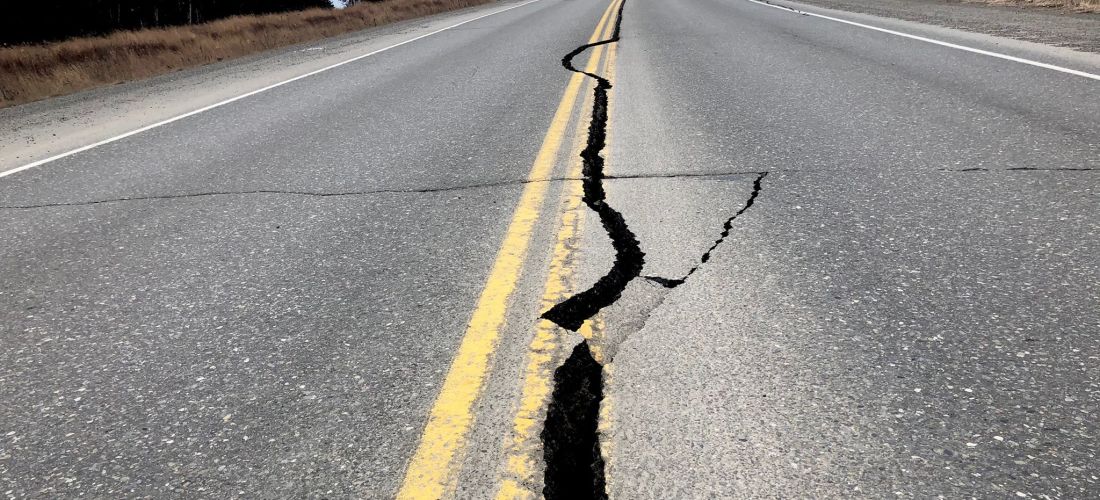
In a statement released Monday, Kenai Peninsula Borough Mayor Charlie Pierce said the peninsula experienced damage to roads, especially in Nikiski along the Kenai Spur Highway. Some borough buildings and schools had minimal damage, but most of the immediate issues were resolved on Friday, Pierce said in his statement.

“This week we will continue structural evaluations to be sure that none of the buildings have any further issues to be sure and keep our students and residents safe,” Pierce said in the statement.

Pegge Erkeneff, communications liaison with the school district, said the district’s facilities received minimal damage.

“We don’t plan to close any schools; we feel confident that schools are safe, or they wouldn’t be open,” Superintendent Sean Dusek said in a statement. “The two-hour delay start on Monday was weather-related, not from the earthquake.”

Borough maintenance fixed a minor leak in the Kenai Central High School heating system. The school remained in session. Nikiski Middle/High School was released early on Friday following the earthquake because of a loss of water pressure caused by a power outage. A minor water leak in the heating system was also patched. Tebughna School in Tyonek suffered a substantial loss of ceiling tiles in the gym, which caused an early release on Friday. Hope School was released early on Friday, following a water and propane gas leak. Paul Banks Elementary and West Homer Elementary had gas leaks at their boilers, which were isolated, patched and repaired. The schools remained in session.

Chapman School in Ninilchik also reported a minor gas leak, which was repaired, Erkeneff said.

Erkeneff said most of the damage at borough schools was addressed on Friday.

“All damage except the ceiling damage was either repaired or patched by the end of the day,” Erkeneff said. “Permanent repairs for temporary patches will be completed within the next few weeks.”

She said several schools have minor cracking and will be looked over by borough maintenance and a structural engineer, which will take several weeks.

Jack Blackwell is the superintendent for the State Parks Department in the Kenai Peninsula and Prince William Sound area. He said the Eagle Rock Boat Launch access road, in between Kenai and Soldotna, was damaged by a landslide, triggered by the earthquake.

“Half of the hill slid into the wetlands below,” Blackwell said. “We were closed for the season so there were no vehicles or people in the area.”

He said the State Parks Department engineers will look over the damaged road and assess further damage.

Mayor Pierce said the borough will continue to improve emergency response in the case of another similar event in the future. Pierce said residents can help by being prepared, keeping emergency supplies at home, vehicles fueled and helping each other during times of emergency.

If residents see any significant damage to property, including their own, reach out to www.kpb.us/emergency or call 262-4910. The borough encourages residents to take photos or videos of any damage or losses. Additional assistance from the state may become available.