
Reception mixed on ASD proposal to switch school start times around

Alaska, Audio, News

Originally published on Alaska Public Media.

The Anchorage School District is considering a huge change. The district is looking at implementing new school start times, with elementary schools starting earlier and high schools later.

The district held a series of open houses recently to educate the community and hear feedback.

At the first open house for school start times, poster boards are set up on tables inside Lake Hood Elementary. Parents, teachers and community members were gathered around tables, talking with school district personnel about the potential start time changes.

Pamela Witwere, a parent and a teacher at Gladdyswood elementary school, says she’s worried about the potential change.

“I have major concerns because my kids aren’t early risers, and many of the families that I work with, none of their kids are early risers,” Witwere said. “So these aren’t kids that are up at 6 a.m. They struggle to get to school at 9 as it is,”

Witwere isn’t alone. Nearly every parent and teacher interviewed at the open house expressed similar concerns.

The school district is proposing the change in an effort to improve attendance, reduce tardiness and increase graduation rates. The school district cites national research that suggests middle schoolers and high schoolers do better with later start times and and younger students benefit from starting earlier.

Anchorage School District superintendent Deena Bishop says the open houses are an opportunity to gather input about the new start times.

“This change isn’t as simple as just change the start time and everybody will be happy. The entire community is nearly affected, so we wanted to be sure that we data sourced it,” Bishop said.

Bishop says she recognizes that switching elementary schools to an earlier start time will not be easy and she understands the change would ripple throughout the community. Childcare is a big issue — making sure daycare providers are able to adjust their schedules to match the school district. Bishop says the district would hope to tackle that issue through partnerships with local nonprofits.

“We would never want a parent to be stressed from just having a family, and running a family, and getting to work on time, and getting to school and back and forth, and getting food on the table. All those things are real life worries and actions for our families, so we wouldn’t want the school to put extra stress on families,” Bishop said.

The school district is proposing four scenarios, one of which is no change to the schedule at all. The other scenarios have high schoolers starting at 8:30 am or after, and the elementary students starting no later than 7:45 am.

Last year, a student created an online petition that urged the school district to study later school start times for high schoolers. The petition gathered thousands of signatures and pushed the school district to hire Western Demographics to study the issue.

Shannon Bingham is leading the research team. He says it’s clear high schoolers benefit from later start times. But the research isn’t as conclusive on elementary kids starting earlier.

“So as far as the quantity of research that’s out there, there’s significantly less. So some of the minority opinions and some of the more recent research is saying earlier start times are not necessarily good for elementary school children either.”

But Bingham says the research they conducted on elementary students showed that younger children who had to wake up earlier weren’t negatively impacted.  .

Jose Lopez attended the Lake Hood open house with his wife and three children. He thinks it would be hard for elementary kids to make the switch.

“I have three kids that attend school early. I kind of have a hard time making the younger kids start earlier than the older kids,” Lopez said.

The Anchorage School District says the comments received so far have been mixed. Parents of middle and high school students tend to be in favor of the change, while parents of elementary students are not.

The Anchorage School Board will make a decision later this year, and any change will be implemented in the 2019-2020 school year.

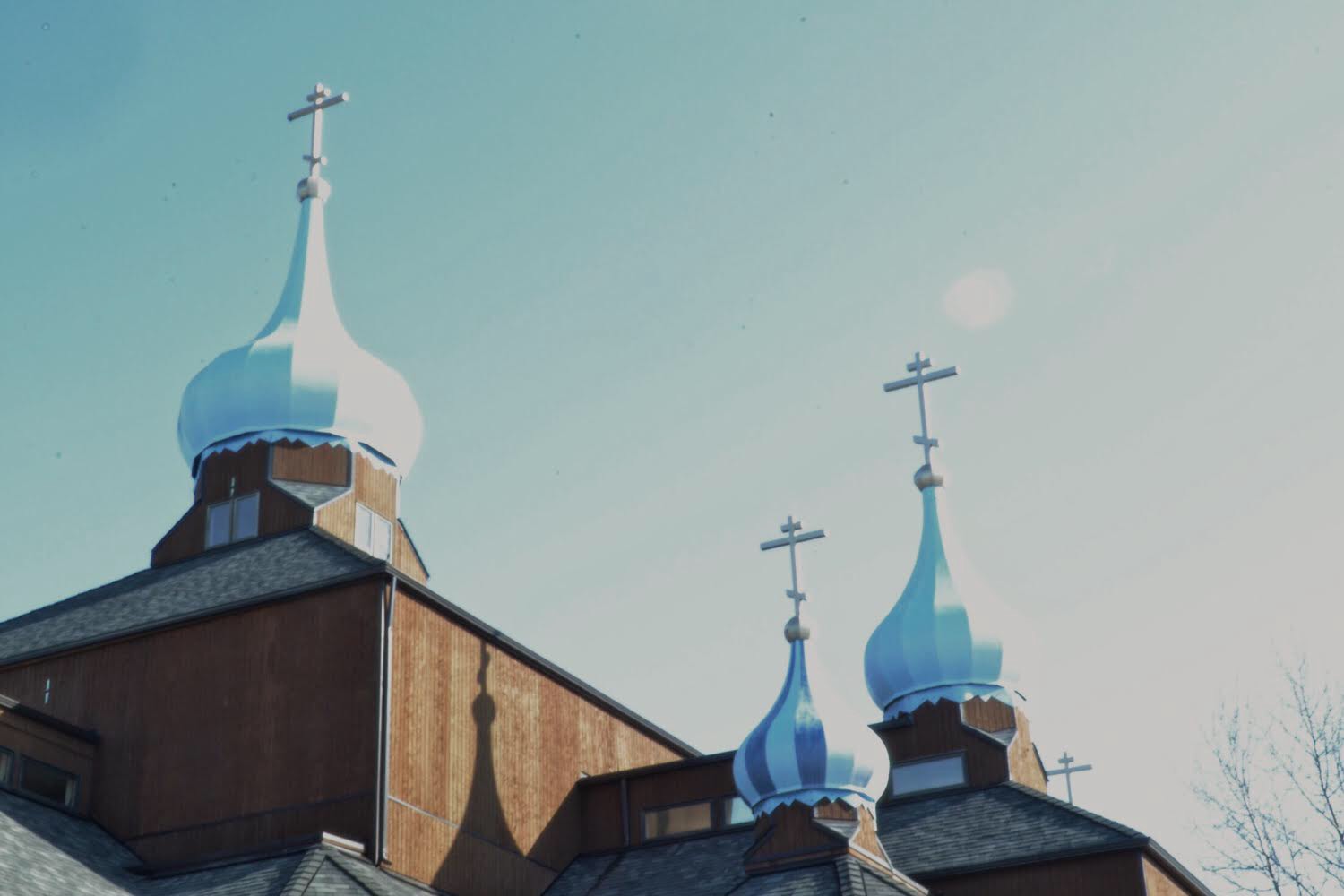
AK: The sweet traditions of Russian Orthodox Easter

Alaska, Audio, food, Uncategorized

Originally published on Alaska Public Media

Scraping the sides of the bowl, Abby Slater is forming a dough of milk, sugar, yeast and flour. It’s Slater’s first time making Easter bread. She’s observed and helped her Aleut family make it many times before though.

“My earliest memory of Easter bread was actually later in life because we didn’t reconnect with my aunt until I was a little bit older,” Slater said. “She was the one who had the recipe for the Easter bread. My grandma died before I was born, my native grandma, my kukax. So she didn’t get to pass that along to us grandkids,”

The recipe her aunt uses is the same the family has been using for generations. Originally from Kashega, a small village near Dutch Harbor, Slater’s family traditionally used dried berries and candied fruits in their Easter bread.

“It’s interesting hearing all the different variations of it because at the end of the day, it’s just a bread recipe, right? We talk about things about how some people put berries in it, or candied fruit,” Slater said. “That’s the version I grew up with. And other people are like ‘that’s not how you make it.’ And other people frost it, and in my mind I’m like ‘that’s not how you make it.’ But that is how people make it, it’s just not what I grew up with, you know?”

St. Innocent Russian Orthodox Church in Anchorage. (Photo by Victoria Petersen, Alaska Public Media – Anchorage)

Diane Chris says that the Easter bread in Prince William Sound is elaborately decorated. She’s a Matushka — priest’s wife — at St. Innocent Russian Orthodox church in Anchorage.

“On Easter, when you’re in a church, I’ve been in the churches, they’re small in the Sound. I’ve been there, and you’re fasting, and all you can smell is this sweet kulich, and the frostings and it’s just amazing,” Chris said. “Normally they put a candle on the top of them, and it’s lit for the blessing. It’s very festive.”

Easter bread, also known as kulich, is a decadent, egg-rich, dairy-rich, yeast-risen bread. Mother Capitolina, the only nun at St. Innocent Russian Orthodox church in Anchorage, says the bread symbolizes Easter.

“We’re doing everything we have fasted from: butter, eggs. Now it’s the resurrection,” Mother Capitolina said.

Chris helps make food for a bake sale the church is having. She says the bread is baked in coffee tins, representing the tomb Jesus resurrected from.

Traditionally, Easter bread is made by women and is a skill mothers pass down to daughters.

Every year, St. Innocent church has an annual bake sale where church members bake Easter bread, fry bread, piroshkis, pirok and other traditional foods. The money from the sale goes to their church and is open to the public.

“We have lots of people throughout the state that have grown up with the bread, from the villages,” Chris said. “They have different types of breads that they’re used to, so we have a variety here that are baked by the ladies of the church.”

It’s not just the Alaska Russian Orthodox population that enjoys the tradition of Easter Bread. Chris says that St. Innocent’s annual bake sale is always the Saturday before unorthodox Easter.

“We try to do it prior to everybody else’s Easter, because they like it for their Easter,” Chris said. “It’s become a tradition for a lot of people who aren’t necessarily orthodox.”

There are over 50,000 followers of Russian Orthodoxy in Alaska, and 49 parishes set up across the state. The first Russian Orthodox Church established in Alaska was on Kodiak Island in 1795. Many of these Russian Orthodox churches are baking Easter bread in mass quantities; some are even shipping it.

St. Tikhon, another Russian Orthodox Church in Anchorage, also sells Easter bread. Via their Facebook page, St. Tikhon takes orders for Easter bread and sometimes ships to villages across Alaska.

The bread is blessed on Easter Sunday by members of the Russian Orthodox church and then shared with the congregation. Easter bread is only eaten by the Russian Orthodox between Easter and Pentecost, which is 49 days after Easter.

Slater isn’t Russian Orthodox, but the making of Easter bread ties her to her Alaska Native family.

“I feel really connected, I guess,” Slater said. “Maybe that sounds silly ‘cause it’s just bread. But I feel like I’m participating in something– It’s kind of the way that I feel when I cook anything that’s an old recipe. You just feel like you’re part of something that’s older than you, and bigger than you.”