For TNL: Sonia Sotomayor visits Anchorage

Alaska, News, Print, Uncategorized

Originally published in The Northern Light

Over 1,200 people gathered in the Dena’ina Center in downtown Anchorage on August 17 for a last minute presentation by Justice of the United States Supreme Court Sonia Sotomayor. Sotomayor was the first Puerto Rican judge to serve in any state, the first Latina to serve on the Supreme Court, the fourth woman to serve on the Supreme Court and is one of the youngest people to have ever served on the Supreme Court.

The Alaska Bar Association organized the event, allowing practicing attorneys to receive Continuing Legal Education (CLE) credits if they participated. Of the sold-out show, 40 percent of the 1,200 attendees were practicing attorneys.

Mary DeSpain, CLE director of the Alaska Bar Association introduced and welcomed Sotomayor with a traditional Spanish greeting — “la bienvenida a nuestra ciudad” — Welcome to our city.

The event was a Q&A, with Alaska resident Judge Morgan Christen of the United States Court of Appeals for the Ninth Circuit.

Questions were canvased and chosen before the event by the Alaska Bar Association. With questions from attorneys, the general public and children of the community.

Sotomayor revealed a vulnerable, human perspective in her poignant responses.

“I can’t imagine a better role model. I like how she talked about her human perspective with the importance of making decisions that affect everyone,” Johanna Richter, an economics student at UAA said.

Christen opened the talk with discussing Sotomayor’s book “My beloved World.” In the book, Sotomayor speaks about how she wanted to speak honestly about the experiences in her life — the good and the bad. Sotomayor discussed the hardships of being in the public eye and nearly turning down her Supreme Court nomination from the pressure of tabloids ruining a reputation she spent a lifetime creating.

“You get nominated for the Supreme Court and it’s like getting on a rocket ship to the moon, and it doesn’t take you back,” Sotomayor said in her discussion.

After a few questions from Christen, Sotomayor decided to leave the stage and walk among the crowd. Making her way through over 1,000 people she hugged, shook hands and signed autographs with the audience as she answered the rest of Christen’s questions.

A crowd favorite, a kid-canvased question submitted to the Alaska Bar Association asked Sotomayor what Harry Potter house she belonged to. Without skipping a beat, Sotomayor answered with Gryffindor, and further discussed her love affair with the book series.

When asked if diversity is important on the court, Sotomayor discussed the importance of life experiences as diversity in perspective and decision making.

“I don’t define diversity by gender, ethnicity or race,” Sotomayor said in her discussion.

Audience members ranged widely in age and profession. With members of the Youth court present, and small children with their parents, to Mayor Ethan Berkowitz and practicing attorneys, the crowd was diverse.

“I’m obsessed with her. I love everything about her, and any exposure i can get is great,” Madeline Parrish, age 16 said. “This is what I want to do.”

Sotomayor, who spoke in Fairbanks days before, is traveling around Alaska visiting over 12 communities around the state. Visiting Alaska has always been on Sotomayor’s bucket list, and it further helped her reach her goal of visiting all fifty states. When she got asked to speak at UAF, she decided to take the opportunity to see the sights throughout the state.
For TNL: RED ZONE: 3,400 and counting – Untested rape kits discovered in statewide audit

Alaska, News, Print, Uncategorized

Originally published in The Northern Light

In the fall of 2015, Governor Bill Walker ordered the states law enforcement agencies to release the number of untested rape kits in their inventory. Of the 52 agencies in the state, 17 facilities reported their inventory. The reported inventory brought the total to 3,400 untested rape kits, and counting. Of the 3,400, 1,691 untested kits were reported at the Anchorage Police Department, some being decades old.

Some reasons a kit might be in storage and not processed is if a victim asks to not be tested, if the sexual assault was a false report, or if the victim is deceased.

“We have been requested in the past from outside entities to say do you know what your current backlog is, are there any ways we might be able to alleviate those and getting a firm answer from anyone was incredibly difficult. It really took an action of the governor to be able to find out how many,” Keeley Olson, Executive Director at Standing Together Against Rape (STAR), said. “The whole idea of sexual assault is that someones power has been completely taken away from them; and the idea of advocacy and empowerment is to give them options.”

In the case of a sexual assault on campus, the University Police Department collects evidence for a rape kit, then sends it to the crime lab. UPD had no untested rape kits in their storage at the time of the audit.

“Like any other agency, if we have a sexual assault, we have a kit. Once we collect it, we give it to our evidence guy and he transports it to the state crime lab. We deal with it like everyone else does,” Lieutenant Michael Beckner of UPD said.

Rape kits hold evidence that is collected from the victim, then examined at the crime lab in hopes of finding a perpetrator. The DNA held in rape kits are often missing pieces in larger criminal cases.

Victims are encouraged to go through with the examination and DNA collection, in hopes to find justice for the victim and other possible victims. Of course, an adult is not required, and has the right to abstain from the examination.

“We would not make a victim do anything they don’t wish to do and they would make that choice. Our responsibility is to educate the about preserving evidence and to understand that there is a time frame to preserve evidence. We would want to make sure that a person understands what that means for the long term,” Bridgett Dooley, Director and Title IX Coordinator said.

The problem of rape kit backlog expands past the state of Alaska and is a national issue. Few state governments track rape kit backlog, and no federal entity tracks rape kit backlog.

Legislation is currently being crafted by the Governor in hopes to bring every law agency accountable for their untested rape kits on site.

That legislation will be will be introduced by the governor in the next legislative session and will require a state wide audit and hold a fiscal note to hire investigators and prosecutors for cases identified.

The state has applied for a federal grant to help finance processing for the untested kits. The state will hear back if they received the grant at the end of the month. It will take years to process the untested rape kits.

For TNL: Record revival: Music’s comeback kid

Alaska, News, Print, Uncategorized

Originally published in The Northern Light.

In an age where virtually all music is in the palm of our hands, it’s hard to believe why anyone would opt for an outdated analog format of listening to music. Despite Apple music, Spotify, Tidal, good ol’ fashioned YouTube, and other music sharing software and apps the vinyl revival is well on its way into 2015 and is spearheaded by an unlikely generation – the millennials. Those late teen to thirty-something-year old’s are putting vinyl LP’s (long playing albums) back on the shelf in a neighborhood near you.

One half of all record purchases are by people 25 and younger according to research done by Music Watch. With over 13 million vinyl albums sold in 2014, this is the highest vinyl sales have been since 1989, according to the Recording Industry Association of America.

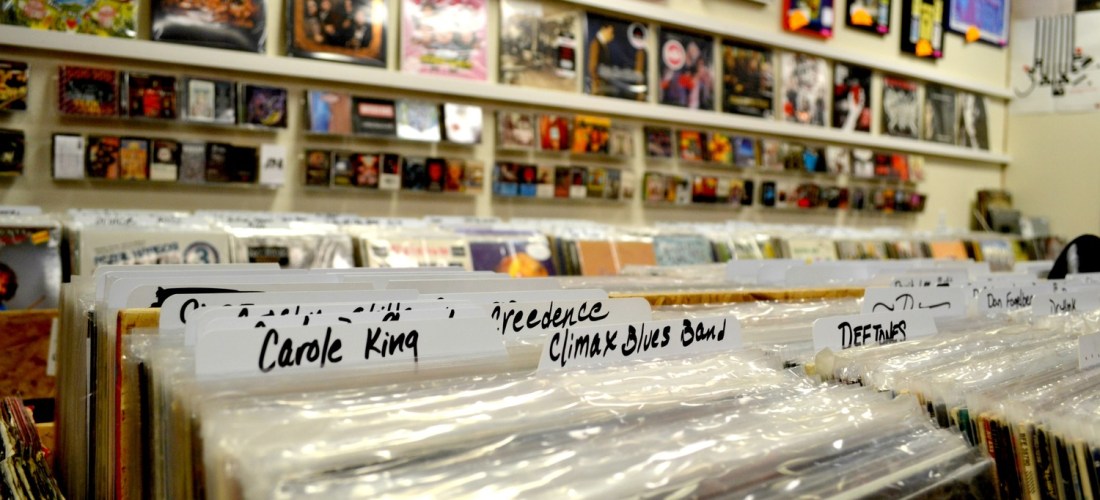
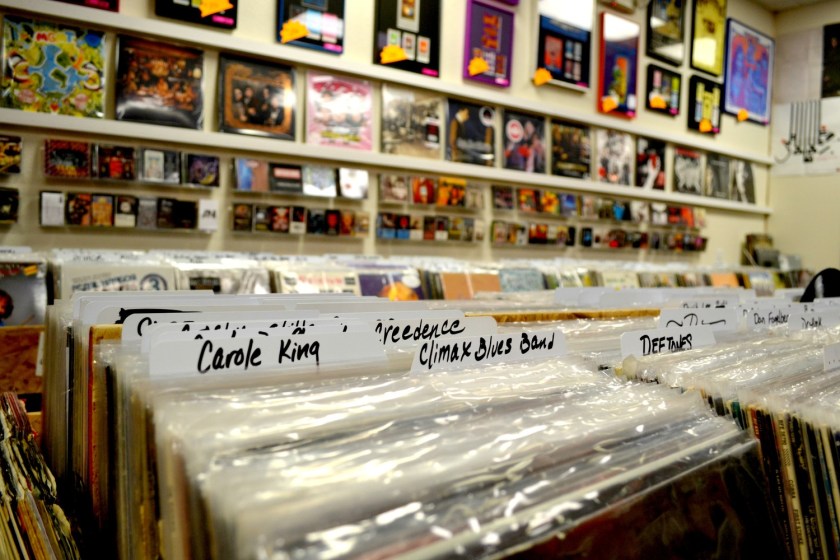
In Anchorage, vinyl records are available in multiple locations; Title Wave, Barnes and Noble, and Anchorage’s newest record shop Obsession Records. Obsession Records opened its doors on Nov. 28, 2014. Verna Haynes runs the shop alongside her husband and son where they buy and sell vinyl records as well as electronics, turntables and speakers.

Nostalgia was the main proponent in Steve and Verna Haynes conception of Obsession records. Their collection grew as did their desire to share with the community their love of vinyl and music.

“Years ago, my sister dragged home a few boxes of records and we had this nostalgic moment and had so much fun looking through them. All of the sudden, it became this thing and he [Steve] just sort of took off with it. All of a sudden he’s out there and he’s chasing records and collecting, and then we had this huge collection. He wanted to be able to communicate with other people that like vinyl, that like music,” said Vema.

The shop has all walks of life come through the doors, but it’s the millennials that want to take vinyl to the next level, with better sound quality and modern music.

“I’ve got that 20-30 year old range and they got jobs and they can invest in the better turntable and better components, and they are at a point where they can take it a step further. They want better sound, that kind of thing, invest a little more money. They are serious about their vinyl, they want quality vinyl, they want it to sound good. Then you have people like me in their 50’s who are coming back to it.” said Vema.

Hannah Dorough, UAA English major with a love of vinyl, can thank her parents for introducing her to the record world. Dorough doesn’t think vinyl is coming back, but that it never left.

“I mean, I like it because vinyl is cool. And you get this awesome feeling when you listen to them. It’s like the musical equivalent to opening that old, dusty book, you know? It’s just cooler to have on vinyl and just feels good to listen to. Honestly, they never truly went out of style. Like the people who love vinyl still love it, still buy it. Even CD’s are rarely bought anymore, but the people who love them go out and buy them,” said Dorough.

Local musician Ian Wahl, age 21, grew up listening and playing music. Wahl appreciates the opportunity vinyl gives you to listen to the music as the artist intended, something Wahl believes is hard to come by.

“I think the appeal has a lot to to with the look and feel of vinyl. I also tend to only listen to older records so it kind of makes me feel closer to the artist that recorded the tracks because that is the way they heard their music and the music that inspired them. In this day you can go online and find almost any song ever recorded and released, but with vinyl you have to hunt through second hand stores and garage sales to find a certain artist or record which makes listening to it more rewarding. I also like having a whole record because I hear songs that I might otherwise not have on B sides of albums that weren’t remembered. When you go online and look for a certain song you find it and play it and you get the other top 40s hits from that artist and genre but you don’t hear the song in the context of what that artist was feeling and creating at that time.” said Wahl.

With a nostalgia transcending generations and a sense of pride, vinyl gives millennials a fascinating and traditional format of listening to music and expressing themselves. Whether you’re a 50-year-old whose always had a love for vinyl and never believed it went out of style, or a 22-year-old with a box of old records your grandparents gave you, vinyl is here to stay