For Show Me Alaska: Conquering the Denali Park Road

Alaska, Online, Uncategorized

Originally published in Show Me Alaska

One moment we were enjoying the ride through Polychrome Pass. The next, we were nearly teetering on the edge of a cliff with the wind rocking the car and a sandstorm brewing right outside our windows.

In September 2012, my parents won their first ticket in the Denali National Park road lottery. A rare opportunity afforded to several hundred lucky Alaskans every year, the ticket allows you one day in the park with your own private vehicle. My stepmom, my grandmother and my aunt packed up the Subaru and made our way north. Binoculars, cameras and a sense of adventure accompanied us on what was sure to be a memorable drive.

The weather was windy and rainy but we were determined to get the most of Denali. We made our way to Polychrome Pass, a beautiful and unforgiving stretch of narrow dirt road: hanging rocks and steep slopes on one side and at least a 500-foot drop on the other. We continued on. Loose gravel from the mountainside was picked up by what were now hurricane force winds. Lack of visibility was becoming an issue, but we persisted.

Then there was no visibility whatsoever. We began to panic. The wind got stronger and stronger and with one large gust, the car shook and the rear window of my stepmom’s new Subaru Forester shattered. Dirt and rocks blew inside. In the back seat, I ducked my head as my stepmom stepped on the gas and propelled the car into the sandstorm’s abyss.

Getting out of Polychrome Pass felt like an eternity. I kept my head on my grandmother’s lap, covered with a jacket to recover from the ferocious windstorm we passed through. We duct taped a garbage bag over the rear window and made a beeline back home to Anchorage. My parents have won the lottery and visited the park every year since. They always invite me and I always decline; too soured by the memories of being a little too close to the edge.

But this year I’m back.

A unique opportunity reserved only for Alaska residents, the Denali Park Road lottery began in 1990. In the 1980s the road was congested with over 2,000 cars a day, according to the National Park Service, and NPS decided to implement a lottery system, capped at 300 cars a day at the time, to reduce the amount of traffic on the narrow dirt road.  In 1994, the cap was raised to 400 vehicles a day, where it remains today. The National Park Service receives around 10,000 applications annually for the 1,600 tickets offered in September of every year.
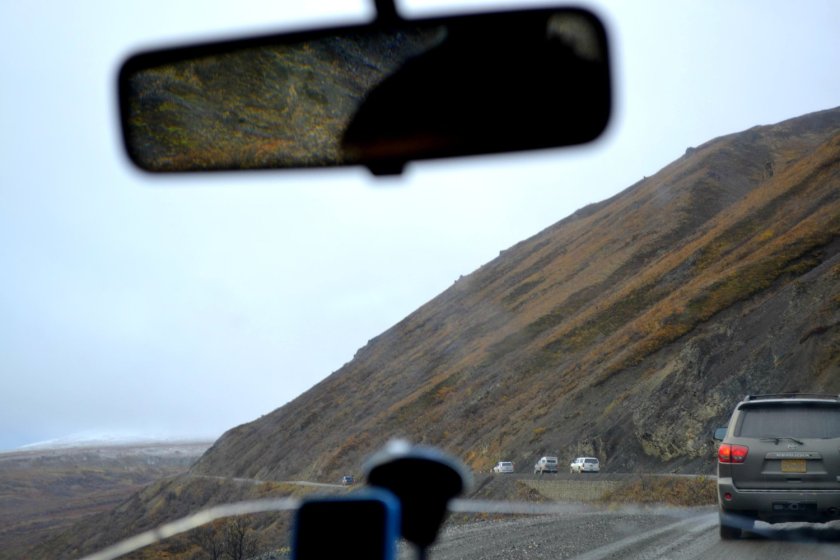
To enter the lottery an Alaskan will pay the $10 entry fee, and if that Alaskan’s ticket is chosen, an additional $25 road lottery fee. Upon entering the park, the driver and attendees will visit the visitor’s center and pick up their permit and pay the $10 park fee. Winners of the road lottery can forfeit their tickets to friends and family with a small note and signature on their printed confirmation. Each ticket is good for a permit for one private vehicle or, for the more adventurous, motorcycle. The permit allows the vehicle and its passengers access to the park road for the entire day (6 a.m. – midnight). The lottery takes place on a Friday, Saturday, Sunday and Monday in mid-September.

This year I drove with my cousin Quinn and his girlfriend Tressa. We rallied our way to the park entrance, excited for wildlife and whatever lay ahead. We packed the Subaru with snacks and drinks. Quinn, a first-time road lottery participant and experienced mountain climber, made a successful trek to the summit of Denali back in 2013; Tressa was a park newcomer, eager to see the mountain in all of its glory.

It is important to check the weather before you go and to plan accordingly. It is not uncommon for the weather to change dramatically in a short amount of time.

As we rounded the corner into Polychrome Pass, the golden-colored canyon rocks came into view, sparking an immediate flashback to that unforgettable drive four years prior.
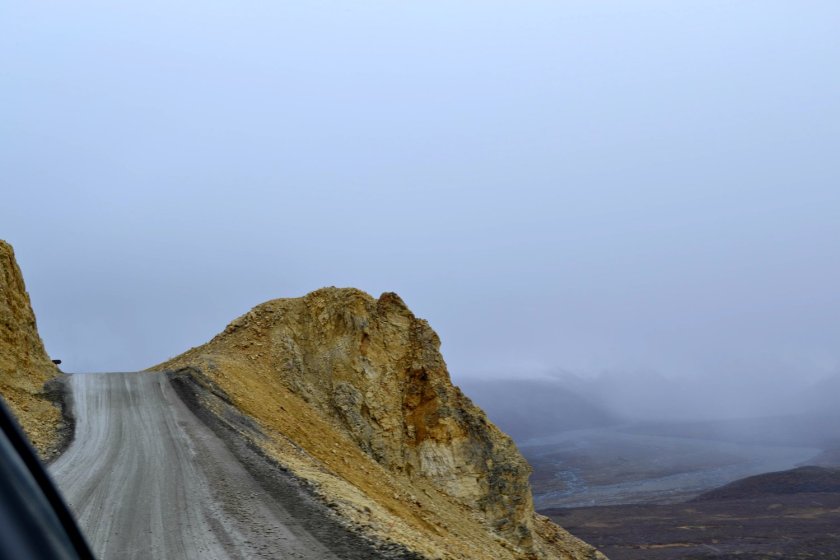
This year, we made our way to end of the dirt road, driving more than 90 miles, socked in by a mild snowstorm; the landscape dusted white, the mountain as mysterious and elusive as ever. This year, I saw Wonder Lake, the remote ranger station and the historic cabin of Joe and Fannie Quigley, famed miners of the early twentieth century.

One bear and three bull moose later, we left the park and were back on the Parks Highway headed home; this time with great memories of the Denali Park Road.

For TNL: Urban indoor farm to provide fresh produce to Anchorage

Alaska, food, Print, Uncategorized

Originally published in The Northern Light

In the land of the midnight sun, the endless sunshine can raise monster 130 pound cabbages, 1,200 pound pumpkins and 35 pound broccoli from the fertile soils of the Matanuska-Susitna Valley. We flock to farmers markets to reap the rewards of valley farmers and savor the flavors of our Alaskan-grown produce. As the frost begins to settle and the season ends, Alaskans grow nostalgic for freshness in anything. Jason Smith, a UAA alumni who graduated with an undergraduate degree in geomatics and a master’s degree in business administration, is bridging the fresh food gap in Anchorage.

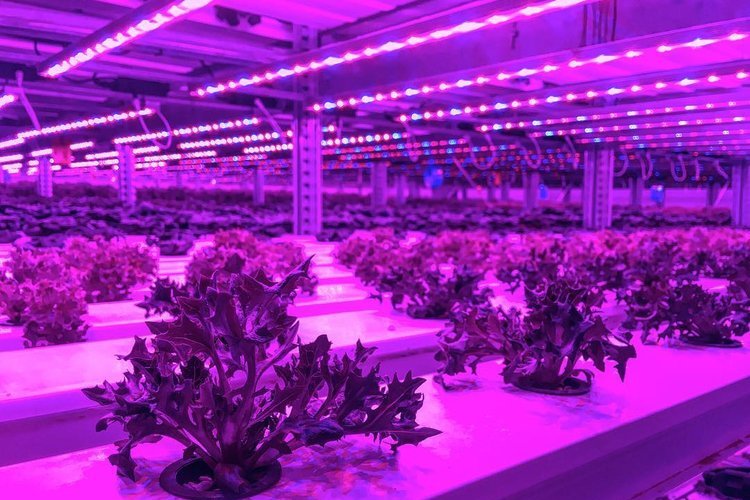
Residing inside the old Matanuska Maid building in Spenard, Alaska Natural Organics is Smith’s hydroponic vertical farm, where he harvests produce for restaurants and the Anchorage community.

Alaska Natural Organics was approved for funding in 2014 and provides fresh, locally grown produce to many local Alaskan restaurants including 49th State Brewing Company, Midnight Sun Brewing Company, Hearth, Bear Tooth Theatrepup, Romano’s, Ginger, Rush Espresso, Sacks Cafe, Snow City Cafe, Spenard Roadhouse, South Restaurant + Coffee House and Pangea. Beyond local restaurants, Alaska Natural Organics also sells their basil through Carrs and Fred Meyer. Marketing their Alaska grown produce has come with its own unique set of challenges.

“One of the challenges we have is that everyone says they want to buy local, but there’s people down in the southern California working for a whole lot cheaper, and it brings the price way down. That’s been a hurdle,” Smith said.

Locally grown produce may be worth the extra money. With higher nutritional value and the potential to improve the local economy, buying local could help Alaskans invest in their community.

“On the one hand, local means higher nutrition value. The nutritional value of produce degrades very quickly days after harvest, so you’ll increase the nutrition if you buy it as fresh as possible,” Smith said. “It helps our economy, it stabilizes jobs in the state and it gives us a bit more independence from outside sources. We got one road and a port to bring our food here. It’s a perpetual task so our food can come into the state.”

Bear Tooth, one of Anchorage’s local restaurants make use of what Alaska Natural Organics has to offer, and is even looking into buying basil from the vertical farm all year round. The popular Spenard restaurant uses an average of 15 pounds of basil a week, mostly being used in pesto sauces.

“We are working to get [basil] from Alaska Natural Organics, we are getting some from them currently. He’s someone who can produce for us in a way where we can use year round. Our goal is to be able to go all out with them,” Stephanie Johnson, general manager at Bear Tooth said.

Bear Tooth who uses a myriad of Alaska grown and made products from around the state, seeks out local products to showcase in their restaurant.

“It’s always ideal for us whenever possible because you lose a lot of flavor the farther away something is. Everything being fresher is ideal. When you work with locally grown food, people are far more willing to work with you. The Bears Tooth had a pretty strong commitment [to local products], prior to me being here. It’s something I’ve been doing at other places as well, so I brought my enthusiasm for it,” Natalie Janicka, Executive chef at Bear Tooth said.

With more awareness for locally grown produce and items in Alaska, awareness is growing and farmers and consumers alike are taking advantage.

“I think years and years ago when we first wanted to start carrying Alaskan grown products there were far less distributors. It was a lot of going to the same three produce distributors. At one point, the only thing that you could get was lettuce, that made sense for us at least. It was super challenging,” Johnson said. “It’s getting easier all the time. There’s such a culture of local food now.”

Options for local food when the winter chill begins to settle over the state are more abundant than previously thought. With Alaska Natural Organics providing fresh greens year round, one can taste the fresh and nutritional bounty of a local grower in the comfort of their favorite restaurant or bought from Carrs or Fred Meyer.

Fresh basil from Alaska Natural organics can be bought at Carrs and Fred Meyer. Other options for locally grown and made products is the Center Market, Alaska’s only year round farmers market located in the Sears mall. The market operates in the mornings and afternoons on Wednesdays and Saturdays throughout the year.

For TNL: UAA Professor Offers Solutions to Alaska’s Roadway Problem

Alaska, News, Print, Uncategorized

Originally published in The Northern Light

Learning to dodge potholes and control your car in ruts is just part of learning to drive in Alaska. Professor Osama Abaza is hoping to change this.

In the civil engineering department, Abaza and his team are researching and working alongside the department of transportation to tackle the issues of Alaska’s highways.

For over 10 years, Abaza has worked with a myriad of student researchers to come up with, test and experiment with a new form of concrete. This rubberized concrete uses crushed up waste tires and is strengthened with steel fiber. The combination allows for durability as well as flexibility, both of which are important for climate-related road expansion and contraction.

“This research could revolutionize how materials engineer combat rutting. By using steel fibers and rubber, they are fighting against rutting from studded tires while also protecting our roads from permafrost heaving and cracking. If this concrete is the answer to our rutting problems, this will mean less road maintenance, and ultimately less money spent on costly repairs and road rehabilitation,” Melissa Frey, an undergraduate engineering student at UAA and a member of professor Abaza’s current research team, said. “Our state hasn’t really seen a material like this before, but implementing this material could really change Alaska’s transportation engineering.”

What’s special about this concrete is that it will prevent ruts and potholes from occurring on the states highways.

“It’s going to prevent ruts from happening. Concrete doesn’t develop potholes. You’re not going to see any ruts or potholes on our roadways, that is of course if we decide to use this material,” Abaza said.

More than ruts and potholes, this material will allow Alaska’s highways to last longer.

“Our roads have a lot of ruts on it. Usually what [Department of Transportation does] is rebuild the road every 4 to 6 years. That same road lives in the lower 48 for 20 years. We have all these issues because of our weather and the use of studded tires. With this concrete, our roads could live for 20 years and we can avoid turning our town into a construction zone,” Abaza said.

When testing this new material out, students and faculty were able to take advantage of the engineering buildings state of the art pavement lab.

“We have one of best labs, even in the lower 48, for testing this,” Abaza said.

Last September, UAA put a slab of this new concrete in front of the parking garage near the Consortium Library. It’s being tested, while students during the summer created slabs to place on Abbot Road. Those test slabs, which will have sensors in them to detect expansion rates, will be placed onto Abbot Road in the spring and then observed for three years.

“We know for sure it’s going to work, but now we have to convince the public,” Abaza said.

The price of this new concrete is much higher than the asphalt the DOT uses now, but the state will be saving money in the long run if the roads can last longer.

“The concern is that the material is going to cost a lot more, but if you look over life cycle cost of the material it’s going to be way cheaper than what we are doing now,” Abaza said.

With UAA and the DOT working together. students can get hands-on training working in their community and have the opportunity to apply the knowledge they learn in the classroom to the field.

“I’ve been working with him when I came on board to do further testing on the feasibility of construction. My background is with DOT construction. I’ve been working with him since the start of my thesis,” Mahear Aboueid, a UAA grad student who is also a project manager at the DOT said. “I think the chemistry behind this material is definitely positive towards resisting stud ware and freeze/thaw. As part of DOT and UAA, it’s nice seeing both sides are wanting to work with each other. I think it’s a great thing to be mutually beneficial in helping the community.”

Abaza also sees the benefit UAA can have the community. Whether it be putting students in the hands-on learning environment by working with DOT or working on research that can save the state money while also keeping Alaska drivers safer; Abaza looks to build a bridge with UAA and community entities.

“In order for us at UAA to be really effective in the community, we are supposed to help the community and figure out new solutions. I want to show that UAA is really a resource to provide solutions. We have way more responsibility than to just graduate new engineers,” Abaza said.

Abaza and his team are currently waiting til the spring to place their concrete slabs in Abbot Road. Once placed, the slabs sensors will monitor expansion and contraction for three years.