For JuliaOmalleyMedia: A Spenardian grandma’s blueberry crumble

Alaska, food, Online, Spenard, Uncategorized

Originally published on Julia O’Malley Media.

My grandmother, Sylvia Butcher, a true Spenardian and Alaskan in her own right, has been living in Alaska since the early 1960s. She met my grandfather, who grew up in Anchorage after his parents homesteaded here in 1943, in California and they started a life together in the city of Anchorage.
One of my grandmother’s favorite Alaskan pastimes is blueberry picking. She knows all the spots, from the shores of Seward to the mountainsides of Broad Pass. Of course, she would never permit to say where her favorite spot is, as that’s a heavily guarded family secret. She claims that the peninsula is the way to go. She notes that Girdwood blueberries are wormy and that Seward and Whittier are good places to explore, claiming that coastal blueberries are better in taste and easier to pick than their alpine cousins.
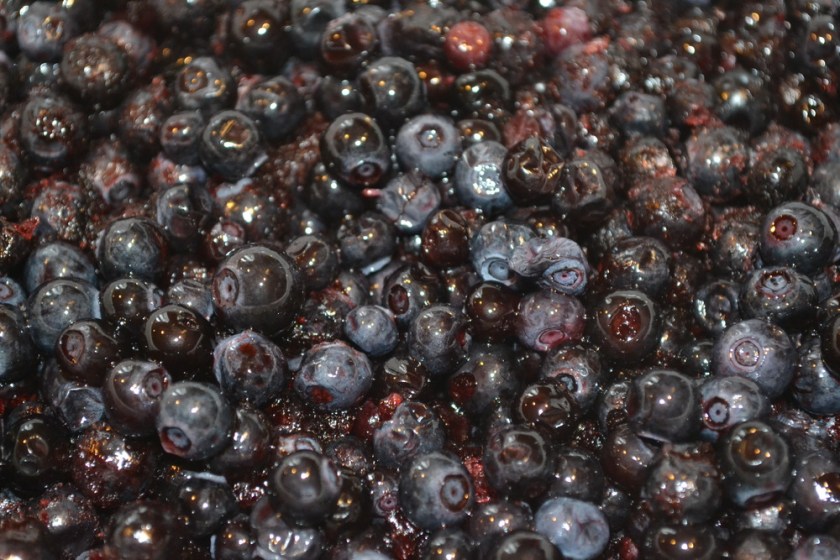
Don’t even think about buying blueberries for this recipe. Grandma scoffs at the mere thought of store bought blueberries, lacking in taste and authenticity.

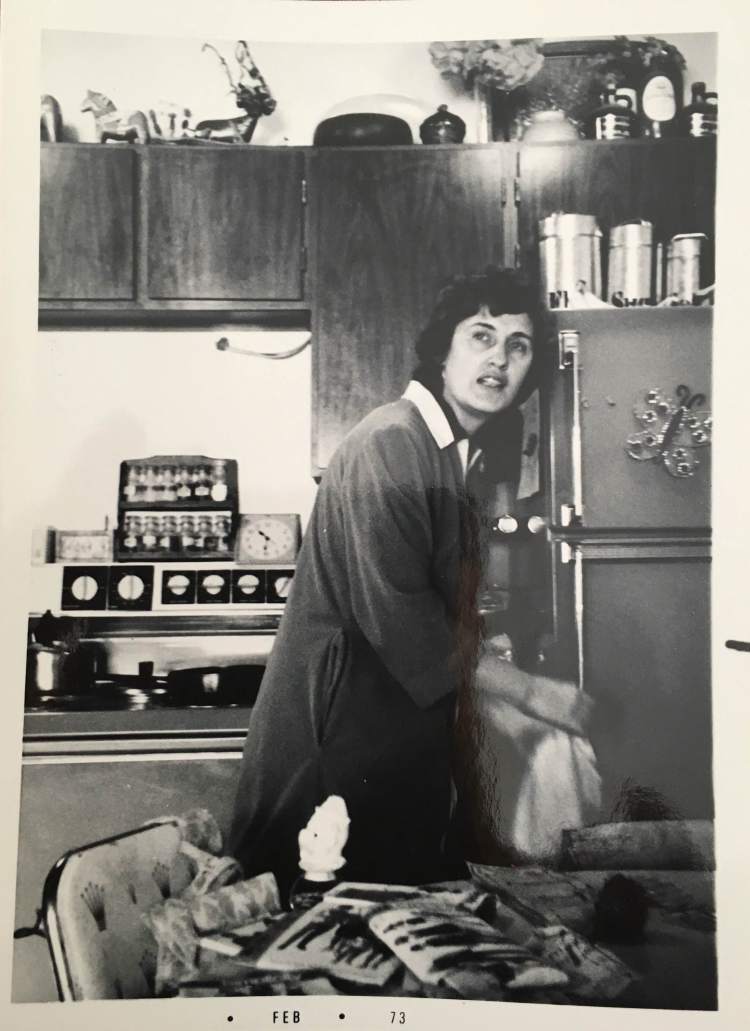
After my grandma agreed to teach me how to make her special blueberry crumble, I visited her in her kitchen. She pulled out of a bag of frozen blueberries that was thawing in the fridge.“They have to be Alaskan blueberries, not store bought. There’s no comparison,” she said. Grandma held the bag in the air and examined it, as if checking to see if a nugget of gold was actually just pyrite. The bag, with the date “8/15″ written in sharpie on the side, was gently poured out into the baking dish. As I spread the blueberries evenly in the dish, Grandma told me about picking those berries with my mom last summer while they were in Seward.

“We picked them until we couldn’t pick anymore, brought them back to the cabin, and went out and did it all again the next day,” she said.

The recipe for blueberry crumble was given to my grandmother in a cookbook published by the women’s club of Anchorage in the late ‘50s. Today, the recipe book is near shreds, the stack of papers are held together by an old rubber band. My grandma received the cookbook from my great-grandmother, her mother-in-law, as a wedding gift. My great-grandmother was part of the women’s club and had her own recipes published in the book as well. My grandma tried the Blueberry Crunch recipe, as it’s called in the recipe book, and has been in love with it ever since.

The recipe is relatively simple, despite the delicious and crowd pleasing results it receives. Make sure to let the dessert completely cool before serving, as it’s too runny and messy if served right after it’s taken out of the oven. The perfect way to serve it — the way it’s been served to me my entire life — according to Grandma is to “warm it up and serve it with vanilla ice cream.”

Grandma’s Alaskan Blueberry Crumble

Ingredients: 

4 cups Alaskan blueberries

1 cup sugar

3 tablespoons all-purpose flour

For the topping:

1 1/2 cups all-purpose flour

1 cup brown sugar

1 cup butter, melted

1 cup rolled oats

Instructions:

1. Preheat oven to 375 degrees.

2.  Place the blueberries into a baking dish. Pour in the sugar and flour, and stir with a spatula until the blueberries are covered. Distribute evenly across the bottom of the baking dish.

3. For the topping: in a separate bowl, combine the melted butter, brown sugar, flour and oats. Mix until evenly combined, then spread across the top of the blueberry mixture with a spatula.

4. Place in the oven and bake for 40 minutes.

5. Let the dessert cool completely. Serve warm and with vanilla ice cream.

For Knik.co: How to live in a dry cabin

Alaska, Online

Originally published on Knik.co

Living without plumbing is a lifestyle choice many Alaskans make. According to a state economic trend analysis published in April 2014, around 12,000 Alaskans live without water; a significant number in a state home to just a little over half a million people.

Whether it is by choice or necessity, living without water is particularly evident in the interior of Alaska. In the interior of the state winter temperatures dip far below zero, making it easy for pipes to freeze. In addition permafrost, ground frozen solid, is common in northern Alaska, making the idea of a modern septic system, a pipe dream. For some, living without water is a way to save money. For others it is a romantic existence, full of self-discipline and self-sufficiency.

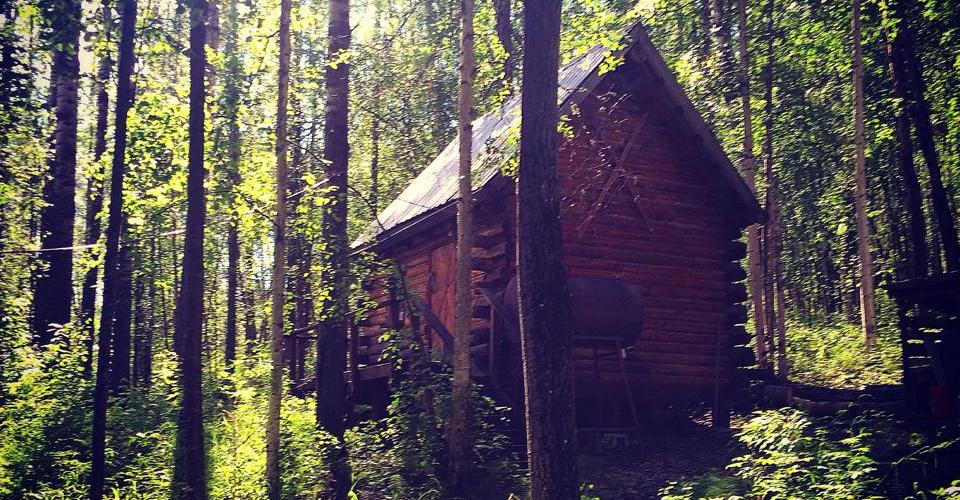
I was all on my own during the summer of 2014. In late April of 2014, I moved into my dry cabin off Farmers Loop Road in Fairbanks, Alaska. I went into town the first morning I woke up in Fairbanks. I found my five gallon jug in the local Fred Meyer and carried it to the nearest water station. The water stations in the Fairbanks area are a dime a dozen. About two cents a gallon, I would pump my water, just like I was pumping gas, into my little blue jug. I dragged little blue, significantly heavier when full of water, up the hill from where I would park my car to the cabin, about 200 feet away. I would then gracefully set my blue jug on the lip of the sink where it would live for three to five days; then I would do it all over again.

download (1)

Before I lived in a dry cabin, thirty minute showers were common and part of my everyday routine. Washing dishes in the dishwasher and cleaning my clothes, just a part of the weekly chores I powered through for majority of my existence. My biggest concern at first was how I was going to shower. I got a gym membership and took advantage of the showers in the locker room. With the hassle of having to drive 20 minutes away to shower, baby wipes and dry shampoo found their way onto my weekly grocery list. There was once a time the gym was closed and I was forced to wash my hair in a bucket on my front porch. I never was much of a bath person, but I remember my first real bath after moving out was more luxurious than I could have ever anticipated.

I never considered how much water went into cooking and cleaning. I’d say that 75 percent of my water usage went into a combination of cooking and cleaning dishes, the rest for drinking and other miscellaneous things. I learned to conserve my dish use and gained a carefree judgment of what was actually dirty when it came time to clean. This is because cleaning the dishes was an event in itself. I had to first try to figure out how much water I needed to finish the dishes. Boil that water. Then over the sink, carefully, I’d rinse the dishes with the water, scrub it with soap and hope for the best. I will never take the invention of dishwashers for granted again. The dishwater would drain through about six inches of PVC pipe into a bucket. Every night I would take the bucket of dirty water and toss it free off the deck. This is imperative if you don’t want your living space to smell like a garbage disposal.

download

It’s easy to remember the wasps, mosquitoes, and dirty dishwater when I recall my dry summer. However, it’s hard to forget the romance and the solitude that comes with sequestering yourself in nature.

Nolin Ainsworth, a former student at University of Alaska Fairbanks, lived alone in a dry cabin while attending school.

“My favorite part [about dry cabin living] was the absolute quiet and sound of the wind when it swept through the trees at night.” Ainsworth said.

With a literal laundry list of things to do, living dry adds hours of chores to your week. Whether it is hauling water, washing dishes, or waiting at the laundromat for your load to finish up; living in a dry cabin takes a lot of time, work, and patience.

10696390_4682489157922_2520628417099064507_n

The dry life is not for everyone. I’d even admit that it’s not for me, despite how “Henry David Thoreau” I like to think I am. Whatever your reason for choosing to live water-free, the experience will no doubt give you a new appreciation for modern day luxuries most of us rely on daily.